


Former Hong Kong media magnate Jimmy Lai (黎智英), who on Monday was sentenced to 20 years in jail for his role in the 2019 Hong Kong democracy movement and “colluding with foreign forces,” once called on members of the US government for support in his struggle against the Chinese Communist Party (CCP). Speaking to a forum at the Foundation for Defense of Democracies in July 2019, Lai, speaking about the US having the moral authority over the CCP, said: “It’s like they are going to battle without any weapon, and you have the nuclear weapon. You can finish them in a minute.”
It is the last part of that statement, taken out of context to suggest he had asked the US to bomb China, that the Chinese state media propaganda machine has leaned on to promote a narrative of Lai’s treason, and evidence of his inhumanity and of his extreme, debilitating hatred of the CCP. For these reasons, the argument goes, the 20-year sentence for a 78-year-old was justified. The narrative was used to push back against reporting from outside China that the accusations against Lai, the trial process and the sentence itself amounted to political persecution.
It is inconceivable that Lai could have meant the statement literally: He used the term “nuclear weapon” as a metaphor for the overwhelming moral legitimacy that he believed the US had, but that the CCP lacked. He was referring to a conversation that he had just had with then-US secretary of state Mike Pompeo and then US vice president Mike Pence, appealing for support from the US for the democracy protests.
He also referred to then-US president John F. Kennedy’s June 26, 1963, Ich bin ein Berliner speech in West Berlin — in which Kennedy offered encouragement to West Germans in the face of Soviet intimidation and threat — saying that Hong Kongers were in dire need of similar support. Lai also evoked the idea of a cold war as a war of “competing values.”
Asked by the moderator, foundation senior vice president for research Jonathan Schanzer, to clarify what more the US could do in addition to providing moral encouragement, Lai said it could send US senators to Hong Kong to voice their support, to be “physically present” to add weight to the encouragement.
That is what the Beijing propaganda machinery disingenuously interpreted as a call for the use of nuclear weapons against China.
A transcript and video of Lai’s remarks are available on the federation’s Web site. The attempt to vilify Lai as a cold, rabid traitor is so easily refutable, and yet the propaganda machine is betting on the fact that people who want to believe the lie will take it at its word.
Beijing’s attempt to defend the trial as anything but the death of freedom of speech and the smothering of democratic processes in Hong Kong is negated by its very methodology. That the state propaganda machine had to resort to such underhanded methods provides ample justification for the democracy drive in Hong Kong. That politics was given primacy over rule of law has delivered the desired effect: a chilling effect over the media and accountability in Hong Kong.
If the state is prepared to stamp on the face of a wealthy, high-profile public figure, a citizen of another country no less, and to deliver what is essentially a life sentence to a septuagenarian who was simply practicing his right to free speech — which should be guaranteed by international law — then it would be prepared to do this to anyone even with legislation enacted after the alleged “crimes.”
The desired effect was not the ultimate goal. It is just the means for maintaining control over the populace without resorting to state violence, as the world witnessed in the Tiananmen Square Massacre of 1989. The 20-year sentence is less a reflection of the seriousness of the “crimes” than it is a measure of the risk the CCP perceives to its fragile regime.
The ultimate goal was to manufacture the moral legitimacy of a regime that has proven itself capable of visiting violence on its own people, and continues to threaten violence against citizens of another country that it pretends to consider part of its “family.”
KMT Chairwoman Cheng Li-wun’s (鄭麗文) recent visit to Beijing and her upcoming visit to Washington will serve as a high-level test of her diplomatic mettle. In Beijing, Cheng was received with symbolic gestures, a warm reception, and high-level access. In Washington, she will receive far less pomp and far sharper questions about the KMT’s vision for the future of Taiwan. Her challenge will be to persuade Washington that the KMT’s engagement with China can coexist with strong deterrence. Cheng’s April 7-12 visit to mainland China coincided with an intense period of conflict in Iran. Despite the strategic significance of Cheng’s trip,
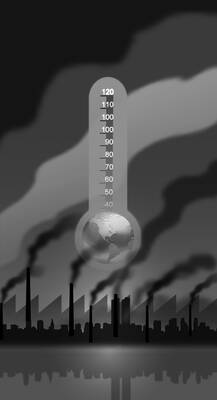
The closure of the Strait of Hormuz has sent the vast Asian chemicals industry into a tailspin. Deprived of the likes of Qatari natural gas and Saudi Arabian oil, the region’s fertilizer and plastics plants are slowing production or even shutting down. Everywhere except China, that is. In petrochemicals, China is unique. As well as a traditional industry that uses oil and gas as feedstock, it has parallel output that relies on its abundant domestic coal. Unsurprisingly, India and other regional powers want to copy and paste the Chinese method. This would not be easy — or climate friendly. The
Indonesian President Prabowo Subianto says he knows how to fix the problems facing Indonesia. Yet his economic mismanagement and authoritarian tendencies are steering the nation toward a familiar mix of currency instability and political chaos. The world’s fourth-most populous nation risks reversing the hard-won democratic and business reforms that came after the Asian Financial Crisis in 1997. At that time, the rupiah collapsed and the political upheaval that followed forced former president Haji Mohamed Suharto from power. Prabowo’s administration is ignoring similar warning signs. That disconnect was apparent in a national address on Wednesday, when Prabowo projected the swagger that has
“Of course you can choose not to be Taiwanese, just do not stay here,” chairwoman of Taipei 101 operator Taipei Financial Center Corp Janet Chia (賈永婕) said in an online interview with local entertainer Tai Chih-yuan (邰智源), triggering intense discussion on social media, with politicians across party lines weighing in. In the interview, which was aired on May 14, Chia and Tai’s discussion over a meal in Taipei 101 covered Chia’s career change from entertainer to chairwoman and US climber Alex Honnold’s free solo climb up the Taipei 101 building. During the interview, Chia said, “Being on this land, we


 RSS
RSS