


Honduran President Nasry Asfura appears increasingly willing to absorb diplomatic and economic friction with Beijing if doing so stabilizes Honduras’ most consequential relationship, the one with Washington, and talks about the possibility of restoring ties with Taiwan.
Minister of Foreign Affairs Lin Chia-lung (林佳龍) earlier this month signaled that relations with Honduras could improve. At a regular briefing, Department of Latin American and Caribbean Affairs Deputy Director-General Lu Chao-jui (盧朝睿) said that the ministry maintains an open attitude and would set no preconditions for engagement, provided exchanges expand Taiwan’s international space and allow it to contribute meaningfully to the global community.
The remarks were widely interpreted as a deliberate opening rather than rhetorical goodwill.
That signal came despite that President William Lai (賴清德) was not invited to Asfura’s inauguration, even though Lai was reportedly interested in attending. The absence was notable, but not decisive. Taipei’s posture suggested patience rather than retreat, emphasizing opportunity over protocol.
Concerns about Asfura’s possible change of heart briefly resurfaced when Chinese Ambassador to Honduras Yu Bo (于波) attended the presidential ceremony at the Honduran National Congress. China on social media later underscored its assistance and Beijing’s willingness to work with Honduras on the basis of its “one China principle.”
For some observers, Lai’s absence suggested a possible recalibration back toward Beijing.
A source close to the Honduran Ministry of Foreign Affairs downplayed the episode, saying that any diplomatic shift was never intended to be immediate. Agreements signed by the outgoing administration remain under review, and the new government is still auditing commitments that were negotiated with limited transparency.
An invitation to Taiwan and Chinese representatives would have resulted in an unpleasant situation on a day of celebration, especially when just a day before, the Honduran ambassador to China had just abandoned his post. Asfura’s transition government does not need conflict, it needs time.
Asfura’s campaign rhetoric supports that interpretation. He pledged to re-establish relations with Taiwan while attempting to maintain commercial exchanges with China. Inviting China’s ambassador to the inauguration could be read as an effort to soften the landing with Beijing, even if sustaining that balance proves difficult in practice.
Domestic pressures are reinforcing that reality: 46 Honduran students studying in China would most likely face the same uncertainty as those in Taiwan when the disruption to Taipei- Tegucigalpa diplomatic ties were severed. The government is acutely aware that mishandling the transition would carry political and human costs.
Economic data further complicate the picture. Honduran central bank figures show that imports from China surged from US$630 million from 2023 to last year, while exports, although rising, remained marginal at US$44.7 million. By contrast, Honduran exports to Taiwan collapsed after the diplomatic rupture, totaling US$26.4 million through October last year, disproportionately affecting the shrimp industry. That is why representatives of the sector, and also of local manufacturers that have been affected by the intrusion of Chinese products, have kept up pressure on the new government to restore ties with Taiwan.
The clearest indication of Asfura’s thinking about Taiwan emerged during a televised interview on the national program Hoy Mismo that aired on Wednesday last week. Asked whether Honduras would maintain relations with China or return to Taiwan, Asfura reframed the question around the US. A president must pursue what is best for their country, but Hondurans must recognize the need to safeguard the relationship with their largest commercial partner, the US, he said.
He cited the potential risk to temporary protected status for about 55,000 Hondurans who have lived in the US for more than two decades, as well as the broader reality of 2 million Hondurans whose remittances sustain families at home and have contributed enormously to the Honduran economy. He also highlighted more than 200,000 manufacturing jobs tied to exports to the US market, adding that further investment is expected if the ties with the US remain in friendly terms. In short, any diplomatic choice would be filtered through its impact on Washington.
That framing is not accidental. Asfura last month traveled to the US and met senior officials, including US Secretary of State Marco Rubio, as well as Cabinet-level figures and representatives from multilateral lenders. Shortly afterward, Washington announced plans to open discussions on reducing tariffs imposed on Honduran exports. Bilateral trade with the US reached $15.8 billion in 2024, up 4.7 percent year on year, underscoring the stakes involved.
Honduras faces a 10 percent US tariff, affecting key exports such as coffee, garments, palm oil, insulated cables and seafood, particularly shrimp. Any relief would be politically valuable and economically transformative for Hondurans. Aligning with Taiwan, a close US partner, would likely ease rather than complicate those negotiations.
None of that means that Honduras’ return to Taiwan is already decided. Beijing would likely try to entice the new administration to maintain its relationship, but its failure to fulfill previous commitments and the dwindling patience of Hondurans might not make it so easy for them.
It is clear that Asfura wants to minimize confrontation, yet the direction is increasingly clear. With domestic pressure mounting, economic indicators undermining the China bet and Washington signaling rewards for alignment, Taipei finds itself in a strong position to regain a diplomatic ally.
What Asfura appears willing to do is pay a price with China if that cost secures Honduras’ relationship with the US and restores a partnership with Taiwan that many Hondurans view as strategic, reliable and economically tangible.
Juan Fernando Herrera Ramos is a Honduran journalist based in Taipei. His work on Taiwan-China-Latin America relations has appeared in the Nikkei Asia, The Diplomat and the Taipei Times.
KMT Chairwoman Cheng Li-wun’s (鄭麗文) recent visit to Beijing and her upcoming visit to Washington will serve as a high-level test of her diplomatic mettle. In Beijing, Cheng was received with symbolic gestures, a warm reception, and high-level access. In Washington, she will receive far less pomp and far sharper questions about the KMT’s vision for the future of Taiwan. Her challenge will be to persuade Washington that the KMT’s engagement with China can coexist with strong deterrence. Cheng’s April 7-12 visit to mainland China coincided with an intense period of conflict in Iran. Despite the strategic significance of Cheng’s trip,
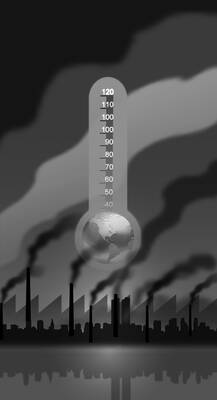
The closure of the Strait of Hormuz has sent the vast Asian chemicals industry into a tailspin. Deprived of the likes of Qatari natural gas and Saudi Arabian oil, the region’s fertilizer and plastics plants are slowing production or even shutting down. Everywhere except China, that is. In petrochemicals, China is unique. As well as a traditional industry that uses oil and gas as feedstock, it has parallel output that relies on its abundant domestic coal. Unsurprisingly, India and other regional powers want to copy and paste the Chinese method. This would not be easy — or climate friendly. The
Indonesian President Prabowo Subianto says he knows how to fix the problems facing Indonesia. Yet his economic mismanagement and authoritarian tendencies are steering the nation toward a familiar mix of currency instability and political chaos. The world’s fourth-most populous nation risks reversing the hard-won democratic and business reforms that came after the Asian Financial Crisis in 1997. At that time, the rupiah collapsed and the political upheaval that followed forced former president Haji Mohamed Suharto from power. Prabowo’s administration is ignoring similar warning signs. That disconnect was apparent in a national address on Wednesday, when Prabowo projected the swagger that has
“Of course you can choose not to be Taiwanese, just do not stay here,” chairwoman of Taipei 101 operator Taipei Financial Center Corp Janet Chia (賈永婕) said in an online interview with local entertainer Tai Chih-yuan (邰智源), triggering intense discussion on social media, with politicians across party lines weighing in. In the interview, which was aired on May 14, Chia and Tai’s discussion over a meal in Taipei 101 covered Chia’s career change from entertainer to chairwoman and US climber Alex Honnold’s free solo climb up the Taipei 101 building. During the interview, Chia said, “Being on this land, we


 RSS
RSS