


I imagine that Chinese People’s Liberation Army General Zhang Youxia (張又俠) had no idea just how powerful he truly was. Just by being removed, he triggered a myriad of possible futures, all of them equally dramatic, ranging from single-handedly causing the apocalypse of Taiwan to triggering the downfall of Chinese President Xi Jinping (習近平). That is if you believe the fauna of China analysts and columnists who had a field day following his removal.
Every media outlet, every author, felt it was their sacred duty to give their two cents on Zhang’s removal. All of them were perfectly open about the speculative nature of their analyses: The headlines themselves were stuffed with “mights” and “coulds.” The fact that they did not even try to hide it is telling of how accepted this has become.
It does not matter whether they think Xi is now more isolated and vulnerable, or the opposite that he has one less barrier stopping him from triggering the next world war (as if he needed someone to tell him what to do). It does not matter whether they think it makes China weaker and Taiwan safer, or China more unpredictable and Taiwan more exposed. The result is the same: Even after reading a few news outlets and social media feeds, it is likely you know less than when you started.
You still do not know what might happen — and that is because these writers do not know either, but that would not stop them from writing about it and stamping their seal of approval on uncertainty.
More often than not, these pundits are the people I am supposed to interview, so I have had to develop a skill for sorting out who is worth talking to. It is not easy: All of these writers share the same kind of high-level credentials — doctorates, memberships in prestigious institutes, countless years spent in East Asia and some sort of experience in the military (typically the US one) — all of which apparently grant them the right to speak with authority about the role played by an event they did not witness, in a system as notoriously opaque as China’s. This does not mean they are all bad, but it does mean these credentials are worthless as a criterion for sorting them out.
Whether they rely on weasel words or not is a far better criterion. I have no time for those who use conditional language as plausible deniability for the theories they choose to cloak in an aura of respectability. It is far better to seek out those who primarily share what they witnessed, since they are in a position to see things more closely than most of us, without leaping to dramatic conclusions. I would single out S. Rajaratnam School of International Studies in Singapore senior fellow Drew Thompson in the case of Zhang: He published a worthwhile account of his own experience meeting the general and does not indulge in wild predictions beyond what he has observed.
However, the blame for avalanches of poor analysis also falls on the reader. There is a lot of talk about journalists being biased, and far less about the extreme bias of audiences themselves. Admit it: On hearing the removal of a general, you go to the supermarket of analysts and pick the one who confirms your bias. This is why this market exists: Each theorist of what Zhang’s removal means has a customer base for their particular brand of “mights” and “coulds.” The others are “doing propaganda” simply because they do not cater to your bias.
It is perhaps natural to seek an authority figure to confirm personal beliefs and soothe anxieties. Yet, it would be healthier to accept that it is impossible to know what a piece of news like Zhang’s removal really means. After all, he should not have the power to make you so afraid of the future.
Julien Oeuillet is an independent reporter in Kaohsiung and hosts the weekly program Taiwan vs the World on Radio Taiwan International.
A gap appears to be emerging between Washington’s foreign policy elites and the broader American public on how the United States should respond to China’s rise. From my vantage working at a think tank in Washington, DC, and through regular travel around the United States, I increasingly experience two distinct discussions. This divergence — between America’s elite hawkishness and public caution — may become one of the least appreciated and most consequential external factors influencing Taiwan’s security environment in the years ahead. Within the American policy community, the dominant view of China has grown unmistakably tough. Many members of Congress, as
The shifting geopolitical tectonic plates of this year have placed Beijing in a profound strategic dilemma. As Chinese President Xi Jinping (習近平) prepares for a high-stakes summit with US President Donald Trump, the traditional power dynamics of the China-Japan-US triangle have been destabilized by the diplomatic success of Japanese Prime Minister Sanae Takaichi in Washington. For the Chinese leadership, the anxiety is two-fold: There is a visceral fear of being encircled by a hardened security alliance, and a secondary risk of being left in a vulnerable position by a transactional deal between Washington and Tokyo that might inadvertently empower Japan
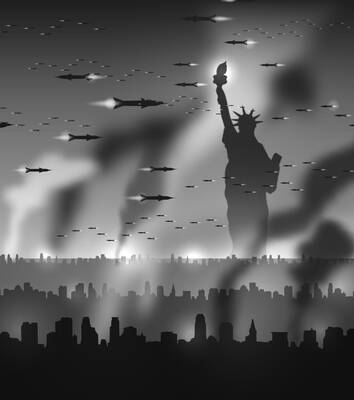
After declaring Iran’s military “gone,” US President Donald Trump appealed to the UK, France, Japan and South Korea — as well as China, Iran’s strategic partner — to send minesweepers and naval forces to reopen the Strait of Hormuz. When allies balked, the request turned into a warning: NATO would face “a very bad” future if it refused. The prevailing wisdom is that Trump faces a credibility problem: having spent years insulting allies, he finds they would not rally when he needs them. That is true, but superficial, as though a structural collapse could be caused by wounded feelings. Something
Former Taipei mayor and Taiwan People’s Party (TPP) founding chairman Ko Wen-je (柯文哲) was sentenced to 17 years in prison on Thursday, making headlines across major media. However, another case linked to the TPP — the indictment of Chinese immigrant Xu Chunying (徐春鶯) for alleged violations of the Anti-Infiltration Act (反滲透法) on Tuesday — has also stirred up heated discussions. Born in Shanghai, Xu became a resident of Taiwan through marriage in 1993. Currently the director of the Taiwan New Immigrant Development Association, she was elected to serve as legislator-at-large for the TPP in 2023, but was later charged with involvement


 RSS
RSS