


Over the past two days, two heartwarming currents have flown through Taiwan’s streets — like sunlight in the winter, shining into people’s hearts.
The first took place in Kaohsiung’s Fongshan County (鳳山), where a junior-high school student walked a person with disabilities across a busy intersection, pushing his bicycle alongside them at a slow, steady pace.
The second occurred at Yilan Riverside Park, where three students from Yilan Junior High School who had gone to the park to play ball discovered an elderly man who had been attacked, his head covered in blood. Faced with shock and potential danger, the boys did not walk away. Instead, they chose to keep the man company, call the police and wait with him until the ambulance arrived.
These actions speak louder than 1,000 words of preaching or moral instruction, proving that kindness is the most invaluable core of education.
In all honesty, adults today have learned to be weary of the world. When they encounter a difficult situation, their first thoughts might be: “Could this get me into trouble?” or “It’s best to avoid any unnecessary involvement.”
However, these students did not stop to weigh the pros and cons. What they showed was the most pure and direct form of goodwill — they saw someone injured, someone in need, and acted immediately. Such simplicity is precisely the force people need most to repair trust in the society.
This should also invite us to rethink the meaning of education. In an era that places excessive emphasis on grades and class rankings, the best education does not actually take place in classrooms, but in the empathy shown when facing the weak and vulnerable. This kind of selfless kindness deserves to be widely shared and affirmed. When schools and the rest of society place greater value on these qualities that extend beyond exam papers, we can plant seeds of hope for the next generation — allowing kindness to become a form of courage that can be passed on.
The students’ good deeds have narrowed the gap between people and allowed us to rediscover trust in its true form. However, this feeling of being emotionally moved should not be confined to online “likes,” but translated into practice in people’s daily lives. Members of the public should be thankful to these children for providing society with a profound lesson in character through gestures that were, to them, entirely ordinary. They serve as a reminder that each of us has the capacity to become that gentle light capable of warming others’ hearts.
Dino Wei is an engineer.
Translated by Kyra Gustavsen
KMT Chairwoman Cheng Li-wun’s (鄭麗文) recent visit to Beijing and her upcoming visit to Washington will serve as a high-level test of her diplomatic mettle. In Beijing, Cheng was received with symbolic gestures, a warm reception, and high-level access. In Washington, she will receive far less pomp and far sharper questions about the KMT’s vision for the future of Taiwan. Her challenge will be to persuade Washington that the KMT’s engagement with China can coexist with strong deterrence. Cheng’s April 7-12 visit to mainland China coincided with an intense period of conflict in Iran. Despite the strategic significance of Cheng’s trip,
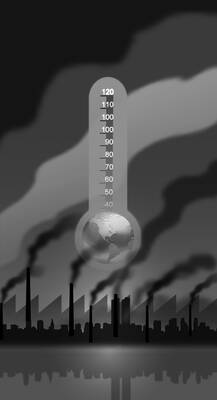
The closure of the Strait of Hormuz has sent the vast Asian chemicals industry into a tailspin. Deprived of the likes of Qatari natural gas and Saudi Arabian oil, the region’s fertilizer and plastics plants are slowing production or even shutting down. Everywhere except China, that is. In petrochemicals, China is unique. As well as a traditional industry that uses oil and gas as feedstock, it has parallel output that relies on its abundant domestic coal. Unsurprisingly, India and other regional powers want to copy and paste the Chinese method. This would not be easy — or climate friendly. The
Indonesian President Prabowo Subianto says he knows how to fix the problems facing Indonesia. Yet his economic mismanagement and authoritarian tendencies are steering the nation toward a familiar mix of currency instability and political chaos. The world’s fourth-most populous nation risks reversing the hard-won democratic and business reforms that came after the Asian Financial Crisis in 1997. At that time, the rupiah collapsed and the political upheaval that followed forced former president Haji Mohamed Suharto from power. Prabowo’s administration is ignoring similar warning signs. That disconnect was apparent in a national address on Wednesday, when Prabowo projected the swagger that has
“Of course you can choose not to be Taiwanese, just do not stay here,” chairwoman of Taipei 101 operator Taipei Financial Center Corp Janet Chia (賈永婕) said in an online interview with local entertainer Tai Chih-yuan (邰智源), triggering intense discussion on social media, with politicians across party lines weighing in. In the interview, which was aired on May 14, Chia and Tai’s discussion over a meal in Taipei 101 covered Chia’s career change from entertainer to chairwoman and US climber Alex Honnold’s free solo climb up the Taipei 101 building. During the interview, Chia said, “Being on this land, we


 RSS
RSS