


In a recent interview, President William Lai (賴清德) said that the legislature’s responsibility is to supervise the government and review the budget, not to use the budget as leverage to force the executive to comply with political demands. In response, the Taiwan People’s Party (TPP) accused the president of evading oversight, contravening constitutional principles and seeking a “rubber-stamp legislature.” The party framed its attack as a defense of democracy and legality. A closer reading suggests something else is at work.
What the TPP is practicing is not a constitutional argument, but a political sleight of hand. This is a familiar trick: cite the law to sound principled, distort the law to sound right and weaponize the distortion to sound righteous. The goal is not to clarify constitutional boundaries, but to confuse them. This tactic must be called out plainly. Taiwan does not need a party that governs by misreading the Constitution willfully and tirelessly.
First, the TPP deliberately misstates what “executing the law” means. The executive branch is obligated to implement statutes as passed by the legislature. It is not obligated to surrender its policy judgement to legislative coercion. There is a crucial difference between enforcing a law and being compelled by lawmakers.
Using the budget to force changes in foreign or defense policy is not the execution of law; it is the use of fiscal power to dictate national direction. The TPP accuses the government of treating the law like a buffet, picking what it likes and discarding the rest. This reverses reality. The government treats the law as a set menu: What is passed must be implemented as written. It is the TPP that keeps changing the dishes — adding conditions and demands — and then insisting the executive swallow the whole plate. What Lai objects to is the attempt to turn legal authority into a tool of command.
Second, the TPP advances claims that misrepresent the Constitution itself. It takes the clause that the legislature may “hear a presidential national address” to mean that it can compel the president to appear and report on designated policy topics such as tariffs or arms purchases. This is a stretch of the text and a distortion of practice.
The Constitution allows the legislature to hear a general national address; it does not convert the president into a prime minister subject to legislative interrogation. Even the statute the TPP cites permits questioning only with the president’s consent. Lai has not rejected oversight; he has rejected the attempt to redefine it. To portray this as evasion is therefore false.
What the TPP presents as accountability is, in effect, an effort to remake Taiwan’s presidential system into a parliamentary one — a change that requires a constitutional amendment.
Taiwanese must be reminded that Taiwan has a presidential system, where the president answers to the electorate and the Constitution, not to the legislature.
Third, the TPP asserts that Taiwan Semiconductor Manufacturing Co’s (TSMC) “core technologies are being hollowed out.” This is a serious accusation, but it is unsupported and undefined. No technologies are named, no processes identified, and no mechanism explained. “Hollowed out” is not an industry term; it is a metaphor designed to provoke fear.
In reality, TSMC is expanding its most advanced operations in Taiwan: mass producing 2-nanometer chips in Hsinchu and Kaohsiung, planning additional 2-nanometer fabs, and building four new advanced chip packaging plants this year. It has also announced capital expenditure of up to US$56 billion, with the majority devoted to advanced process development in Taiwan. Does that resemble hollowing out?
The same pattern appears in the TPP’s foreign policy rhetoric. The party describes Taiwan’s engagement with the US as surrender and humiliation, accusing the government of “selling out” the country’s future. This narrative ignores strategic reality. Taiwan does not negotiate from a position of equality with great powers. Diplomacy is about securing Taiwan’s survival in a complex world, not winning a pride contest. To present every compromise as betrayal is to turn diplomacy into a battle of nationalism.
What the TPP is doing is not merely opposing the president. It is blurring the line between oversight and obstruction, between criticism and coercion. The TPP uses the budget to coerce the government, and when the president points to constitutional boundaries, the party dismisses those boundaries as mere excuses.
Taiwanese have had enough of this game. They did not vote for a legislature that paralyzes the government in the name of supervision. They did not choose representatives to rewrite constitutional practice through procedural traps. They did not ask for national security to be reduced to slogans about humiliation and pride.
A democracy is strong when its institutions know their limits. A party that constantly pushes against those limits in the name of righteousness is not defending democracy, it is destroying it.
John Cheng is a retired businessman from Hong Kong now living in Taiwan.
KMT Chairwoman Cheng Li-wun’s (鄭麗文) recent visit to Beijing and her upcoming visit to Washington will serve as a high-level test of her diplomatic mettle. In Beijing, Cheng was received with symbolic gestures, a warm reception, and high-level access. In Washington, she will receive far less pomp and far sharper questions about the KMT’s vision for the future of Taiwan. Her challenge will be to persuade Washington that the KMT’s engagement with China can coexist with strong deterrence. Cheng’s April 7-12 visit to mainland China coincided with an intense period of conflict in Iran. Despite the strategic significance of Cheng’s trip,
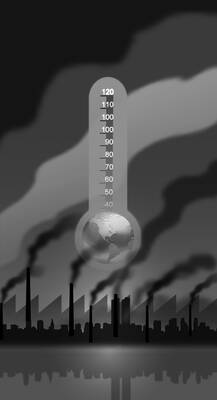
The closure of the Strait of Hormuz has sent the vast Asian chemicals industry into a tailspin. Deprived of the likes of Qatari natural gas and Saudi Arabian oil, the region’s fertilizer and plastics plants are slowing production or even shutting down. Everywhere except China, that is. In petrochemicals, China is unique. As well as a traditional industry that uses oil and gas as feedstock, it has parallel output that relies on its abundant domestic coal. Unsurprisingly, India and other regional powers want to copy and paste the Chinese method. This would not be easy — or climate friendly. The
Indonesian President Prabowo Subianto says he knows how to fix the problems facing Indonesia. Yet his economic mismanagement and authoritarian tendencies are steering the nation toward a familiar mix of currency instability and political chaos. The world’s fourth-most populous nation risks reversing the hard-won democratic and business reforms that came after the Asian Financial Crisis in 1997. At that time, the rupiah collapsed and the political upheaval that followed forced former president Haji Mohamed Suharto from power. Prabowo’s administration is ignoring similar warning signs. That disconnect was apparent in a national address on Wednesday, when Prabowo projected the swagger that has
“Of course you can choose not to be Taiwanese, just do not stay here,” chairwoman of Taipei 101 operator Taipei Financial Center Corp Janet Chia (賈永婕) said in an online interview with local entertainer Tai Chih-yuan (邰智源), triggering intense discussion on social media, with politicians across party lines weighing in. In the interview, which was aired on May 14, Chia and Tai’s discussion over a meal in Taipei 101 covered Chia’s career change from entertainer to chairwoman and US climber Alex Honnold’s free solo climb up the Taipei 101 building. During the interview, Chia said, “Being on this land, we


 RSS
RSS