


Chinese Nationalist Party (KMT) deputy secretary-general Lin Pei-hsiang (林沛祥) said that Taiwan’s low birthrate is no longer a warning sign, but a fact of life. The declining birthrate has become a genuine national security crisis. More dire yet is that it is not merely low, but the lowest on Earth.
Why is this the case? Is it not because the KMT promoted an unfair and unjust pension system? Why is it that only military personnel, police and civil servants can receive continuous pay raises while in service and enjoy a preferential interest rate of 18 percent after retirement, while everyone else receives no such benefit? KMT legislators have also encouraged property developers to speculate in the real-estate market, leaving many Taiwanese with no hope of owning a home.
Lin said the Democratic Progressive Party repeatedly points to record highs in the stock market and impressive economic indicators in an attempt to create an atmosphere that Taiwan is doing well. If society truly felt secure and hopeful, why would young people choose not to have children?
A nation’s birthrate reflects the most honest portrait of society.
Why does the KMT continue to focus solely on workplace and retirement benefits for the military, police and civil servants while ignoring the welfare of all other groups? What is the purpose of opposing pension reform? Are they aware that the retirement funds of average workers are far lower than that of military personnel and civil servants?
Lin said that systems such as child development accounts and baby bonds have long existed internationally and are considered important policy tools for addressing intergenerational inequality and restoring confidence to start families. The national security crisis posed by low birthrates transcends party lines — it decides whether Taiwan’s next generation has a future.
If it were not for the massive national defense budget required to face the threat of a hostile neighbor, China — and for the extremely high pensions awarded to military personnel, police and civil servants — the money saved could certainly fulfill Lin’s wishes.
KMT legislators even questioned Directorate-General of Budget, Accounting and Statistics Minister Chen Shu-tzu (陳淑姿) about why the general budget has not yet been approved and why fighter jets have not yet been upgraded. Is the real issue not that the KMT has continuously blocked both the general budget and the special defense budget?
Teng Hon-yuan is a university professor.
Translated by Kyra Gustavsen
KMT Chairwoman Cheng Li-wun’s (鄭麗文) recent visit to Beijing and her upcoming visit to Washington will serve as a high-level test of her diplomatic mettle. In Beijing, Cheng was received with symbolic gestures, a warm reception, and high-level access. In Washington, she will receive far less pomp and far sharper questions about the KMT’s vision for the future of Taiwan. Her challenge will be to persuade Washington that the KMT’s engagement with China can coexist with strong deterrence. Cheng’s April 7-12 visit to mainland China coincided with an intense period of conflict in Iran. Despite the strategic significance of Cheng’s trip,
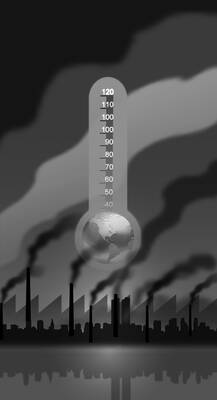
The closure of the Strait of Hormuz has sent the vast Asian chemicals industry into a tailspin. Deprived of the likes of Qatari natural gas and Saudi Arabian oil, the region’s fertilizer and plastics plants are slowing production or even shutting down. Everywhere except China, that is. In petrochemicals, China is unique. As well as a traditional industry that uses oil and gas as feedstock, it has parallel output that relies on its abundant domestic coal. Unsurprisingly, India and other regional powers want to copy and paste the Chinese method. This would not be easy — or climate friendly. The
Indonesian President Prabowo Subianto says he knows how to fix the problems facing Indonesia. Yet his economic mismanagement and authoritarian tendencies are steering the nation toward a familiar mix of currency instability and political chaos. The world’s fourth-most populous nation risks reversing the hard-won democratic and business reforms that came after the Asian Financial Crisis in 1997. At that time, the rupiah collapsed and the political upheaval that followed forced former president Haji Mohamed Suharto from power. Prabowo’s administration is ignoring similar warning signs. That disconnect was apparent in a national address on Wednesday, when Prabowo projected the swagger that has
“Of course you can choose not to be Taiwanese, just do not stay here,” chairwoman of Taipei 101 operator Taipei Financial Center Corp Janet Chia (賈永婕) said in an online interview with local entertainer Tai Chih-yuan (邰智源), triggering intense discussion on social media, with politicians across party lines weighing in. In the interview, which was aired on May 14, Chia and Tai’s discussion over a meal in Taipei 101 covered Chia’s career change from entertainer to chairwoman and US climber Alex Honnold’s free solo climb up the Taipei 101 building. During the interview, Chia said, “Being on this land, we


 RSS
RSS