


Japanese pop singer Ayumi Hamasaki was originally scheduled to hold a concert in Shanghai on Nov. 29, but she received a last-minute notice to cancel the show the day before — despite the fact that it took a team of more than 200 from Japan and China five days to prepare the stage.
Media reports focused on Hamasaki’s professionalism, after she insisted that the show would go on, performing to an empty venue. She expressed her regret on social media at being unable to apologize in person to all her fans who had come from across the world, adding that she was unwilling to comment on affairs that she did not understand.
The incident was caused by the growing tension in Japan-China relations, following Japanese Prime Minister Sanae Takaichi’s remarks on Japan’s response to a potential Taiwan contingency. China launched a ban on Japanese entertainers late last month.
If a ban was really intended, China could have notified the Japanese side long ago. The delay was due to Takaichi’s refusal to retract her comments, leading Beijing instead to target Japanese civilians. The Chinese Communist Party (CCP) seems to feel this is a victory to be proud of. Hamasaki and her team had come from Japan, taking five days to set up the stage, while her fans traveled long distances to Shanghai. They all spent a considerable amount of money for this, with the CCP gloating over their misfortune.
The Shanghai foreign district used to be a shining beacon of architecture and style for China, but this was extinguished when the CCP got its hands on them. With China’s reform and opening up, jazz was heard once again in the Peace Hotel at the Sassoon House, as Shanghai regained some of its past glamor, giving people an illusion of the better days. Now even this mere illusion is about to be extinguished.
Even in the extreme communist era, Shanghai was the best managed city in China, thanks to the foundation laid by the past foreign concessions, but the city has devolved into a politically-oriented sprawling CCP concession.
Shanghai CCP Party Secretary Chen Jining (陳吉寧) is a Chinese academic with multiple degrees. After graduating from China’s Tsinghua University, he earned a doctorate from Imperial College London. During his study in the UK, Chen was fully aware of the tragedy of the Tiananmen Square Massacre in 1989.
However, after returning to China, Chen has had to bow before Chinese President Xi Jinping (習近平), whose doctorate from Tsinghua University might be questionable. This time, Chen has caused a global sensation by banning the Japanese pop diva. Why?
The CCP often dons its best Western attire to conceal its unmannered nature, but when it comes to confrontations with other countries, it switches to its Mao suit to intimidate. Chinese diplomats are not even trying to conceal their nature when meeting with their Japanese counterparts, even as Chinese officials rushed to Dalian to placate Japanese enterprises, assuring them it was still safe to conduct business in China. Xi is clearly at his wit’s end.
Paul Lin is a political commentator.
Translated by Eddy Chang
KMT Chairwoman Cheng Li-wun’s (鄭麗文) recent visit to Beijing and her upcoming visit to Washington will serve as a high-level test of her diplomatic mettle. In Beijing, Cheng was received with symbolic gestures, a warm reception, and high-level access. In Washington, she will receive far less pomp and far sharper questions about the KMT’s vision for the future of Taiwan. Her challenge will be to persuade Washington that the KMT’s engagement with China can coexist with strong deterrence. Cheng’s April 7-12 visit to mainland China coincided with an intense period of conflict in Iran. Despite the strategic significance of Cheng’s trip,
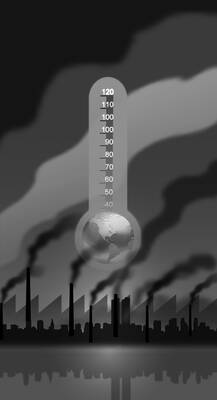
The closure of the Strait of Hormuz has sent the vast Asian chemicals industry into a tailspin. Deprived of the likes of Qatari natural gas and Saudi Arabian oil, the region’s fertilizer and plastics plants are slowing production or even shutting down. Everywhere except China, that is. In petrochemicals, China is unique. As well as a traditional industry that uses oil and gas as feedstock, it has parallel output that relies on its abundant domestic coal. Unsurprisingly, India and other regional powers want to copy and paste the Chinese method. This would not be easy — or climate friendly. The
Indonesian President Prabowo Subianto says he knows how to fix the problems facing Indonesia. Yet his economic mismanagement and authoritarian tendencies are steering the nation toward a familiar mix of currency instability and political chaos. The world’s fourth-most populous nation risks reversing the hard-won democratic and business reforms that came after the Asian Financial Crisis in 1997. At that time, the rupiah collapsed and the political upheaval that followed forced former president Haji Mohamed Suharto from power. Prabowo’s administration is ignoring similar warning signs. That disconnect was apparent in a national address on Wednesday, when Prabowo projected the swagger that has
“Of course you can choose not to be Taiwanese, just do not stay here,” chairwoman of Taipei 101 operator Taipei Financial Center Corp Janet Chia (賈永婕) said in an online interview with local entertainer Tai Chih-yuan (邰智源), triggering intense discussion on social media, with politicians across party lines weighing in. In the interview, which was aired on May 14, Chia and Tai’s discussion over a meal in Taipei 101 covered Chia’s career change from entertainer to chairwoman and US climber Alex Honnold’s free solo climb up the Taipei 101 building. During the interview, Chia said, “Being on this land, we


 RSS
RSS