


Japanese Prime Minister Sanae Takaichi lit a fuse the moment she declared that trouble for Taiwan means trouble for Japan. Beijing roared, Tokyo braced and like a plot twist nobody expected that early in the story, US President Donald Trump suddenly picked up the phone to talk to her.
For a man who normally prefers to keep Asia guessing, the move itself was striking.
What followed was even more intriguing. No one outside the room knows the exact phrasing, the tone or the diplomatic eyebrow raises exchanged, but the broad takeaway circulating among people familiar with the call was this: Trump did not try to yank her away from her position, yet he did nudge the conversation toward “dialing things down a notch.”
That subtle shift matters — not because it changes Japan’s policy, but because it exposes Trump’s deep reluctance to plant a firm flag on anything Taiwan-related right now.
The reluctance is not random. It is part of a pattern. If Trump’s first administration was marked by loud, fiery confrontations with Beijing — especially after the COVID-19 pandemic upended the global order — his political comeback has been the opposite.
His instinct today is transactional, not ideological. In Trump’s worldview, China is less a hostile rival to contain and more a massive bargaining partner holding the keys to economic wins he desperately wants to claim.
That is precisely why his careful silence on Taiwan should worry everyone.
After his latest conversation with Chinese President Xi Jinping (習近平), Trump released a message so polished it might as well have been written by a bored intern with a thesaurus.The usual Trumpian verbal fireworks were gone. Instead, every line read like it had been scrubbed for anything that could accidentally irritate Beijing or complicate his quest for trade concessions.
China has dangled promises — more US farm imports, maybe a loosening on rare earths restrictions — but nothing concrete has landed. Trump wants those wins. Until he gets them, he clearly sees no upside in poking the Taiwan issue with anything sharper than a feather.
Some analysts spin this as a clever strategy: “Deterrence without drama,” or “quiet strength,” but anyone watching US-China dynamics knows that the truth is much simpler.
The two sides are easing into a thaw. Plans for mutual visits are already forming. Business interests on both sides are pushing for calmer waters.
In that environment, Trump’s caution is not some 4D chess move — it is the political equivalent of bubble-wrapping the furniture and hoping that nothing breaks before the deal closes.
That is why the notion that Trump would reliably “stand tough on China” is becoming less persuasive by the day. Could he swing back to confrontation? Of course. He has a history of snapping from warm handshakes to cold hostility when it suits him.
However, such shifts have always been driven by personal political need, not strategic conviction. The first time he broke with Xi, the trigger was domestic: The pandemic wrecked his re-election prospects. If he turns again next year, the trigger will almost certainly be transactional — Beijing not offering enough or demanding something Trump cannot afford to give.
There lies the real danger for Taiwan: The “something” China wants most is rhetorical validation of its narrative. A single phrase from Trump — however symbolic — could send tremors through the region. A leader who prioritizes economic optics over long-term strategy might find such a trade tempting.
Taipei knows this and the conclusion is unavoidable: Being cautious about Trump is not the same as being skeptical of the US. Support for Taiwan among US institutions and alliances, as well as across party lines, remains far steadier than Trump’s moods.
In the end, Takaichi’s comments did more than stir Beijing’s anger. They pulled back the curtain on Trump’s risk-averse calculus. What he is not saying about Taiwan speaks louder than what he ever has — and that silence is its own bright red flag.
Bonnie Yushih Liao is an assistant professor in the Department of Diplomacy and International Relations at Tamkang University.
KMT Chairwoman Cheng Li-wun’s (鄭麗文) recent visit to Beijing and her upcoming visit to Washington will serve as a high-level test of her diplomatic mettle. In Beijing, Cheng was received with symbolic gestures, a warm reception, and high-level access. In Washington, she will receive far less pomp and far sharper questions about the KMT’s vision for the future of Taiwan. Her challenge will be to persuade Washington that the KMT’s engagement with China can coexist with strong deterrence. Cheng’s April 7-12 visit to mainland China coincided with an intense period of conflict in Iran. Despite the strategic significance of Cheng’s trip,
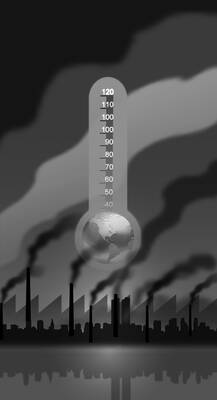
The closure of the Strait of Hormuz has sent the vast Asian chemicals industry into a tailspin. Deprived of the likes of Qatari natural gas and Saudi Arabian oil, the region’s fertilizer and plastics plants are slowing production or even shutting down. Everywhere except China, that is. In petrochemicals, China is unique. As well as a traditional industry that uses oil and gas as feedstock, it has parallel output that relies on its abundant domestic coal. Unsurprisingly, India and other regional powers want to copy and paste the Chinese method. This would not be easy — or climate friendly. The
Indonesian President Prabowo Subianto says he knows how to fix the problems facing Indonesia. Yet his economic mismanagement and authoritarian tendencies are steering the nation toward a familiar mix of currency instability and political chaos. The world’s fourth-most populous nation risks reversing the hard-won democratic and business reforms that came after the Asian Financial Crisis in 1997. At that time, the rupiah collapsed and the political upheaval that followed forced former president Haji Mohamed Suharto from power. Prabowo’s administration is ignoring similar warning signs. That disconnect was apparent in a national address on Wednesday, when Prabowo projected the swagger that has
“Of course you can choose not to be Taiwanese, just do not stay here,” chairwoman of Taipei 101 operator Taipei Financial Center Corp Janet Chia (賈永婕) said in an online interview with local entertainer Tai Chih-yuan (邰智源), triggering intense discussion on social media, with politicians across party lines weighing in. In the interview, which was aired on May 14, Chia and Tai’s discussion over a meal in Taipei 101 covered Chia’s career change from entertainer to chairwoman and US climber Alex Honnold’s free solo climb up the Taipei 101 building. During the interview, Chia said, “Being on this land, we


 RSS
RSS