


“Si ambulat loquitur tetrissitatque sicut anas, anas est” is, in customary international law, the three-part test of anatine ambulation, articulation and tetrissitation. And it is essential to Taiwan’s existence. Apocryphally, it can be traced as far back as Suetonius (蘇埃托尼烏斯) in late first-century Rome. Alas, Suetonius was only talking about ducks (anas).
But this self-evident principle was codified as a four-part test at the Montevideo Convention in 1934, to which the United States is a party. Article One: “The state as a person of international law should possess the following qualifications: a) a permanent population; b) a defined territory; c) government; and, d) a capacity to enter into relations with the other states.”
In US constitutional law, the recognition of foreign states is within the sole purview of the Chief Executive. Thrice in his first term, President Donald J. Trump invoked this authority: to recognize Jerusalem as Israel’s capital, the Golan Heights as Israel’s sovereign territory, and Western Sahara as the sovereign soil of the Kingdom of Morocco. He did this in laudable pursuit of the “Abraham Accords” and achieving detente between Israel and major Arab neighbors. The moves were controversial, to say the least, and it was fortunate Congress could not kibbitz. Four years ago, in this column (“The American Constitution and recognizing Taiwan” Dec. 20, 2021), I pondered whether an American President was empowered formally to recognize Taiwan independence without further consultation with the legislature. The answer was “yes.”
Today, I examine whether a US president might go in the opposite direction and recognize Taiwan as China’s sovereign territory without Congressional consultation. Here, I think not.
The primary factor that complicates the president’s authority vis-a-vis Taiwan sovereignty was absent in the Abraham Accords. It is that the United States Code (22 USC 48 § 3303(b)(1) — “The Taiwan Relations Act”) already defines Taiwan’s status as identical to “foreign countries, nations, states, governments, or similar entities.” Thus, when the TRA became law, with full support in the Senate and under the President’s signature, the matter of Taiwan’s sovereign status (by the Montevideo test) was elevated beyond the purview of the President’s powers and into the realm of “the law of the land.”
This was no legislative usurpation of the executive’s prerogative. The United States president at the time of the Taiwan Relations Act, Jimmy Carter, had himself already included this identical “foreign countries, nations, states” formula in his own executive memorandum to all departments and agencies of December 30, 1978. Applying Suetonius’s principle of “anatine tetrissitation” (嘎嘎似鴨) as well as Article 3 of the Montevideo pact (“The political existence of the state is independent of recognition by the other states”), Carter judged that, in international law, Taiwan was indeed a “state.”
One key element of President Carter’s December 30th memorandum was the following: “Existing international agreements and arrangements in force between the United States and Taiwan shall continue in force and shall be performed and enforced by departments and agencies beginning January 1, 1979.”
Somehow, mysteriously, this little phrase slipped out of his January 26, 1979, draft “Taiwan Enabling Act” before it had even reached Capitol Hill. It was a clause that necessarily presumed “Taiwan’s” continued statehood, and was essential to the continuation of orderly relations with Taiwan after that date. Omission of this clause was strange because everyone agreed it was fundamental. Deputy Secretary of State Warren Christopher was the first Carter administration witness to testify before the Senate Foreign Relations Committee on February 5, 1979, and the first thing Christopher assured the committee of was: “First, we have moved to assure that, with the exception of the mutual defense treaty and related agreements, our many treaties and other agreements with Taiwan — more than 55 in all — will remain in force.” Perhaps he hoped that the clause’s absence in the draft legislation wouldn’t be noticed?
If so, he was mistaken. The senators interrogated him, “why was there nothing in the President’s ‘enabling’ bill about the continuation of existing US treaties with Taiwan when it was part of his December 30 ‘memorandum’?” Christopher responded that “if there is any doubt about [President Carter] having the right ... to permanently provide that the people on Taiwan are to be treated as a country for purposes of the legislation, we think that the precedents are clear that the President is permitted to do this as a transitional structure until Congress has an opportunity to act.” Christopher emphasized, “one of the main purposes of the legislation [is] that in general the people on Taiwan can be treated as a country.”
He continued, “The United States, I think, would find no difficulty if the legislation is passed in treating the people on Taiwan as a valid treaty partner for purposes of important treaties, such as aviation arrangements, nuclear supply arrangements which now exist. Under international law, I think that our judgment is clear that it is legally permissible to have a treaty or an agreement with an entity that is not formally recognized as a government.”
Christopher also explained to the Senate the trade-off which Presidents Nixon and Carter confronted: Because the Chinese side was adamant that it would not issue an explicit renunciation of the use of force against Taiwan, the US would not, therefore, concede Chinese sovereignty over Taiwan.
Senator Jesse Helms (NC) then interrogated Department of State Legal Advisor Herbert Hansell on whether there was, in the US Government’s view, “a government [that] maintain[ed] order on that island.” Hansell agreed, “of course, there is, but that does not mean it is the sovereign government. That does not mean it is the legal Government of China.”
Helms was shocked! “So, you are saying the policy of the US Government is that the Government of Taiwan is no longer legal. Is that so?” Hansell retrenched, “No, sir, that is not what I said. It is no longer the recognized legal Government of China. I think there is a difference ... in the view of the US Government.” These assurances by the executive branch to the Senate were intrinsic to the TRA’s enactment. Deputy Secretary Christopher’s legal position that determination of whether the United States could legally treat Taiwan as a “valid treaty partner” was within the President’s constitutional authority only as a “transitional structure” until the “Congress has the opportunity to act.” That is, the President himself believed he was “transitionally” authorized to recognize Taiwan as a “valid treaty partner” only until such time as the Congress acted to confirm (or not confirm) this permanently.
In the end, the Congress was unanimous in enshrining in law the “continuation of all treaties” with Taiwan, together with the enumeration of Taiwan among all the world’s other “foreign countries, nations, states, governments, or similar entities.” To conform with Montevideo, the TRA added a geographic definition of “Taiwan” as “the islands of Taiwan and the Pescadores,” and a political definition of “Taiwan” as “the governing authorities on Taiwan recognized by the United States as the Republic of China prior to January 1, 1979, and any successor governing authorities.” These qualities constitute statutory recognition under US domestic law of Taiwan’s international personality as a sovereign, independent state.
In the weeks before the Donald Trump-Xi Jinping (習近平) summit meeting in South Korea on October 30, The Wall Street Journal reported that Xi’s “ultimate prize” would be extracting from President Trump his explicit opposition to “Taiwan independence,” overturning a 54-year US stance of merely “not supporting” it. Questioned on this, Secretary of State Marco Rubio remarked that, whatever the Chinese side may want, no one on the American side entertained the idea. When asked, Trump himself commented, “I don’t know that we’ll even speak about Taiwan. I’m not sure. He may want to ask about it. There’s not that much to ask about. Taiwan is Taiwan.”
It was his message to Xi that Taiwan was off the table. Optimistically, the day before the summit, President Trump was overheard confiding to South Korean President Lee Jae Myung that his meeting with Xi could “stretch ‘three to four hours,’” signaling that while Trump was preparing for broad-ranging negotiations with Chairman Xi, he was not prepared to discuss Taiwan.
In the end, the Trump-Xi summit lasted only 100 minutes. And Taiwan? Mr. Trump says the topic “never came up.” A Chinese academic said the two sides agreed that “issue of Taiwan will be postponed until Trump’s visit to China,” perhaps in April, 2026. Even then, President Trump’s position will be the same: “Taiwan is Taiwan.” After all, as Confucius says in the Great Learning (or was it the Analects? Or did I read it in a fortune cookie?): “it’s a duck.” (子曰:狀似鴨,游似鴨,嘎嘎似鴨,則為鴨也.)
John J. Tkacik, Jr. is a retired US foreign service officer who has served in Taipei and Beijing and is now director of the Future Asia Project at the International Assessment and Strategy Center. He is also on the Advisory Board of the Global Taiwan Institute.
KMT Chairwoman Cheng Li-wun’s (鄭麗文) recent visit to Beijing and her upcoming visit to Washington will serve as a high-level test of her diplomatic mettle. In Beijing, Cheng was received with symbolic gestures, a warm reception, and high-level access. In Washington, she will receive far less pomp and far sharper questions about the KMT’s vision for the future of Taiwan. Her challenge will be to persuade Washington that the KMT’s engagement with China can coexist with strong deterrence. Cheng’s April 7-12 visit to mainland China coincided with an intense period of conflict in Iran. Despite the strategic significance of Cheng’s trip,
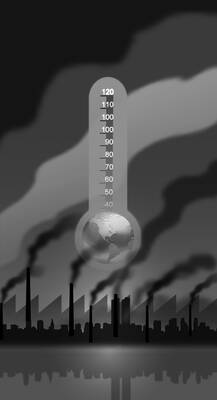
The closure of the Strait of Hormuz has sent the vast Asian chemicals industry into a tailspin. Deprived of the likes of Qatari natural gas and Saudi Arabian oil, the region’s fertilizer and plastics plants are slowing production or even shutting down. Everywhere except China, that is. In petrochemicals, China is unique. As well as a traditional industry that uses oil and gas as feedstock, it has parallel output that relies on its abundant domestic coal. Unsurprisingly, India and other regional powers want to copy and paste the Chinese method. This would not be easy — or climate friendly. The
Indonesian President Prabowo Subianto says he knows how to fix the problems facing Indonesia. Yet his economic mismanagement and authoritarian tendencies are steering the nation toward a familiar mix of currency instability and political chaos. The world’s fourth-most populous nation risks reversing the hard-won democratic and business reforms that came after the Asian Financial Crisis in 1997. At that time, the rupiah collapsed and the political upheaval that followed forced former president Haji Mohamed Suharto from power. Prabowo’s administration is ignoring similar warning signs. That disconnect was apparent in a national address on Wednesday, when Prabowo projected the swagger that has
“Of course you can choose not to be Taiwanese, just do not stay here,” chairwoman of Taipei 101 operator Taipei Financial Center Corp Janet Chia (賈永婕) said in an online interview with local entertainer Tai Chih-yuan (邰智源), triggering intense discussion on social media, with politicians across party lines weighing in. In the interview, which was aired on May 14, Chia and Tai’s discussion over a meal in Taipei 101 covered Chia’s career change from entertainer to chairwoman and US climber Alex Honnold’s free solo climb up the Taipei 101 building. During the interview, Chia said, “Being on this land, we


 RSS
RSS