


The Chinese Communist Party meets next week to map a five-year vision that prioritizes high-tech manufacturing in its quest to upgrade its sprawling industries and project global power as its rivalry with the US intensifies, analysts say.
Known as a plenum, the meeting is also likely to pledge strong measures to lift household consumption and curb deep, historical supply-demand imbalances that threaten long-term growth in the world’s second-largest economy.
The two goals are decades old and pull in opposite directions, a policy challenge that has become acute now with US-China tensions worsening, making it hard for Beijing to pivot to demand-side policies, analysts say.
Industrial prowess demands channeling state resources to producers, while boosting consumption requires funds be redirected to households, leaving less for business and government investment.
China’s growth over the past decade was driven by the pursuit of the first goal at the expense of the second, but this is now fanning deflationary pressures and creating unsustainable debt.
The intensifying rivalry between the US and China, underlined by US President Donald Trump’s renewed threats of triple-digit tariffs, has complicated matters for policymakers in Beijing, analysts say.
It is a choice to prioritize great power competition over the compelling need to address domestic growth imbalances.
China’s next five-year plan, the closely watched policy document that the plenum is to produce for parliamentary approval in March next year, would “definitely emphasize, and re-emphasize, support for high-tech research and industrial development,” said Chen Bo (陳波), senior research fellow at the National University of Singapore’s East Asian Institute.
“In terms of a country’s hard power, manufacturing is still a top priority,” Chen said. “When conflict arises, what ultimately matters is manufacturing, not services.”
A speech by Chinese President Xi Jinping (習近平) published by the Chinese Communist Party magazine Qiushi in July said that the world was going through changes not seen in a century, which made “technological revolution and major-country competition increasingly intertwined.”
Xi called on the nation to secure the “strategic high ground” in the global technology race.
China now leads in industries such as electric vehicles, solar and wind power, and is leveraging its dominance of rare earths production with export controls before potential trade talks between Trump and Xi later this month.
Apart from a few high-end sectors, such as aircraft or advanced semiconductors, its supply chains are largely domestic.
With the West aiming to reindustrialize and rearm after Russia’s invasion of Ukraine, and amid growing tensions over Taiwan and the South China Sea, the stakes are too high for Beijing to even contemplate slowing down on that front.
“If you do not develop high-end industries, you will be subject to others in the future,” said Guo Tianyong (郭田勇), professor at the Central University of Finance and Economics in Beijing, adding that China needs a better policy balance.
Morgan Stanley analysts said they expect post-plenum statements to deliver a “tech and supply-driven framework, with incremental focus on social welfare.”
Consequently, “decisive reflation remains elusive in 2026,” they added.
Beneath the envy-worthy headline growth, the past five-year cycle has been anything but smooth sailing for the economy — factory gate deflation is becoming entrenched, adding to a property crisis, a municipal debt scare, endemic industrial overcapacity and record youth unemployment.
A generation who studied for highly skilled and well-paid service-sector jobs, which a consumption-driven growth model had better chances of creating, faces limited opportunities.
“If you only rely on external demand and domestic demand is not working, then you will have unemployment problems and also deflation,” said Larry Hu (胡偉俊), chief China economist at Macquarie. “If it continues like this for one or two years, it’s still okay, but in the long run, it will definitely be a problem.”
Hu expects China to get serious about stimulating consumption if and when external demand shrinks enough to threaten growth targets.
The 2026-2030 blueprint would be China’s 15th five-year plan since it adopted Soviet-style policy formulation cycles in the 1950s.
Analysts say China can muddle along with its contradictory goals by tilting industrial support toward tech research and away from capacity expansion, while gradually building on its incipient efforts to strengthen the welfare system.
Over the past year, Beijing has rolled out consumer goods subsidies, childcare benefits and small pension increases. A court ruling that makes social insurance contributions mandatory for both employers and workers lays the groundwork for stronger welfare over the longer term.
One policy adviser, asking for anonymity to discuss sensitive topics, said benefits would likely rise further in the next five years, with lower pensions increasing faster than higher ones, but improvements “won’t be particularly substantial,” even though “everyone recognizes the issue of insufficient demand,” adding that the small social security budget and tight local government finances limit policy options.
After the property sector’s downturn, the adviser added: “We are unable to find new demand drivers.”
Dan Wang (王丹), China director at Eurasia Group, expects the five-year plan to “focus more on people’s livelihood, including social security, healthcare systems, and possibly more support and protection for low-income groups,” but such language should “absolutely not” be read as a paradigm shift.
“In a now very typical Marxist country, it’s all about production,” Wang said.
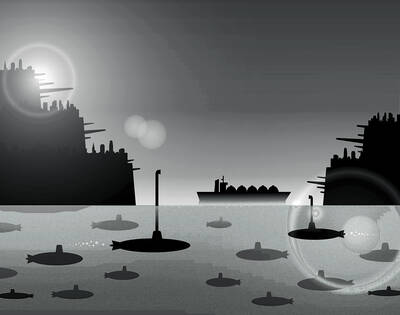
In the event of a war with China, Taiwan has some surprisingly tough defenses that could make it as difficult to tackle as a porcupine: A shoreline dotted with swamps, rocks and concrete barriers; conscription for all adult men; highways and airports that are built to double as hardened combat facilities. This porcupine has a soft underbelly, though, and the war in Iran is exposing it: energy. About 39,000 ships dock at Taiwan’s ports each year, more than the 30,000 that transit the Strait of Hormuz. About one-fifth of their inbound tonnage is coal, oil, refined fuels and liquefied natural gas (LNG),
To counter the CCP’s escalating threats, Taiwan must build a national consensus and demonstrate the capability and the will to fight. The Chinese Communist Party (CCP) often leans on a seductive mantra to soften its threats, such as “Chinese do not kill Chinese.” The slogan is designed to frame territorial conquest (annexation) as a domestic family matter. A look at the historical ledger reveals a different truth. For the CCP, being labeled “family” has never been a guarantee of safety; it has been the primary prerequisite for state-sanctioned slaughter. From the forced starvation of 150,000 civilians at the Siege of Changchun
The two major opposition parties, the Chinese Nationalist Party (KMT) and the Taiwan People’s Party (TPP), jointly announced on Tuesday last week that former TPP lawmaker Chang Chi-kai (張啟楷) would be their joint candidate for Chiayi mayor, following polling conducted earlier this month. It is the first case of blue-white (KMT-TPP) cooperation in selecting a joint candidate under an agreement signed by their chairpersons last month. KMT and TPP supporters have blamed their 2024 presidential election loss on failing to decide on a joint candidate, which ended in a dramatic breakdown with participants pointing fingers, calling polls unfair, sobbing and walking
In recent weeks, Taiwan has witnessed a surge of public anxiety over the possible introduction of Indian migrant workers. What began as a policy signal from the Ministry of Labor quickly escalated into a broader controversy. Petitions gathered thousands of signatures within days, political figures issued strong warnings, and social media became saturated with concerns about public safety and social stability. At first glance, this appears to be a straightforward policy question: Should Taiwan introduce Indian migrant workers or not? However, this framing is misleading. The current debate is not fundamentally about India. It is about Taiwan’s labor system, its


 RSS
RSS