


Last week, the Ministry of Education was found to be planning to allow three universities — which were permitted to admit government-funded postgraduate medical students under special provisions from 2022 to this year — to continue admitting self-funded medical students next year beyond the enrollment cap, which has not been changed in two decades.
The three universities are: National Tsing Hua University, National Chung Hsing University and National Sun Yat-sen University.
Eleven medical groups issued a statement to oppose the plan. The ministry responded by saying it did not intend to increase the admission quota, with the Executive Yuan saying that it has decided to maintain the total medical student enrollment quota at 1,300 per year.
The incident revealed that the Ministry of Health and Welfare has decided to halt its plan to provide a government-sponsored quota for medical students in some specialties after this academic year.
The purpose of the program was to address the uneven distribution of doctors across the country and different specialties.
The program should not be halted, so that medical needs in remote areas could be fulfilled, while the shortage of doctors in some specialties, including general medicine, surgery, obstetrics and gynecology, pediatrics, emergency medicine, and intensive care could be addressed. Why end the program after this academic year?
Most medical school graduates in Taiwan are not willing to dedicate themselves in those specialties. Many would rather pursue a career in specialties, such as cosmetic surgery, that are less stressful or do not require shift work. This is a clear result of the medical education system in our country failing to produce graduates willing to serve in those demanding specialties.
Now that the program designed to address shortages in those areas is to be ceased, it would mean that the nation’s medical schools could not enroll students who are willing to selflessly serve the public, while also being unable to produce graduates who are committed to rescuing lives.
What is the purpose of establishing medical schools? Do medical school professors and experts of the Taiwan Medical Accreditation Council live up to what they are expected of?
Lin Min-che is a surgeon.
Translated by Fion Khan
KMT Chairwoman Cheng Li-wun’s (鄭麗文) recent visit to Beijing and her upcoming visit to Washington will serve as a high-level test of her diplomatic mettle. In Beijing, Cheng was received with symbolic gestures, a warm reception, and high-level access. In Washington, she will receive far less pomp and far sharper questions about the KMT’s vision for the future of Taiwan. Her challenge will be to persuade Washington that the KMT’s engagement with China can coexist with strong deterrence. Cheng’s April 7-12 visit to mainland China coincided with an intense period of conflict in Iran. Despite the strategic significance of Cheng’s trip,
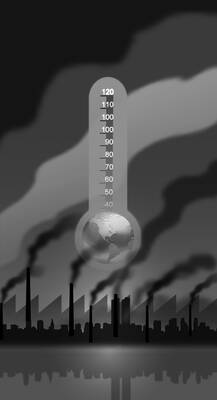
The closure of the Strait of Hormuz has sent the vast Asian chemicals industry into a tailspin. Deprived of the likes of Qatari natural gas and Saudi Arabian oil, the region’s fertilizer and plastics plants are slowing production or even shutting down. Everywhere except China, that is. In petrochemicals, China is unique. As well as a traditional industry that uses oil and gas as feedstock, it has parallel output that relies on its abundant domestic coal. Unsurprisingly, India and other regional powers want to copy and paste the Chinese method. This would not be easy — or climate friendly. The
Indonesian President Prabowo Subianto says he knows how to fix the problems facing Indonesia. Yet his economic mismanagement and authoritarian tendencies are steering the nation toward a familiar mix of currency instability and political chaos. The world’s fourth-most populous nation risks reversing the hard-won democratic and business reforms that came after the Asian Financial Crisis in 1997. At that time, the rupiah collapsed and the political upheaval that followed forced former president Haji Mohamed Suharto from power. Prabowo’s administration is ignoring similar warning signs. That disconnect was apparent in a national address on Wednesday, when Prabowo projected the swagger that has
“Of course you can choose not to be Taiwanese, just do not stay here,” chairwoman of Taipei 101 operator Taipei Financial Center Corp Janet Chia (賈永婕) said in an online interview with local entertainer Tai Chih-yuan (邰智源), triggering intense discussion on social media, with politicians across party lines weighing in. In the interview, which was aired on May 14, Chia and Tai’s discussion over a meal in Taipei 101 covered Chia’s career change from entertainer to chairwoman and US climber Alex Honnold’s free solo climb up the Taipei 101 building. During the interview, Chia said, “Being on this land, we


 RSS
RSS