


In his thoughtful op-ed “Protests are a symbol of national resilience” (May 1, page 8), Yu Ming (嶼明) offers a stirring defense of peaceful civil resistance as a cornerstone of Taiwan’s democratic strength. As someone who deeply values such freedoms, I agree with much of his sentiment — particularly the notion that protest is a vital democratic function, not a threat to national stability.
However, one line in his article gave me pause: “Even if [the Chinese Communist Party, CCP] managed to take over the [Taiwanese] government or paralyze the military, it would still have a hard time assuming control over such a deeply resilient society.”
That is a comforting thought, but in light of what has happened across the Taiwan Strait — in a territory once celebrated for its civic vibrancy — it is also a dangerously complacent one.
Not so long ago, Hong Kong too was hailed as a paragon of civic engagement. Its people marched peacefully and frequently in the streets, in their hundreds of thousands, sometimes millions. Protest culture was not just active — it was iconic. International observers praised Hong Kong’s rule of law, its judicial independence, its free press and its population’s commitment to order, reason and nonviolence.
Yet, despite all this resilience, Hong Kong fell — almost overnight. In July 2020, Beijing imposed the National Security Law without public consultation. On paper, the right to protest still exists, enshrined in the Basic Law, but in practice, it has become a right no one can exercise.
Every protest requires a “no-objection notice” from the police — a formality once routinely granted, but now routinely denied. Authorities delay approvals, impose conditions that cannot be met and place legal liability on applicants for any disorder, no matter how minor. Faced with such risks, organizers often withdraw their applications pre-emptively.
For high-profile dissidents, the strategy is even simpler: direct threats or even detention. No mass ban is ever declared — just a suffocating blanket of procedural control and fear.
Today, Hong Kong’s streets are quiet. Not because people stopped caring, but because the cost of caring became unbearable.
Many observers expected some resistance from those best positioned to push back: senior civil servants, respected judges, university deans and editors of major newspapers. After all, these were professionals who had been educated under the British legal system, who once upheld values of fairness, freedom and restraint.
Instead, what followed was not principled defiance, but willing compliance.
Judges began delivering harsh sentences with reasoning that mirrored Beijing’s rhetoric. Whenever political defendants were involved, prosecutors pursued appeals relentlessly — until guilty verdicts were secured. Officials enthusiastically enforced vague security provisions to shut down opposition parties, non-governmental organizations and independent media. School administrators purged libraries and curricula with chilling efficiency.
It was not just Beijing’s power that subdued Hong Kong — it was the eagerness of Hong Kong’s own pragmatic elites to adapt, cooperate and rationalize their silence.
Resignation in protest was rare. Taking a stand, rarer still.
That is what Taiwan must prepare for — not just the external threat of Chinese aggression, but the internal corrosion that sets in when people choose pragmatism over principle. The rot does not arrive all at once. It begins with quiet rationalizations: “Who am I to resist?” “I’m just doing my job.” “Someone else would do it anyway.”
Such sentiments are not born from malice, but from fear — and that fear is transformative: It shifts from fear of the consequences of defiance to fear of not complying enough.
Yu rightly points out that spontaneous protests in Taiwan demonstrate extraordinary civic strength. I have seen this myself and feel heartened every time ordinary Taiwanese take to the streets with order, clarity and unity.
However, it is not enough to assume that such civic muscle will automatically translate into long-term resistance. Protest movements need legal protection, institutional independence and most of all, a population unwilling to be co-opted by fear or comfort.
Democracies are not invulnerable by nature. They are upheld by daily, sometimes mundane, acts of courage — speaking the truth in a meeting, refusing to implement an unjust directive, resigning rather than compromising principle. When enough people stop doing those things, the democratic shell remains, but the substance disappears.
If Hong Kong taught us anything, it is that even a society steeped in protest can be silenced, that even judges trained in liberty can be turned into enforcers of repression, that even civil servants who once served under a free system can become its gravediggers.
So yes, Taiwan’s civil society is resilient — but resilience is not immunity. The only sure way to preserve democracy is this: Do not be taken over by the CCP.
Once that line is crossed, no amount of civic strength, protest culture or ideological conviction would matter. What happened in Hong Kong was not a failure of the public — it was the result of a system slowly suffocated from the top down, aided by those who saw more to gain by complying, or too little hope in resisting.
Taiwan’s only chance is to stand united and uncompromising against CCP encroachment — not with naivety, but with clarity, not with hope alone, but with strength.
Peace is not achieved by restraint. It only has a chance when the price of aggression is perceived as too high to bear.
John Cheng is a retired businessman from Hong Kong residing in Taiwan.
KMT Chairwoman Cheng Li-wun’s (鄭麗文) recent visit to Beijing and her upcoming visit to Washington will serve as a high-level test of her diplomatic mettle. In Beijing, Cheng was received with symbolic gestures, a warm reception, and high-level access. In Washington, she will receive far less pomp and far sharper questions about the KMT’s vision for the future of Taiwan. Her challenge will be to persuade Washington that the KMT’s engagement with China can coexist with strong deterrence. Cheng’s April 7-12 visit to mainland China coincided with an intense period of conflict in Iran. Despite the strategic significance of Cheng’s trip,
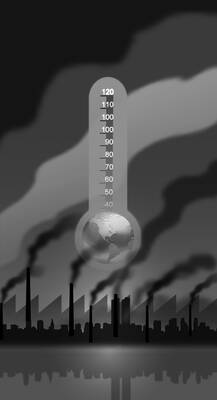
The closure of the Strait of Hormuz has sent the vast Asian chemicals industry into a tailspin. Deprived of the likes of Qatari natural gas and Saudi Arabian oil, the region’s fertilizer and plastics plants are slowing production or even shutting down. Everywhere except China, that is. In petrochemicals, China is unique. As well as a traditional industry that uses oil and gas as feedstock, it has parallel output that relies on its abundant domestic coal. Unsurprisingly, India and other regional powers want to copy and paste the Chinese method. This would not be easy — or climate friendly. The
Indonesian President Prabowo Subianto says he knows how to fix the problems facing Indonesia. Yet his economic mismanagement and authoritarian tendencies are steering the nation toward a familiar mix of currency instability and political chaos. The world’s fourth-most populous nation risks reversing the hard-won democratic and business reforms that came after the Asian Financial Crisis in 1997. At that time, the rupiah collapsed and the political upheaval that followed forced former president Haji Mohamed Suharto from power. Prabowo’s administration is ignoring similar warning signs. That disconnect was apparent in a national address on Wednesday, when Prabowo projected the swagger that has
“Of course you can choose not to be Taiwanese, just do not stay here,” chairwoman of Taipei 101 operator Taipei Financial Center Corp Janet Chia (賈永婕) said in an online interview with local entertainer Tai Chih-yuan (邰智源), triggering intense discussion on social media, with politicians across party lines weighing in. In the interview, which was aired on May 14, Chia and Tai’s discussion over a meal in Taipei 101 covered Chia’s career change from entertainer to chairwoman and US climber Alex Honnold’s free solo climb up the Taipei 101 building. During the interview, Chia said, “Being on this land, we


 RSS
RSS