


Addressing the ongoing crisis of overcrowded emergency rooms (ER), the government has proposed new measures, including plans to separate ER nursing fees from ER consultation according to triage classification, introduce a handbook advising people on where to seek medical service and improve inpatient bed and staff allocation to address resource shortages.
The government is expected to allocate NT$3 billion (US$ 91.4 million) annually to implement the new measures. However, if the budget comes from the National Health Insurance (NHI) program’s funding pool instead of additional subsidies, it is like patching one hole with another.
If the NHI program’s funding does not expand, increasing ER fees would just mean using resources from other sectors, which would only reduce the quality of medical care and increase the burdon on staff.
Healthcare workers in Taiwan already have low salaries and long working hours. Their salaries do not keep up with inflation, and their workloads are increasing.
If the government wants to address the ER crisis, it should face up to the labor shortage, instead of covering up the problem with financial adjustments.
To address the labor shortage, the government should increase staff numbers and improve their pay. So far it has only responded with “flexible adjustment of beds and medical staff allocation.” In fact, resources in the industry were exhausted long ago.
The so-called “flexible adjustment” just means further exploiting frontline medical staff. It would mean lowering service quality and endangering patients.
Workforce shortages have forced many hospitals to close medical wards, giving rise to the ER crisis. There is no use adding more beds if the shortage of medical workers is not addressed.
The government must improve the pay and conditions of healthcare workers, and reduce their workload. The problem would not be solved simply by adjustments.
To reduce the burden on medical centers, the government said it would release a handbook to inform people when it is appropriate to seek medical services.
The public indeed understands the hierarchy of medical care, but what they lack are effective incentives and restrictions. This is why people often seek medical services at large hospitals regardless of their condition.
The handbook scheme would be ineffective without also implementing restrictions. The solution should be to reform the NHI payment system — raising the copayment rate for those who seek medical services at medical centers or ERs without a referral, and discontinuing the provision of services for people with mild conditions at medical centers.
The biggest problem for Taiwan’s medical industry is that hospital revenue depends on government budget allocations as part of the NHI’s global budget payment system, instead of market mechanisms.
If the budget remains unchanged, hospitals would have to provide more services just to maintain their revenue, increasing the workload of medical staff.
Instead, the government should incrementally put an end to the NHI’s global budget payment system and adopt a flexible payment system to allow medical institutions to provide self-pay services within a reasonable range outside the NHI. This would ensure the sustainable use of medical resources.
Without systematic reform, the predicament of Taiwan’s medical industry would only worsen. High turnover rates and worker shortages would become aggravated, plunging the medical system into deeper crisis.
Lu Chun-wei is a dermatologist and assistant professor at Chang Gung Memorial Hospital.
Translated by Fion Khan
KMT Chairwoman Cheng Li-wun’s (鄭麗文) recent visit to Beijing and her upcoming visit to Washington will serve as a high-level test of her diplomatic mettle. In Beijing, Cheng was received with symbolic gestures, a warm reception, and high-level access. In Washington, she will receive far less pomp and far sharper questions about the KMT’s vision for the future of Taiwan. Her challenge will be to persuade Washington that the KMT’s engagement with China can coexist with strong deterrence. Cheng’s April 7-12 visit to mainland China coincided with an intense period of conflict in Iran. Despite the strategic significance of Cheng’s trip,
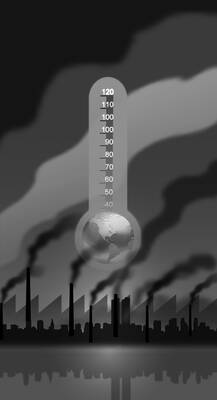
The closure of the Strait of Hormuz has sent the vast Asian chemicals industry into a tailspin. Deprived of the likes of Qatari natural gas and Saudi Arabian oil, the region’s fertilizer and plastics plants are slowing production or even shutting down. Everywhere except China, that is. In petrochemicals, China is unique. As well as a traditional industry that uses oil and gas as feedstock, it has parallel output that relies on its abundant domestic coal. Unsurprisingly, India and other regional powers want to copy and paste the Chinese method. This would not be easy — or climate friendly. The
Indonesian President Prabowo Subianto says he knows how to fix the problems facing Indonesia. Yet his economic mismanagement and authoritarian tendencies are steering the nation toward a familiar mix of currency instability and political chaos. The world’s fourth-most populous nation risks reversing the hard-won democratic and business reforms that came after the Asian Financial Crisis in 1997. At that time, the rupiah collapsed and the political upheaval that followed forced former president Haji Mohamed Suharto from power. Prabowo’s administration is ignoring similar warning signs. That disconnect was apparent in a national address on Wednesday, when Prabowo projected the swagger that has
“Of course you can choose not to be Taiwanese, just do not stay here,” chairwoman of Taipei 101 operator Taipei Financial Center Corp Janet Chia (賈永婕) said in an online interview with local entertainer Tai Chih-yuan (邰智源), triggering intense discussion on social media, with politicians across party lines weighing in. In the interview, which was aired on May 14, Chia and Tai’s discussion over a meal in Taipei 101 covered Chia’s career change from entertainer to chairwoman and US climber Alex Honnold’s free solo climb up the Taipei 101 building. During the interview, Chia said, “Being on this land, we


 RSS
RSS