


When Chinese students visiting Taiwan at the invitation of the Ma Ying-jeou Foundation arrived at National Taiwan University’s (NTU) College of Social Sciences, they were met by protesting students holding cardboard signs and books.
The NTU students were eager to have exchanges on freedom, democracy, and human rights with the tour group. They wished to discuss issues on Xinjiang, Hong Kong, gender equality, the Tiananmen Square Massacre, freedom of speech and Taiwan’s sovereignty with them. However, it was a shame that the Chinese students left in a hurry. None of them dared to stop by for an “exchange.”
The Chinese students were welcomed by students and teachers in their previous school stops as if they were superstars. They were praised for their accomplishments. What Taiwan got in return was being mocked by one of the Chinese students. A student from China’s Fudan University on Sunday said the tour group “would like to congratulate the China Taipei team on their win” in the Premier12 baseball championship in Tokyo last month.
Videos of Olympic gold medalist Ma Long (馬龍), surrounded by students at the Taipei Municipal Zhong Shan Girls’ High School, went viral on Chinese social media platforms. Chinese news media and social media platforms described it as Ma entering a “gossamer cave” (盤絲洞), in which she-devils (actually spiders) tried to seduce and eat the Buddhist master Tripitaka (唐三藏) in the Chinese classic Journey to the West (西遊記). It is shameful that the young students were compared to spider-demon seductresses.
What the NTU students did was impressive. Getting straight to the point, they asked the tour group if the Chinese government values freedom, democracy and human rights. This is something that the students cannot hear about in China because the Chinese Communist Party (CCP) has indoctrinated them on “the greatness of the motherland.” Chinese students only hear CCP propaganda about the government’s accomplishments, from basic infrastructure to space development, and China’s superiority.
The CCP government would not show the dark side of reality. Chinese students would not know what an election is. How could China call itself a “republic”? Chinese students were taught about how authoritarian and corrupt the Chinese Nationalist Party (KMT) was when it ruled China, that former president Chiang Kai-shek (蔣介石) was called “the people’s enemy,” and that Taiwan belongs to China.
However, they were not told how Taiwanese see the CCP’s barbaric actions. Without freedom, democracy and human rights, the achievements of the country and the people would be meaningless.
Former president Ma Ying-jeou (馬英九) should have taken the tour group to the National Revolutionary Martyrs’ Shrine and the Cihu Mausoleum to let them get a feeling of the national flag and the honor guard of the Republic of China (ROC).
But Ma would probably not dare to do so. When Chinese envoy Chen Yun-lin (陳雲林) visited Taiwan when Ma was president, police were ordered to forcefully remove ROC flags.
I am very proud of the NTU students’ demonstration of moral courage. They are the role models of what NTU students should be like.
Teng Hon-yuan is a university professor.
Translated by Fion Khan
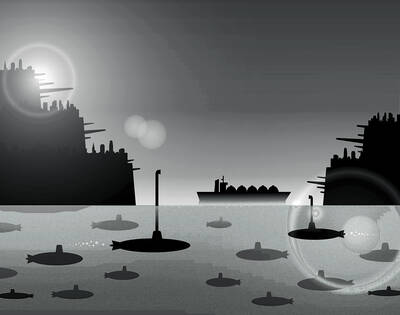
In the event of a war with China, Taiwan has some surprisingly tough defenses that could make it as difficult to tackle as a porcupine: A shoreline dotted with swamps, rocks and concrete barriers; conscription for all adult men; highways and airports that are built to double as hardened combat facilities. This porcupine has a soft underbelly, though, and the war in Iran is exposing it: energy. About 39,000 ships dock at Taiwan’s ports each year, more than the 30,000 that transit the Strait of Hormuz. About one-fifth of their inbound tonnage is coal, oil, refined fuels and liquefied natural gas (LNG),
To counter the CCP’s escalating threats, Taiwan must build a national consensus and demonstrate the capability and the will to fight. The Chinese Communist Party (CCP) often leans on a seductive mantra to soften its threats, such as “Chinese do not kill Chinese.” The slogan is designed to frame territorial conquest (annexation) as a domestic family matter. A look at the historical ledger reveals a different truth. For the CCP, being labeled “family” has never been a guarantee of safety; it has been the primary prerequisite for state-sanctioned slaughter. From the forced starvation of 150,000 civilians at the Siege of Changchun
The two major opposition parties, the Chinese Nationalist Party (KMT) and the Taiwan People’s Party (TPP), jointly announced on Tuesday last week that former TPP lawmaker Chang Chi-kai (張啟楷) would be their joint candidate for Chiayi mayor, following polling conducted earlier this month. It is the first case of blue-white (KMT-TPP) cooperation in selecting a joint candidate under an agreement signed by their chairpersons last month. KMT and TPP supporters have blamed their 2024 presidential election loss on failing to decide on a joint candidate, which ended in a dramatic breakdown with participants pointing fingers, calling polls unfair, sobbing and walking
In the opening remarks of her meeting with Chinese President Xi Jinping (習近平) in the Great Hall of the People in Beijing on Friday, Chinese Nationalist Party (KMT) Chairwoman Cheng Li-wun (鄭麗文) framed her visit as a historic occasion. In his own remarks, Xi had also emphasized the history of the relationship between the KMT and the Chinese Communist Party (CCP). Where they differed was that Cheng’s account, while flawed by its omissions, at least partially corresponded to reality. The meeting was certainly historic, albeit not in the way that Cheng and Xi were signaling, and not from the perspective


 RSS
RSS