


Chinese Nationalist Party (KMT) Legislator Chen Hsueh-sheng (陳雪生) proposed amendments to allow the government, political parties and the military to indirectly invest in broadcast media.
The Radio and Television Act (廣播電視法), as well as the cable and satellite-specific versions of that act, each specify that politicians, the government and organizations affiliated with the government are not permitted to invest in the media.
Chen argued that indirect investments in broadcast media by the government and politicians should be permitted to allow “the media industry the opportunity to grow and prosper,” if those investments do not exceed 10 percent of a company’s value.
Yet as Taiwan Forever Association chairman and lawyer Huang Di-ying (黃帝穎) said, “holding 10 percent of a large firm could give a shareholder the power to influence its operation.”
Arguably, journalists at a media company partially owned by a politician or party would practice self-censorship, avoiding statements critical of that party.
However, even when the owners of a media company are not directly employed in politics, those owners could influence reporting and, by extension, politics. An article by the Journal of Politics at the University of Hamburg says that business magnate Rupert Murdoch, who owns various media companies in the US, has “exceptional political access.” In European countries including Turkey, Hungary and Italy, wealthy businesspeople have acquired media companies due to their relationships with those countries’ leaders. Leaders leverage those relationships to impact reporting about their administrations.
The issue is further complicated by the growing popularity of social media. An increasing number of people get their news from social media platforms, and those platforms are easier to acquire, have a wider reach, and are generally less regulated than broadcast media.
During his time in office, former US president Donald Trump was banned from Twitter, now X, for allegedly inciting violence. The platform has over 100 million users in the US alone. By banning Trump, it arguably could have impacted political views among the US public and potentially impacted the outcome of subsequent elections.
Billionaire founder of Tesla and SpaceX Elon Musk later bought the platform and renamed it X, before reinstating access for Trump and others. However, Musk has been subject to criticism since his takeover of the platform for, among other things, eliminating rules banning hate speech and disinformation.
Taiwan also has its own example of a wealthy media company owner very publicly supporting a political election candidate. In the lead-up to the 2020 presidential election, CTi News was fined after it dedicated more than 70 percent of its election coverage to then-KMT candidate Legislative Speaker Han Kuo-yu (韓國瑜). CTi News, which has since had its license revoked, is owned by Want Want China Times Media Group founder Tsai Eng-meng (蔡衍明), who has publicly stated that he “cannot wait for unification” of Taiwan with China.
Political researcher Bill Sharp wrote in an editorial titled “A wolf stalks democratic Taiwan” on April 19, 2020, that Taiwan should establish a centralized regulatory organization, break up consolidation of media organizations, and create an enforceable media ethics code.
Since the end of martial law, Taiwan has become a “media free-for-all” susceptible to Chinese infiltration, and thus needs stricter regulation of broadcast, print and social media, he wrote.
Rather, the scope of existing laws should be expanded to more closely monitor and regulate journalistic ethics and better prevent the dissemination of disinformation. Greater transparency is also needed to ensure the public knows who is funding reporting.
A gap appears to be emerging between Washington’s foreign policy elites and the broader American public on how the United States should respond to China’s rise. From my vantage working at a think tank in Washington, DC, and through regular travel around the United States, I increasingly experience two distinct discussions. This divergence — between America’s elite hawkishness and public caution — may become one of the least appreciated and most consequential external factors influencing Taiwan’s security environment in the years ahead. Within the American policy community, the dominant view of China has grown unmistakably tough. Many members of Congress, as
The shifting geopolitical tectonic plates of this year have placed Beijing in a profound strategic dilemma. As Chinese President Xi Jinping (習近平) prepares for a high-stakes summit with US President Donald Trump, the traditional power dynamics of the China-Japan-US triangle have been destabilized by the diplomatic success of Japanese Prime Minister Sanae Takaichi in Washington. For the Chinese leadership, the anxiety is two-fold: There is a visceral fear of being encircled by a hardened security alliance, and a secondary risk of being left in a vulnerable position by a transactional deal between Washington and Tokyo that might inadvertently empower Japan
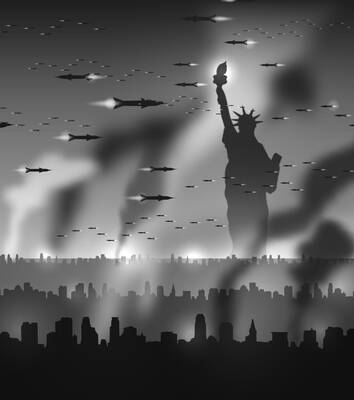
After declaring Iran’s military “gone,” US President Donald Trump appealed to the UK, France, Japan and South Korea — as well as China, Iran’s strategic partner — to send minesweepers and naval forces to reopen the Strait of Hormuz. When allies balked, the request turned into a warning: NATO would face “a very bad” future if it refused. The prevailing wisdom is that Trump faces a credibility problem: having spent years insulting allies, he finds they would not rally when he needs them. That is true, but superficial, as though a structural collapse could be caused by wounded feelings. Something
Former Taipei mayor and Taiwan People’s Party (TPP) founding chairman Ko Wen-je (柯文哲) was sentenced to 17 years in prison on Thursday, making headlines across major media. However, another case linked to the TPP — the indictment of Chinese immigrant Xu Chunying (徐春鶯) for alleged violations of the Anti-Infiltration Act (反滲透法) on Tuesday — has also stirred up heated discussions. Born in Shanghai, Xu became a resident of Taiwan through marriage in 1993. Currently the director of the Taiwan New Immigrant Development Association, she was elected to serve as legislator-at-large for the TPP in 2023, but was later charged with involvement


 RSS
RSS