


As deadly as the COVID-19 pandemic was, the next one could be more nightmarish. Powerful new artificial intelligence (AI) models, combined with novel lab tools, could soon enable rogue scientists or states to engineer a pathogen that would spread faster, resist vaccines better and kill more people than COVID-19 did. Governments, technology companies and scientific researchers should act now to lower the risk.
Nature has always had the ability to concoct nasty pathogens, from the plague to the Spanish Flu. For many decades, so have humans: The Japanese conducted brutal biological warfare experiments in World War II, and the US and the Soviet Union stockpiled toxins during the Cold War, with the latter’s program continuing even after signing the Biological Weapons Convention in 1972. The Pentagon thinks Russia and North Korea continue to develop bioweapons.
However, such efforts have traditionally been limited by the number of scientists trained to conduct the necessary research and the tools available for producing and distributing effective weapons. Technology is breaking down both barriers.
Large language models (LLMs) such as OpenAI Inc’s ChatGPT can synthesize vast amounts of knowledge rapidly: In one experiment, a chatbot advised a group of Massachusetts Institute of Technology students about how to engineer four potentially deadly pathogens and where to procure the necessary DNA without detection — in an hour.
More specific AI programs trained on biological data, known as biological design tools, are even more powerful. Over time, such programs could speed the development of entirely new pathogens with deadly properties, perhaps even the ability to target specific populations. Emerging technologies — from “benchtop” synthesizers that would allow individual researchers to create their own strands of DNA, to so-called cloud labs where experiments can be conducted remotely using robots and automated instruments — would lower other hurdles to testing and producing potential weapons.
It is worth noting that the barriers to producing and distributing a workable weapon remain quite high. However, scientists say that could change in a few years, given how fast all these technologies are progressing. The time to act is now, before they reach maturity. A series of interventions would help.
Begin with the AI models. Some US developers of the most powerful LLMs are voluntarily submitting them to the government for further evaluation. That is welcome, but more scrutiny might be warranted for the riskiest models — those trained on sensitive biological data. Congress should work with AI developers and scientists to develop criteria for which models might require formal screening and what guardrails could be included in those found to pose the highest risks. While legislators should stay narrowly focused for now, stricter oversight might be warranted as the technology progresses.
The next task is to prevent any AI-designed viruses from entering the real world. Providers of synthetic nucleic acids should be required to know their customers and screen orders for suspicious DNA sequences. All requests should be logged, so new pathogens can be traced back if they are released into the wild. Controls should also be built into benchtop synthesizers, while cloud labs should scrutinize customers and requests. Risky experiments should always have a human in the loop.
The US should press other countries to adopt similar safeguards, so rogue actors cannot simply seek out less scrupulous providers elsewhere. If the Biological Weapons Convention cannot be toughened, because of diplomatic frictions, like-minded countries should at least agree on a set of best practices, as they have begun to do with AI.
Above all, countries ought to harden their pandemic defenses so that anyone who manages to exploit loopholes in the system cannot cause extensive damage. AI itself could boost the ability of governments to detect the emergence of new pathogens, not to mention speed the development of vaccines, and the production and distribution of personal protective equipment. Stronger public health systems are critical, whether new viruses are produced by terrorists, rogue states, accidents or nature.
COVID-19 exposed huge gaps in those defenses, too many of which remain unfilled. Governments have every incentive to head off this new threat while there is still time.
The Editorial Board publishes the views of the editors across a range of national and global affairs.
A gap appears to be emerging between Washington’s foreign policy elites and the broader American public on how the United States should respond to China’s rise. From my vantage working at a think tank in Washington, DC, and through regular travel around the United States, I increasingly experience two distinct discussions. This divergence — between America’s elite hawkishness and public caution — may become one of the least appreciated and most consequential external factors influencing Taiwan’s security environment in the years ahead. Within the American policy community, the dominant view of China has grown unmistakably tough. Many members of Congress, as
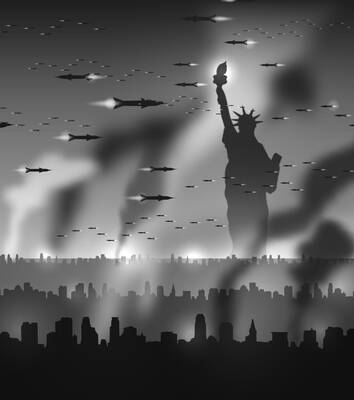
After declaring Iran’s military “gone,” US President Donald Trump appealed to the UK, France, Japan and South Korea — as well as China, Iran’s strategic partner — to send minesweepers and naval forces to reopen the Strait of Hormuz. When allies balked, the request turned into a warning: NATO would face “a very bad” future if it refused. The prevailing wisdom is that Trump faces a credibility problem: having spent years insulting allies, he finds they would not rally when he needs them. That is true, but superficial, as though a structural collapse could be caused by wounded feelings. Something
Former Taipei mayor and Taiwan People’s Party (TPP) founding chairman Ko Wen-je (柯文哲) was sentenced to 17 years in prison on Thursday, making headlines across major media. However, another case linked to the TPP — the indictment of Chinese immigrant Xu Chunying (徐春鶯) for alleged violations of the Anti-Infiltration Act (反滲透法) on Tuesday — has also stirred up heated discussions. Born in Shanghai, Xu became a resident of Taiwan through marriage in 1993. Currently the director of the Taiwan New Immigrant Development Association, she was elected to serve as legislator-at-large for the TPP in 2023, but was later charged with involvement
Out of 64 participating universities in this year’s Stars Program — through which schools directly recommend their top students to universities for admission — only 19 filled their admissions quotas. There were 922 vacancies, down more than 200 from last year; top universities had 37 unfilled places, 40 fewer than last year. The original purpose of the Stars Program was to expand admissions to a wider range of students. However, certain departments at elite universities that failed to meet their admissions quotas are not improving. Vacancies at top universities are linked to students’ program preferences on their applications, but inappropriate admission


 RSS
RSS