


A New Taipei City police officer was killed by a car while performing patrol duties in the middle of last month. As it was recognized as “death while on duty,” the compensation for his family is NT$7 million (US$213,304) less than it would have been for a “death from performing duties.”
Several Chinese Nationalist Party (KMT) legislators have expressed concern about the standard for “death while on duty.”
Given that police protect people regardless of political affiliation, the Democratic Progressive Party (DPP) should also take the initiative to show concern over the issue.
The biggest problem lies in the definitions of police who die while on duty and those who die from performing duties, because the distinction affects how much compensation the families receive.
For a police officer who dies on duty, compensation for the family is 180 months of salary, while for an officer who dies from performing duties, compensation is up to 240 months of salary. This is a huge difference.
Without follow-up media reports, people are likely to forget this issue quickly, but the family of the deceased officer must go on after losing their major means of financial support.
The issue of the disparity in compensation has been around for a long time. When a situation like what happened last month arises, it generates public anger, while politicians raise a hue and cry to seek greater compensation for the family to attract votes.
However, the issue is forgotten soon after the storm passes.
Due to close media attention, National Police Agency (NPA) Director-General Chang Jung-hsin (張榮興) said that the rules allow compensation of up to NT$20 million and that the agency is seeking to amend the regulations to raise the maximum so that the family of a police officer who dies while on duty would be eligible for up to NT$30 million.
The NPA said that it has submitted a draft amendment to the Ministry of the Interior and the Cabinet is reviewing it.
The media should pay attention to the situation to ensure that the NPA revises the rules to make them fairer. That would ensure that families of police officers who die while on duty can continue to live normally and their children are able to receive an education and grow up healthy.
Knight Chang is a political worker.
Translated by Eddy Chang
KMT Chairwoman Cheng Li-wun’s (鄭麗文) recent visit to Beijing and her upcoming visit to Washington will serve as a high-level test of her diplomatic mettle. In Beijing, Cheng was received with symbolic gestures, a warm reception, and high-level access. In Washington, she will receive far less pomp and far sharper questions about the KMT’s vision for the future of Taiwan. Her challenge will be to persuade Washington that the KMT’s engagement with China can coexist with strong deterrence. Cheng’s April 7-12 visit to mainland China coincided with an intense period of conflict in Iran. Despite the strategic significance of Cheng’s trip,
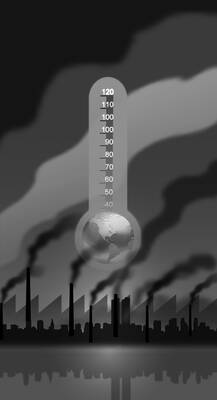
The closure of the Strait of Hormuz has sent the vast Asian chemicals industry into a tailspin. Deprived of the likes of Qatari natural gas and Saudi Arabian oil, the region’s fertilizer and plastics plants are slowing production or even shutting down. Everywhere except China, that is. In petrochemicals, China is unique. As well as a traditional industry that uses oil and gas as feedstock, it has parallel output that relies on its abundant domestic coal. Unsurprisingly, India and other regional powers want to copy and paste the Chinese method. This would not be easy — or climate friendly. The
Indonesian President Prabowo Subianto says he knows how to fix the problems facing Indonesia. Yet his economic mismanagement and authoritarian tendencies are steering the nation toward a familiar mix of currency instability and political chaos. The world’s fourth-most populous nation risks reversing the hard-won democratic and business reforms that came after the Asian Financial Crisis in 1997. At that time, the rupiah collapsed and the political upheaval that followed forced former president Haji Mohamed Suharto from power. Prabowo’s administration is ignoring similar warning signs. That disconnect was apparent in a national address on Wednesday, when Prabowo projected the swagger that has
“Of course you can choose not to be Taiwanese, just do not stay here,” chairwoman of Taipei 101 operator Taipei Financial Center Corp Janet Chia (賈永婕) said in an online interview with local entertainer Tai Chih-yuan (邰智源), triggering intense discussion on social media, with politicians across party lines weighing in. In the interview, which was aired on May 14, Chia and Tai’s discussion over a meal in Taipei 101 covered Chia’s career change from entertainer to chairwoman and US climber Alex Honnold’s free solo climb up the Taipei 101 building. During the interview, Chia said, “Being on this land, we


 RSS
RSS