


Last month, Kung Tung St Joseph Technical Senior High School celebrated the Ministry of Education removing the Taitung County vocational school from a two-year watch list, after liquidating real-estate assets, receiving donations from philanthropists and gaining government support, with the school pledging to provide better educational resources and cultivate more technical and vocational talent.
The school, which has been open for more than six decades, is famous for its carpentry program and is one of the few of its kind with a master-apprenticeship system. However, due to declining student enrollment and a worsening financial situation, the ministry placed it on the watch list in April last year, making it one of a few private high schools to face potential closure as the nation grapples with a declining birthrate.
Its turnaround is good news for the school founded by Father Hilber Jakob of the Bethlehem Mission Society in 1960, with its continued operations to benefit students in the Taitung area. However, fundamental problems such as falling student numbers and shifting market demand remain.
While surveys over the past few years have shown that a low birthrate is a major factor behind the drop in the number of high school students nationwide, enrollment numbers at vocational high schools have fallen below those of traditional high schools since 2020. That shows that society still values academic credentials over practical skills and that students prefer to attend regular high schools rather than vocational ones.
If the situation continues, Taiwan might one day face a serious shortage of skilled workers to repair vehicles, maintain appliances, or perform plumbing and electrical work. Does Taiwan need to find migrant workers to do these things? Absolutely not, as all kinds of homegrown technical workers — such as technicians and associate professionals, and craft and trade workers, as well as plant and machine operators — are necessary for routine tasks and play a critical role in the nation’s long-term development, socially and economically.
In an interview with the Liberty Times (the sister paper of the Taipei Times) published on Saturday, Minister of Education Cheng Ying-yao (鄭英耀) said the vocational school system must shift to focus on practical skills instead of academic credentials, while a deep-rooted cultural norm of paying workers with higher educational degrees more than those with better practical skills must change.
Misguided educational reforms have led to the dire situation of the vocational high school system, in which 90 percent of its graduates face pressure to study at a university or a college, when they should be preparing to enter the workforce, Cheng said.
The government has in the past few years worked to enhance vocational education equipment and resources to keep up with the nation’s industrial development, enrich the practical experience of vocational teachers, introduce more professionals into the vocational education system and help improve the management of private vocational schools.
However, major difficulties for vocational education, apart from families’ overemphasizing academic success, come from local industries, which face growing demand for intelligent manufacturing and digital transformation, for climate change and carbon reduction, and for people’s different lifestyle needs. Vocational education is at a turning point as the demand for talent continues to change.
People generally know a lack of skilled workers poses a critical problem to the nation, as poll results show that more people are acknowledging the issue. How to create an environment that is conducive for this to happen sooner than later deserves more discussion and effective collaboration among government agencies, local industries, labor groups and education institutions.
KMT Chairwoman Cheng Li-wun’s (鄭麗文) recent visit to Beijing and her upcoming visit to Washington will serve as a high-level test of her diplomatic mettle. In Beijing, Cheng was received with symbolic gestures, a warm reception, and high-level access. In Washington, she will receive far less pomp and far sharper questions about the KMT’s vision for the future of Taiwan. Her challenge will be to persuade Washington that the KMT’s engagement with China can coexist with strong deterrence. Cheng’s April 7-12 visit to mainland China coincided with an intense period of conflict in Iran. Despite the strategic significance of Cheng’s trip,
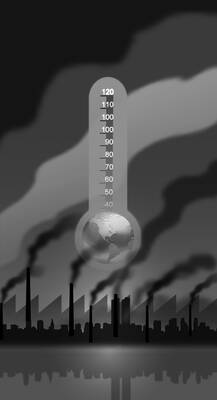
The closure of the Strait of Hormuz has sent the vast Asian chemicals industry into a tailspin. Deprived of the likes of Qatari natural gas and Saudi Arabian oil, the region’s fertilizer and plastics plants are slowing production or even shutting down. Everywhere except China, that is. In petrochemicals, China is unique. As well as a traditional industry that uses oil and gas as feedstock, it has parallel output that relies on its abundant domestic coal. Unsurprisingly, India and other regional powers want to copy and paste the Chinese method. This would not be easy — or climate friendly. The
Indonesian President Prabowo Subianto says he knows how to fix the problems facing Indonesia. Yet his economic mismanagement and authoritarian tendencies are steering the nation toward a familiar mix of currency instability and political chaos. The world’s fourth-most populous nation risks reversing the hard-won democratic and business reforms that came after the Asian Financial Crisis in 1997. At that time, the rupiah collapsed and the political upheaval that followed forced former president Haji Mohamed Suharto from power. Prabowo’s administration is ignoring similar warning signs. That disconnect was apparent in a national address on Wednesday, when Prabowo projected the swagger that has
“Of course you can choose not to be Taiwanese, just do not stay here,” chairwoman of Taipei 101 operator Taipei Financial Center Corp Janet Chia (賈永婕) said in an online interview with local entertainer Tai Chih-yuan (邰智源), triggering intense discussion on social media, with politicians across party lines weighing in. In the interview, which was aired on May 14, Chia and Tai’s discussion over a meal in Taipei 101 covered Chia’s career change from entertainer to chairwoman and US climber Alex Honnold’s free solo climb up the Taipei 101 building. During the interview, Chia said, “Being on this land, we


 RSS
RSS