


Since the histrionic breakup of the planned “blue-white alliance,” polls have shown a massive drop in support for Taiwan People’s Party (TPP) Chairman and presidential candidate Ko Wen-je (柯文哲). To make up for his lost support, Ko has proposed that opposition parties form a coalition government to replace the Democratic Progressive Party (DPP), which would be an absolute nightmare for Taiwan.
The most recent example of a political alliance was between the DPP and Ko in 2018. With the DPP not nominating its own candidate and giving Ko its full support, he emerged triumphant as the mayor of Taipei.
However, Ko’s character soon drove personnel away from him. Former Straits Exchange Foundation secretary-general Yao Jen-to (姚人多), former DPP deputy secretary-general Sidney Lin (林鶴明), former minister without portfolio Lin Chin-chang (林錦昌), former New Party legislator Yao Li-ming (姚立明) and former deputy minister of labor Su Li-chung (蘇麗瓊) all left after Ko was voted in.
However, Ko said all those who left him were “jumping ship” as their political interests evaporated. To find fault with then-Taipei Agricultural Products Marketing (TAPM) general manager Wu Yin-ning (吳音寧), who had been appointed by the DPP, Ko colluded with the KMT, smearing Wu by accusing her of using “business promotion funds” to purchase 60 bottles of wine as a gift for the DPP’s Taipei office, having the Taipei Department of Legal Affairs investigate and audit the TAPM books, as well as inciting the Taipei City Market Administration Office to fabricate a scandal that Wu was sending leftovers to charity groups. All of this mudslinging was carried out with the aim of forcing Wu to resign.
Aside from the Grand Hyatt “blue-white alliance” horror show presided over by former president Ma Ying-jeou (馬英九), when the coalition had not yet been agreed upon, Ko made mind-boggling comments: He said he had been “duped” by KMT Chairman Eric Chu (朱立倫), that every KMT legislator-at-large seat came with a big, fat price tag, that the KMT was spending a staggering NT$2 billion to NT$10 billion (US$63.88 million to US$319.39 million) on its presidential campaign and vowed to “oversee the president” if elected.
If the TPP and KMT were to collaborate, there is a high possibility that Ko would do the same as when he was Taipei mayor: tyrannize the DPP. As Taipei did not see much improvement in the eight years Ko was in office, Taiwan would be in for the same fate if Ko were elected. Taiwan would bring destruction upon itself without China firing a single shot.
Ko’s campaign slogan “unite Taiwan, coalition government” is a joke. Ever since he entered the political arena, he has been sowing discord and ethnic division to increase his support base. He first said he was “deep green” to woo DPP supporters, and then flip-flopped to demonstrate his neutrality, finally offering Chinese spouse Xu Chunying (徐春鶯) a spot on the TPP’s legislator-at-large list to attract “deep blue” supporters.
The best way to assess a politician is not to listen to what they say, but to see if their actions match their words. For a wily, capricious politician such as Ko, who enjoys creating partisan division and using slander to cover up for his incompetence, perhaps “mudslinging and sowing division in Taiwan’’ is a better campaign slogan.
A TPP-KMT coalition government would be a political catastrophe. Supporters should cast their presidential, party and legislative ballots for the pro-Taiwan party. Only with a majority in the legislature will the elected president be free to push his vision and policies without restraint, with party politics fit for a Taiwanese democracy.
Robert Wang is a writer.
Translated by Rita Wang
A gap appears to be emerging between Washington’s foreign policy elites and the broader American public on how the United States should respond to China’s rise. From my vantage working at a think tank in Washington, DC, and through regular travel around the United States, I increasingly experience two distinct discussions. This divergence — between America’s elite hawkishness and public caution — may become one of the least appreciated and most consequential external factors influencing Taiwan’s security environment in the years ahead. Within the American policy community, the dominant view of China has grown unmistakably tough. Many members of Congress, as
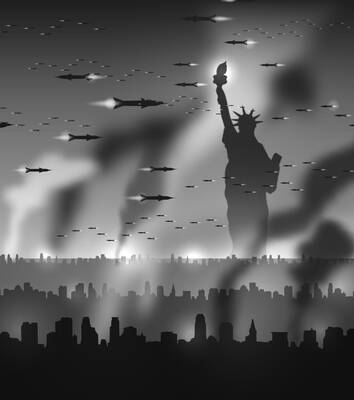
After declaring Iran’s military “gone,” US President Donald Trump appealed to the UK, France, Japan and South Korea — as well as China, Iran’s strategic partner — to send minesweepers and naval forces to reopen the Strait of Hormuz. When allies balked, the request turned into a warning: NATO would face “a very bad” future if it refused. The prevailing wisdom is that Trump faces a credibility problem: having spent years insulting allies, he finds they would not rally when he needs them. That is true, but superficial, as though a structural collapse could be caused by wounded feelings. Something
Former Taipei mayor and Taiwan People’s Party (TPP) founding chairman Ko Wen-je (柯文哲) was sentenced to 17 years in prison on Thursday, making headlines across major media. However, another case linked to the TPP — the indictment of Chinese immigrant Xu Chunying (徐春鶯) for alleged violations of the Anti-Infiltration Act (反滲透法) on Tuesday — has also stirred up heated discussions. Born in Shanghai, Xu became a resident of Taiwan through marriage in 1993. Currently the director of the Taiwan New Immigrant Development Association, she was elected to serve as legislator-at-large for the TPP in 2023, but was later charged with involvement
Out of 64 participating universities in this year’s Stars Program — through which schools directly recommend their top students to universities for admission — only 19 filled their admissions quotas. There were 922 vacancies, down more than 200 from last year; top universities had 37 unfilled places, 40 fewer than last year. The original purpose of the Stars Program was to expand admissions to a wider range of students. However, certain departments at elite universities that failed to meet their admissions quotas are not improving. Vacancies at top universities are linked to students’ program preferences on their applications, but inappropriate admission


 RSS
RSS