


Democratic Taiwan is beginning to heat up in preparation for next January’s presidential and legislative elections. These tend to be raucous and hotly contested. President Tsai Ing-wen (蔡英文) will step down in the spring after serving the constitutionally permitted two terms, which featured significant advances in the island’s democratic system as well as the growth and diversification of its overall economy.
Having lived and worked in Taiwan five times over the past fifty years, I have been privileged to observe some of these changes up close. In my humble opinion, Taiwan remains one of the most dynamic economies in the world, with a current GDP of over $760 billion USD. This is expected to near a trillion USD by the end of the decade. This growth is anchored by its high-tech sector, whose centerpiece is semiconductor giant Taiwan Semiconductor Manufacturing Co (TSMC). Many other thriving companies, such as Foxconn (Hon Hai Precision Industry), and Giant Bicycles, have robust global markets competitive with the best of the best. Not bad for a population of 23 million citizens with relatively few rich natural resources to tap into. In no small part this is due to Taiwan’s impressive army of technology-savvy engineers and managers. A surprising number of them have pursued advanced studies in the United States and other highly-developed nations.
The early favorite in the upcoming presidential election is Vice President William Lai (賴清德), a longstanding leader in the Democratic Progressive Party (DPP) who seems set to carry the DPP standard. The rival Chinese Nationalist Party (KMT) has struggled recently to compete in national elections, hampered by its tendency to seek closer political ties to the Chinese Communist Party (CCP). Former president Ma Ying-jeou (馬英九) has some sway as the party’s senior spokesman, but his recent trip to the mainland probably soured many observers, including within the KMT, by suggesting a desire to grow too close to the mainland behemoth.
We can be certain that the mainland will be watching events closely and hoping for a KMT victory to push the DPP back into opposition. Chinese leader Xi Jinping (習近平) has made no secret of his ambition to absorb Taiwan into its political orbit, though that remains a fraught and contested objective with many East Asian neighbors.
As a side note, I would observe that the People’s Republic of China has had tumultuous relations with most of its neighbors, including Japan, India, Vietnam, Mongolia and much of Central Asia. History has shown that China harbors an almost unlimited appetite for expansion whenever the opportunity appears. Taiwan is just one of the objects of its attention, though it is fair to say this is the most prominent goal of Mr. Xi. Though no fan of the authoritarian chieftain of China, since he insists that he must resolve the Taiwan issue in his lifetime, I can only hope that his lifetime lasts a while.
I had the privilege of visiting my favorite island with a Global Taiwan Institute (GTI) delegation this spring, during which we met many of the leading political figures on both sides of the political spectrum. Our group was treated to a relaxed and lengthy dinner with President Tsai at her residence, and Vice President Lai was one of the guests of honor. We also met KMT leader Eric Chu (朱立倫) for a productive exchange of views. Eric has long impressed me for breaking the mold of lawyer-candidates, which seems to have been the pattern of most candidates for the top job.
One thing is certain. The campaign will be vigorous and hard-fought. It most likely will be decided by a very narrow margin. Democratic friends around the world will watch with great interest to see how the election plays out. The fate of the Legislative Yuan will also be decided. A president who lacks a majority in the legislature will face significant difficulty advancing his party’s platform. So much is at stake.
Vice President Lai recently visited Latin America and made a couple of stopovers in the US on his way there and back. This is a longtime tradition. Lai even visited the greater Washington DC area and saw friends there both in and out of government. He also visited New York and San Francisco.
While the results of these pivotal elections will largely reflect political and economic concerns of the Taiwan electorate, they will also be closely watched by the US, the PRC, and neighboring countries like Japan, the Philippines, Vietnam, India and South Korea. Most of Taiwan’s neighbors remain alarmed by Beijing’s assertive claims to both territorial seas and their own borders.
I also note that TECRO’s current representative in Washington, the estimable Bi-khim Hsiao (蕭美琴), is being discussed as a possible running mate with Lai. I have known Bi-khim for over twenty-five years and have the greatest respect for her. She has distinguished herself in the hothouse of Washington politics and would be an excellent member of the DPP’s leadership if selected. Moscow would do well to study Taiwan’s model of vibrant democracy and impressive use of its skilled and hardworking people to build a modern economy amidst difficult regional circumstances.
One thing is certain. Taiwan’s steady development as a stable young democracy, buttressed by strong economic growth, will continue to play an active and positive force in East Asia as well as the global economy. The plucky island state can also count on the steady support of the United States as it heads into these elections and the path beyond.
We can only hope that China will assume a realistic approach to cross-strait relations. If not, it will find itself isolated from most of its neighbors. It cannot count on much support from Putin’s Russia, mired as it is in an ugly and totally unjustified war against Ukraine. Russia’s economy is floundering; it will not be able to offset the global opprobrium it now faces, so long as it continues to threaten its neighbors and flout global standards of decent behavior. One wonders how long the Russian people will tolerate Mr. Putin’s shameful behavior on the regional and global stage.
Ambassador Stephen M. Young (ret.) lived in Kaohsiung as a boy over 50 years ago, and served in AIT four times: as a young consular officer (1981-’82), as a language student (1989-’90), as Deputy Director (1998-2001) and as Director (2006-’9). He visits often and writes regularly about Taiwan matters. Young was also US Ambassador to Kyrgyzstan and Consul General to Hong Kong during his 33-year career as a foreign service officer. He has a BA from Wesleyan University and a PhD from the University of Chicago.
A gap appears to be emerging between Washington’s foreign policy elites and the broader American public on how the United States should respond to China’s rise. From my vantage working at a think tank in Washington, DC, and through regular travel around the United States, I increasingly experience two distinct discussions. This divergence — between America’s elite hawkishness and public caution — may become one of the least appreciated and most consequential external factors influencing Taiwan’s security environment in the years ahead. Within the American policy community, the dominant view of China has grown unmistakably tough. Many members of Congress, as
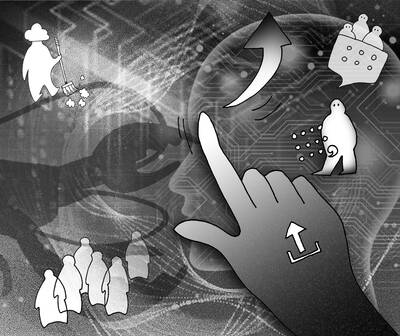
Weeks into the craze, nobody quite knows what to make of the OpenClaw mania sweeping China, marked by viral photos of retirees lining up for installation events and users gathering in red claw hats. The queues and cosplay inspired by the “raising a lobster” trend make for irresistible China clickbait. However, the West is fixating on the least important part of the story. As a consumer craze, OpenClaw — the AI agent designed to do tasks on a user’s behalf — would likely burn out. Without some developer background, it is too glitchy and technically awkward for true mainstream adoption,
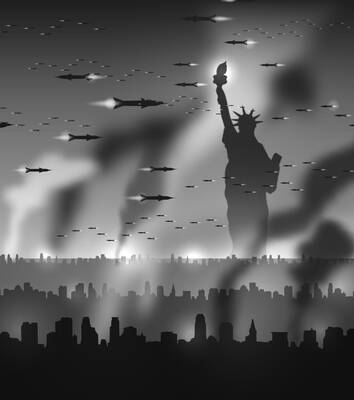
After declaring Iran’s military “gone,” US President Donald Trump appealed to the UK, France, Japan and South Korea — as well as China, Iran’s strategic partner — to send minesweepers and naval forces to reopen the Strait of Hormuz. When allies balked, the request turned into a warning: NATO would face “a very bad” future if it refused. The prevailing wisdom is that Trump faces a credibility problem: having spent years insulting allies, he finds they would not rally when he needs them. That is true, but superficial, as though a structural collapse could be caused by wounded feelings. Something
Former Taipei mayor and Taiwan People’s Party (TPP) founding chairman Ko Wen-je (柯文哲) was sentenced to 17 years in prison on Thursday, making headlines across major media. However, another case linked to the TPP — the indictment of Chinese immigrant Xu Chunying (徐春鶯) for alleged violations of the Anti-Infiltration Act (反滲透法) on Tuesday — has also stirred up heated discussions. Born in Shanghai, Xu became a resident of Taiwan through marriage in 1993. Currently the director of the Taiwan New Immigrant Development Association, she was elected to serve as legislator-at-large for the TPP in 2023, but was later charged with involvement


 RSS
RSS