


When President Tsai Ing-wen (蔡英文) arrived in New York on Wednesday last week, protesters gathered outside her hotel and other locations holding banners, placards and Chinese flags, with some of the signs reading: “A bad end awaits those who forget their roots,” “Support unification with China and oppose Taiwanese independence” and “Nothing good will come from Taiwanese independence.”
The Chinese Communist Party (CCP) has used these kinds of polemics as “moral blackmail” against people of Chinese descent at home and abroad. It is a manipulative approach, pursued under the banner of patriotism and nationalism, to realize its political agenda.
“Moral blackmail” refers to how, without explicit guidelines regarding code of conduct, a person exploits another’s sense of morality to influence their thoughts and behaviors to force them act involuntarily.
Victoria University of Wellington philosophy professor Simon Keller explained the mechanics of moral blackmail in a 2016 article, in which he wrote that everyone has their own “moral situation ... constituted by the particular moral rights, duties, permissions and reasons that you have, in your particular circumstances.”
The CCP has long used moral blackmail to abuse people of Chinese descent, even beyond the 1.4 billion citizens living on its soil. Methods such as oppression, elimination and crackdowns on voices advocating freedom leave Chinese citizens living in fear, which compels them to believe that if they choose to fight for freedom, they could possibly be charged with “inciting subversion of state power.”
Akin to the system employed by the Nazis, the state uses morality as a shield and a blackmailing tool. When people are afraid of the consequences of their free choices, the state mobilizes violence against them to set an example.
The aforementioned approach has always been a tactic of the CCP’s rule. As a result, “little pinks” — Chinese nationalists who forcefully push their ideologies on the Internet — often make comments toward people of Chinese descent such as “your surname tells you where your motherland is.”
However, the same ideology cannot be applied to Taiwan, because it is a liberal democratic country and its people are masters of their nation. As Taiwan is not part of China, Taiwanese can act according to their own free will, and are therefore immune to Chinese moral blackmail.
It is a matter of time before 1.4 billion Chinese citizens become tired of the CCP’s governance tactics based on moral blackmail, but the situation there has not yet reached the boiling point necessary for a civil uprising.
As for saying that Taiwanese are “forgetting their roots,” perhaps the CCP should take a look in the mirror. The group of protesters mobilized by the CCP, who were supposedly paid US$200 to disrupt Tsai’s transit, made a blunder with a misplaced Chinese idiom written on one of the placards. It used “wang dian shu zu” (忘典數祖) instead of “shu dian wang zu” (數典忘祖) for “forgetting one’s roots.” For an ethnicity that is always boasting about its rich cultural heritage, it is indeed “forgetting its roots” when it fails to even get an expression in its mother tongue right, and on US foreign territory at that.
Knight Chang is a political worker and doctor of education.
Translated by Rita Wang
A gap appears to be emerging between Washington’s foreign policy elites and the broader American public on how the United States should respond to China’s rise. From my vantage working at a think tank in Washington, DC, and through regular travel around the United States, I increasingly experience two distinct discussions. This divergence — between America’s elite hawkishness and public caution — may become one of the least appreciated and most consequential external factors influencing Taiwan’s security environment in the years ahead. Within the American policy community, the dominant view of China has grown unmistakably tough. Many members of Congress, as
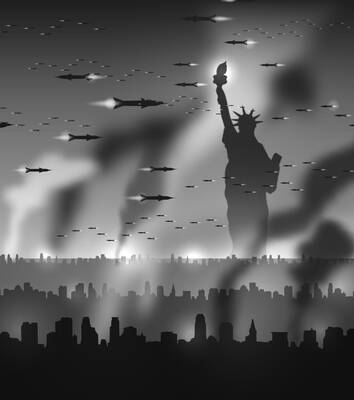
After declaring Iran’s military “gone,” US President Donald Trump appealed to the UK, France, Japan and South Korea — as well as China, Iran’s strategic partner — to send minesweepers and naval forces to reopen the Strait of Hormuz. When allies balked, the request turned into a warning: NATO would face “a very bad” future if it refused. The prevailing wisdom is that Trump faces a credibility problem: having spent years insulting allies, he finds they would not rally when he needs them. That is true, but superficial, as though a structural collapse could be caused by wounded feelings. Something
Former Taipei mayor and Taiwan People’s Party (TPP) founding chairman Ko Wen-je (柯文哲) was sentenced to 17 years in prison on Thursday, making headlines across major media. However, another case linked to the TPP — the indictment of Chinese immigrant Xu Chunying (徐春鶯) for alleged violations of the Anti-Infiltration Act (反滲透法) on Tuesday — has also stirred up heated discussions. Born in Shanghai, Xu became a resident of Taiwan through marriage in 1993. Currently the director of the Taiwan New Immigrant Development Association, she was elected to serve as legislator-at-large for the TPP in 2023, but was later charged with involvement
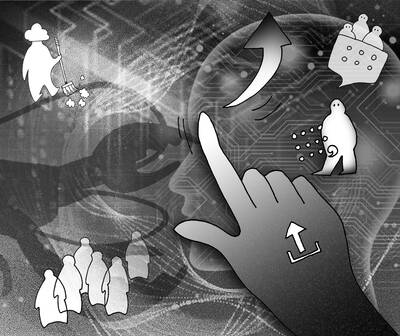
Weeks into the craze, nobody quite knows what to make of the OpenClaw mania sweeping China, marked by viral photos of retirees lining up for installation events and users gathering in red claw hats. The queues and cosplay inspired by the “raising a lobster” trend make for irresistible China clickbait. However, the West is fixating on the least important part of the story. As a consumer craze, OpenClaw — the AI agent designed to do tasks on a user’s behalf — would likely burn out. Without some developer background, it is too glitchy and technically awkward for true mainstream adoption,


 RSS
RSS