


Taiwanese democracy advocate Lee Ming-che (李明哲), imprisoned by Chinese authorities on false charges, was finally released and returned to Taiwan last month. A human rights advocate, Lee was charged with “subversion of state power” and sentenced to five years behind bars.
There is also the case of Morrison Lee (李孟居), a political consultant to Pingtung County’s Fangliao Township (枋寮), who was accused of espionage by the Chinese authorities, sentenced to 22 months in prison and deprived of his “political rights” (prevented from leaving China) for a further two years.
To date, Morrison Lee has been detained in China for nearly three years and there are no signs that the Chinese Communist Party intends to release him any time soon.
Contrast this treatment with that of the New Party’s Wang Ping-chung (王炳忠) and other party members who allegedly received funding from China’s Taiwan Affairs Office to set up organizations in Taiwan.
Although the alleged spy ring was suspected of collecting information relating to serving and retired members of the military and civil servants, as they had not yet recruited anyone, prosecutors had insufficient evidence to prove that the actions of Wang and the others constituted a clear and present threat to national security. For this reason, the group was acquitted at both the initial trial and a subsequent appeal.
The difference between Taiwan’s and China’s judicial systems is like night and day.
As a liberal democracy, the common phrase “no bending of the law and no indulgence of criminality (勿枉勿縱)” perfectly encapsulates the spirit of Taiwan’s judicial system. However, with an enemy on the other side of the Taiwan Strait that could launch an invasion at any moment, Taiwan’s judiciary often appears utterly ignorant of the threat facing the nation.
Local media have reported that many members of Taiwan’s legal system believe that the verdicts of judges are a means by which to “encourage” just verdicts from their opposite numbers in China. This means going soft on Chinese agents who infiltrate Taiwanese society under the guise of friendship.
The problem with this overly lenient attitude is that as soon as a clear and present danger does present itself, it would be too late to do anything about it.
Late democracy pioneer Peng Ming-min (彭明敏) once wrote that interaction with China must be based upon the principle of equality and reciprocity: Whatever China is allowed to do in Taiwan, Taiwan should also be able to do in China.
Conversely, whatever Taiwan cannot do in China, China should not be allowed to do in Taiwan, Peng said.
This is an absolutely fundamental principle.
Looked at another way: Do the verdicts of Taiwan’s judges place too little value on upholding Taiwan’s democracy and its freedoms? And has the government been forceful enough in its condemnation of China’s unjust incarceration of Taiwanese?
Upholding the values of Taiwan’s liberal democracy requires the rigorous application of the law. When a Taiwanese court hears a case involving a pro-China individual or group stirring up trouble in society, it almost always ends in a light sentence or an acquittal. Each time a lenient verdict is handed down in such cases, this causes unease among the public.
Upholding freedom and democracy is the responsibility of everyone. In carrying out their work, judges must take care not to throw away our hard-won liberties by allowing others to abuse the very rights that are meant to protect us.
Jane Ywe-hwan is an associate professor in the Department of Applied Japanese at National Pingtung University.
Translated by Edward Jones
Minister of Labor Hung Sun-han (洪申翰) on April 9 said that the first group of Indian workers could arrive as early as this year as part of a memorandum of understanding (MOU) between the Taipei Economic and Cultural Center in India and the India Taipei Association. Signed in February 2024, the MOU stipulates that Taipei would decide the number of migrant workers and which industries would employ them, while New Delhi would manage recruitment and training. Employment would be governed by the laws of both countries. Months after its signing, the two sides agreed that 1,000 migrant workers from India would
On March 31, the South Korean Ministry of Foreign Affairs released declassified diplomatic records from 1995 that drew wide domestic media attention. One revelation stood out: North Korea had once raised the possibility of diplomatic relations with Taiwan. In a meeting with visiting Chinese officials in May 1995, as then-Chinese president Jiang Zemin (江澤民) prepared for a visit to South Korea, North Korean officials objected to Beijing’s growing ties with Seoul and raised Taiwan directly. According to the newly released records, North Korean officials asked why Pyongyang should refrain from developing relations with Taiwan while China and South Korea were expanding high-level
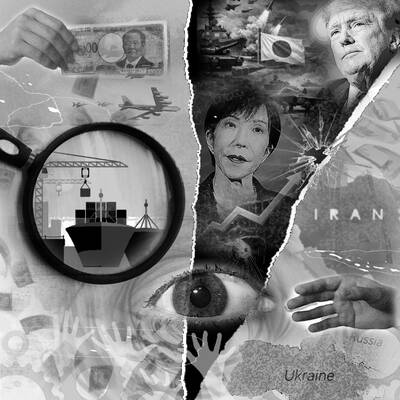
Japan’s imminent easing of arms export rules has sparked strong interest from Warsaw to Manila, Reuters reporting found, as US President Donald Trump wavers on security commitments to allies, and the wars in Iran and Ukraine strain US weapons supplies. Japanese Prime Minister Sanae Takaichi’s ruling party approved the changes this week as she tries to invigorate the pacifist country’s military industrial base. Her government would formally adopt the new rules as soon as this month, three Japanese government officials told Reuters. Despite largely isolating itself from global arms markets since World War II, Japan spends enough on its own
When 17,000 troops from the US, the Philippines, Australia, Japan, Canada, France and New Zealand spread across the Philippine archipelago for the Balikatan military exercise, running from tomorrow through May 8, the official language would be about interoperability, readiness and regional peace. However, the strategic subtext is becoming harder to ignore: The exercises are increasingly about the military geography around Taiwan. Balikatan has always carried political weight. This year, however, the exercise looks different in ways that matter not only to Manila and Washington, but also to Taipei. What began in 2023 as a shift toward a more serious deterrence posture


 RSS
RSS