


Education long game
Regarding the editorial about Harvard’s decision to relocate its summer language program from Beijing to Taipei (“Learning thrives where it is free,” Oct. 16, page 8), it is hard to overestimate the potential long-term positive impact actions like that will have on US-Taiwan relations. It is imperative that the government finds ways to convince more US universities to follow suit.
One only has to look at the history of the old Sanford Center, a consortium of a half-dozen leading US universities with significant Chinese studies and language programs that operated at National Taiwan University between 1963 and 1997.
Dozens of students from those schools spent a year in intensive advanced Chinese-language study at “Tai Da,” spending four hours a day in classes and the other hours studying, exploring the city and otherwise being exposed to the country and the people — and in most cases getting to love both.
Significantly, many of those students after graduation became government policymakers, academics, journalists and other professionals who were often instrumental in forming and maintaining US policy toward China and Taiwan.
It is hard to think of any of them who became detractors of Taiwan or doubters of Taiwan’s right to exist as an independent entity.
That in the face of the fact that many, if not most, held jaundiced views of Chiang Kai-shek (蔣介石) and the Chinese Nationalist Party’s (KMT) era of martial law terror.
While there were other language training centers in Taipei after Stanford left, it was the most prestigious and important.
It is hard to know just how the Stanford Center’s move to Beijing affected US policy toward Taiwan, but it could not have been positive.
However, with the chilling of US-China relations, the increasing authoritarianism of Chinese President Xi Jinping’s (習近平) regime in Beijing, and the Chinese Communist Party’s crushing of freedom in Hong Kong, there is a great opportunity for the leaders in Taipei to make an all-out effort to get other US institutions to follow Harvard’s example.
It might not make a tangible difference now, but in 10, 20 or 30 years, when the graduates have top positions in their crucial fields, it will be clearly evident.
We tend to cherish the wonderful experiences we had when we were younger.
I know that I did (class of 1969).
Charles Snyder
Retired Taipei Times correspondent
A gap appears to be emerging between Washington’s foreign policy elites and the broader American public on how the United States should respond to China’s rise. From my vantage working at a think tank in Washington, DC, and through regular travel around the United States, I increasingly experience two distinct discussions. This divergence — between America’s elite hawkishness and public caution — may become one of the least appreciated and most consequential external factors influencing Taiwan’s security environment in the years ahead. Within the American policy community, the dominant view of China has grown unmistakably tough. Many members of Congress, as
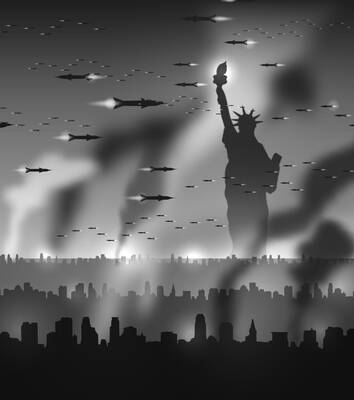
After declaring Iran’s military “gone,” US President Donald Trump appealed to the UK, France, Japan and South Korea — as well as China, Iran’s strategic partner — to send minesweepers and naval forces to reopen the Strait of Hormuz. When allies balked, the request turned into a warning: NATO would face “a very bad” future if it refused. The prevailing wisdom is that Trump faces a credibility problem: having spent years insulting allies, he finds they would not rally when he needs them. That is true, but superficial, as though a structural collapse could be caused by wounded feelings. Something
Former Taipei mayor and Taiwan People’s Party (TPP) founding chairman Ko Wen-je (柯文哲) was sentenced to 17 years in prison on Thursday, making headlines across major media. However, another case linked to the TPP — the indictment of Chinese immigrant Xu Chunying (徐春鶯) for alleged violations of the Anti-Infiltration Act (反滲透法) on Tuesday — has also stirred up heated discussions. Born in Shanghai, Xu became a resident of Taiwan through marriage in 1993. Currently the director of the Taiwan New Immigrant Development Association, she was elected to serve as legislator-at-large for the TPP in 2023, but was later charged with involvement
Out of 64 participating universities in this year’s Stars Program — through which schools directly recommend their top students to universities for admission — only 19 filled their admissions quotas. There were 922 vacancies, down more than 200 from last year; top universities had 37 unfilled places, 40 fewer than last year. The original purpose of the Stars Program was to expand admissions to a wider range of students. However, certain departments at elite universities that failed to meet their admissions quotas are not improving. Vacancies at top universities are linked to students’ program preferences on their applications, but inappropriate admission


 RSS
RSS