


Protests have intensified outside property giant Evergrande Group’s offices across China, as the developer falls farther behind on promises to more than 70,000 investors. Construction of unfinished properties with enough floor space to cover three-fourths of Manhattan has ground to a halt, leaving more than 1 million homebuyers in limbo.
Fire sales pummel a shaky real-estate market, squeezing other developers and rippling through a supply chain that accounts for more than one-quarter of Chinese economic output.
People, weary of the COVID-19 pandemic, retrench further and the risk of popular discontent rises during a politically sensitive transition period for Chinese President Xi Jinping (習近平).

Illustration: Mountain People
Credit-market stress spreads from lower-rated property companies to stronger peers and banks. Global investors who bought US$527 billion of Chinese stocks and bonds in the 15 months through June are selling.
While it is impossible to know for sure what would happen if Beijing allowed Evergrande’s downward spiral to continue unabated, China watchers are gaming out worst-case scenarios as they contemplate how much pain the Chinese Communist Party is willing to tolerate. Pressure to intervene is growing as signs of financial contagion increase.
“As a systemically important developer, an Evergrande bankruptcy would cause problems for the entire property sector,” said Shen Meng (沈萌), director of Chanson & Co, a Beijing-based boutique investment bank. “Debt recovery efforts by creditors would lead to fire sales of assets and hit housing prices. Profit margins across the supply chain would be squeezed. It would also lead to panic-selling in capital markets.”
For now, Shen and nearly all of the other bankers, analysts and investors interviewed for this story say that Beijing is in no mood for a Lehman Brothers moment. Rather than allow a chaotic collapse into bankruptcy, they predict that regulators will engineer a restructuring of Evergrande’s US$300 billion pile of liabilities, keeping systemic risk to a minimum.
Markets seem to agree: China’s Shanghai Composite Index is less than 3 percent from a six-year high, while the yuan is trading near a three-month high against the US dollar.
Yet a benign outcome is far from assured. Beijing’s bungled stock-market rescue in 2015 showed how difficult it can be for policymakers to control financial outcomes, even in a system where the government runs most of the banks and can exert outsized pressure on creditors, suppliers and other parties.
Contagion risk was on full display on Sept. 9. Chinese junk-bond yields jumped to an 18-month high and shares of real-estate companies plunged after Evergrande had its credit rating downgraded and requested a trading halt in its onshore bonds.
Some banks in China appear to be hoarding yuan at the highest cost in almost four years, a sign that they might be preparing for what a Mizuho Financial Group strategist called a “liquidity squeeze in crisis mode.” Where Xi will ultimately draw the line remains a mystery. While China’s State Administration for Market Regulation has urged billionaire Evergrande founder Xu Jiayin (許家印), or Hui Ka Yan in Cantonese, to solve his company’s debt problems, authorities have yet to spell out whether the government would allow a major debt restructuring or bankruptcy.
Even senior officials at state-owned banks have privately said that they are still waiting for guidance on a long-term solution from top leaders in Beijing.
Evergrande’s main banks had been told by the Chinese Ministry of Housing and Urban-Rural Development that the developer could not make interest payments due on Monday, people familiar with the matter said.
The Chinese government is not averse to taking over companies from the private sector if needed. It seized Baoshang Bank in 2019 and assumed control of HNA Group, the once-sprawling conglomerate, early last year after the pandemic decimated the company’s main travel business. Court-led restructurings have also become more common in the past few years, with more than 700 being completed last year.
The Evergrande endgame might largely depend on how Xi decides to balance his goals of maintaining social and financial stability against his multi-year campaign to reduce moral hazard. The timing is particularly tricky as China juggles an economic slowdown, a sweeping crackdown on the private sector and rising tensions with Washington — all in the run-up to a once-in-five-year leadership reshuffle next year, at which Xi is set to extend his indefinite rule.
“The government has to be very, very careful in balancing support for Evergrande,” said Yu Yong (於勇), a former regulator with the China Banking and Insurance Regulatory Commission and now chief risk officer at China Agriculture Reinsurance Fund.
“Property is the biggest bubble that everyone has been talking about in China,” Yu told Everbright Sun Hung Kai analyst Jonas Short in a recent podcast. “So if anything happens, this could clearly cause systematic risk to the whole China economy.” Here are some of the factors that may sway Chinese leaders:
SOCIAL UNREST
Maintaining social order has always been paramount for the Chinese Communist Party, which has little tolerance for protests of any kind. In Guangzhou, homebuyers earlier this month surrounded a local housing bureau to demand that Evergrande restart stalled construction. Last week, disgruntled retail investors gathered at the company’s Shenzhen headquarters, and unconfirmed videos of protests against the developer in other parts of China have been shared widely online.
Evergrande had 1.3 trillion yuan (US$201.04 billion at the current exchange rate) in presale liabilities at the end of June, equivalent to about 1.4 million individual properties that it has committed to complete, a Capital Economics report said.
“If Evergrande had to dump its inventory onto the market, it would drag down property prices substantially,” Bocom International chief strategist Hao Hong (洪灝) said.
Without a social safety net and with limited places to put their money, Chinese savers have for years been encouraged to buy homes, whose prices were only ever supposed to go up. Today, real estate accounts for 40 percent of household assets and buying a house (or two) is a cultural touchstone. While housing affordability has become a hot topic in the West, many Chinese are more likely to protest falling home prices than spiking ones.
“Given that the bulk of people’s wealth is already in property, even a 10 percent correction would be a serious knock to many people,” said Fraser Howie, an independent analyst and coauthor of books on Chinese finance who has been following the country’s corporate sector for decades. “It would certainly knock their hopes and dreams and expectations about what property is.”
Another potential flashpoint is whether Evergrande can repay high-yield wealth management products that it sold to thousands of retail investors, including many of its own employees.
About 40 billion yuan of the wealth management products are due to be repaid, reported Caixin, a Chinese financial news service.
Evergrande is trying to free up cash by selling assets, including stakes in its electric-vehicle and property-management businesses, but has so far made little progress.
CAPITAL MARKETS
Evergrande is the largest high-yield dollar bond issuer in China, accounting for 16 percent of outstanding notes, Bank of America analysts wrote in a note this month.
Should the company collapse, that alone would push the default rate on the country’s junk dollar bond market to 14 percent from 3 percent, they added.
While Beijing has become more comfortable with allowing weaker businesses to fail, an uncontrolled spike in offshore funding costs would risk derailing a key source of financing. It could also undermine global confidence in the country’s issuers at a time when Beijing is pushing for larger foreign investor ownership.
Yields on China’s junk dollar bonds are nearing 14 percent, up from about 7.4 percent in February, a Bloomberg index showed.
The stakes are higher in China, where the credit market is about 15 times the size at US$12 trillion. While Evergrande is less of a whale onshore, a collapse could force banks to cut their holdings of corporate notes and even freeze money markets — the very plumbing of China’s financial system.
In such a credit crunch, the Chinese government or central bank would likely be forced to act. Banks involved in property lending might come under pressure, leading to an increase in soured loans.
Smaller banks exposed to Evergrande or other weaker developers might face “significant” increases in nonperforming loans in the event of a default, Fitch Ratings has said.
ECONOMIC IMPACT
Concern over Evergrande comes at a time when China’s economy is slowing. Aggressive controls to curb COVID-19 outbreaks are hurting retail spending and travel, while measures to cool property prices are taking a toll.
Data earlier this month showed that home sales by value slumped 20 percent last month from a year earlier, the biggest drop since the onset of COVID-19 early last year.
Responding to a question on Evergrande’s potential impact on the economy, Chinese National Bureau of Statistics spokesman Fu Linghui (付凌暉) said that some large property enterprises are running into difficulties and the fallout “remains to be seen.”
China’s priorities of promoting “common prosperity” and deterring excessive risk-taking mean that there is unlikely to be any easing of property curbs this year, Macquarie Group has said.
The sector is likely to be a “main growth headwind” for next year, although policymakers might loosen restrictions to defend growth goals, Macquarie analysts wrote in a note on Sept. 8.
A correction in China’s property market would not only slow the domestic economy, but have global consequences, too.
“A significant slowdown in property construction over the next few years appears probable already, and would become even more likely in the event of an Evergrande failure or bankruptcy,” said Logan Wright, a Hong Kong-based director at research firm Rhodium Group.
“A long-term slowdown in property construction, an industry that represents around a fifth or a quarter of China’s economy by most estimates, would cause a significant decline in GDP growth, commodity demand and would likely have disinflationary effects globally,” Wright said.
Minister of Labor Hung Sun-han (洪申翰) on April 9 said that the first group of Indian workers could arrive as early as this year as part of a memorandum of understanding (MOU) between the Taipei Economic and Cultural Center in India and the India Taipei Association. Signed in February 2024, the MOU stipulates that Taipei would decide the number of migrant workers and which industries would employ them, while New Delhi would manage recruitment and training. Employment would be governed by the laws of both countries. Months after its signing, the two sides agreed that 1,000 migrant workers from India would
In recent weeks, Taiwan has witnessed a surge of public anxiety over the possible introduction of Indian migrant workers. What began as a policy signal from the Ministry of Labor quickly escalated into a broader controversy. Petitions gathered thousands of signatures within days, political figures issued strong warnings, and social media became saturated with concerns about public safety and social stability. At first glance, this appears to be a straightforward policy question: Should Taiwan introduce Indian migrant workers or not? However, this framing is misleading. The current debate is not fundamentally about India. It is about Taiwan’s labor system, its
On March 31, the South Korean Ministry of Foreign Affairs released declassified diplomatic records from 1995 that drew wide domestic media attention. One revelation stood out: North Korea had once raised the possibility of diplomatic relations with Taiwan. In a meeting with visiting Chinese officials in May 1995, as then-Chinese president Jiang Zemin (江澤民) prepared for a visit to South Korea, North Korean officials objected to Beijing’s growing ties with Seoul and raised Taiwan directly. According to the newly released records, North Korean officials asked why Pyongyang should refrain from developing relations with Taiwan while China and South Korea were expanding high-level
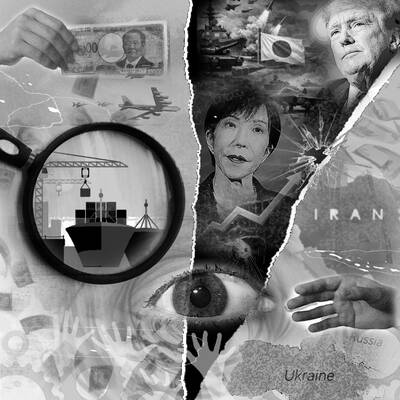
Japan’s imminent easing of arms export rules has sparked strong interest from Warsaw to Manila, Reuters reporting found, as US President Donald Trump wavers on security commitments to allies, and the wars in Iran and Ukraine strain US weapons supplies. Japanese Prime Minister Sanae Takaichi’s ruling party approved the changes this week as she tries to invigorate the pacifist country’s military industrial base. Her government would formally adopt the new rules as soon as this month, three Japanese government officials told Reuters. Despite largely isolating itself from global arms markets since World War II, Japan spends enough on its own


 RSS
RSS