


As this year marks the fifth anniversary of the New Southbound Policy (NSP) the time is ripe to evaluate the challenges and opportunities brought about by the nation’s pivot to the south.
Despite the ongoing COVID-19 pandemic, international cooperation has not come to a halt; in fact, recent instances of closer cooperation on public health issues might be viewed as a catalyst for the return of multilateralism in global politics.
Consequently, it is important to evaluate the mechanisms and the extent to which the policy can facilitate Taiwan’s inclusion in multilateral partnerships within and beyond the policy’s 18 target countries. Specifically, potential synergies between the policy and the EU’s strategy for cooperation in the Indo-Pacific region merits further consideration.
On April 19, the EU adopted its long-awaited Strategy for Cooperation in the Indo-Pacific. Importantly, the document states explicitly that the EU would seek to promote “rules-based multilateralism” by engaging with “third countries for mutual benefit.”
This signals a window of opportunity for Taiwan, which, too, has been a proponent of a free, inclusive and rules-based order in the region.
Beyond normative synergies, the priority areas for collaboration listed in the European Council’s conclusions on the strategy also demonstrate a high degree of complementarity between the EU’s five flagship programs and three prospective areas of Taiwan’s regional policy focus.
Particularly noteworthy provisions of the European strategy include prioritizing the health sector as a new crucial area for cooperation, inclusion of regional partners in Horizon Europe — the EU’s flagship research and innovation funding program — and a call for increased multilateralism and cooperation with like-minded partners under the EU’s global approach to research, innovation, education and youth.
Correspondingly, Taiwan has sought to employ the policy as a key tool to bolster cooperation in similar areas. Medical and public health cooperation, collaboration in innovative industries, and youth exchanges and policy fora are NSP flagship programs — and in its fifth year, Brussels should pay heed to Taiwan’s tangible achievements in these fields.
The potential for closer cooperation between Taipei and Brussels is further bolstered by the recently adopted 2021-2027 EU multiannual financial framework.
Expansion of research and innovation funding through the Horizon Europe initiative is particularly noteworthy. Horizon Europe enables twinning activities with entities from non-associated non-EU countries — a tool on which Taiwan could, and indeed should, capitalize.
As Zsuzsa Anna Ferenczy, a research fellow in National Taiwan University’s European Union Center, argued in the Taipei Times: “Scientific partnerships remain the most effective tools for Taiwan to share knowledge and circumvent its international isolation” (“Boosting science ties with Europe,” Feb. 3, page 8).
The European Parliament’s adoption of the EU Neighborhood, Development and International Cooperation Instrument — a new instrument covering cooperation with third countries with an overall allocation of 79.5 billion euros (US$93.4 billion) — brought about a more integrated approach to development cooperation, as well as opportunities for bilateral and trilateral cooperation.
The idea of closer cooperation between Taipei and Brussels in third countries, including ASEAN members, is gaining traction in academic and policy circles.
Last month, it was an important subject of discussion at the “Taiwan and the Indo-Pacific: Relevance and Geopolitical Implication” webinar, organized by the Taiwan NextGen Foundation and 9DashLine.
During the panel, Ivy Kwek (郭艾薇), a Taiwan fellow at National Chengchi University, acknowledged the complementarity between the EU’s approach to the region and Taiwan’s policy. Asserting that “Taiwan cannot engage the region alone,” Kwek called for an intensification of multilateral cooperation with and on Taiwan.
Similarly, Democratic Progressive Party Lawmaker Lo Chih-cheng (羅致政) also expressed his enthusiasm about the prospect of multilateral cooperation, saying: “Taiwan should be seen as a strategic asset rather than a strategic burden or a liability. By making good use of Taiwan’s strategic role, we can reverse the great loss of balance in the Indo-Pacific.”
This year has seen a watershed moment in multilateral cooperation, including between Taiwan and the EU.
In April, the EU for the first time cohosted a Global Cooperation and Training Framework workshop, joining the framework initiated by Taipei and Washington six years ago.
Additionally, in its resolution on connectivity and EU-Asia relations in January, the European Parliament highlighted the need to enhance connectivity with Taiwan, particularly with regard to its achievements in narrowing the digital gap in Southeast Asia.
The Taiwan Digital Opportunity Center was later prominently included under the umbrella of the NSP.
From a solar-powered mobile information and communications technology learning center in Myanmar to digital literacy training in the rural Philippines, the center has facilitated resource sharing between Taiwan and the target countries, contributing to the realization of one of the four key pillars of the policy.
At subnational level, Taiwanese cities have also been engaged in technology sharing with their partners in Southeast Asia. Partnerships for smart city cooperation between New Taipei City and Indonesia’s West Java Province, or Taipei and Malaysia’s Selangor state serve as cases in point.
This is particularly noteworthy, as the EU continues to embrace the promotion of urban innovation and smart city solutions.
A representative example of this dynamic is the EU-funded Smart Change program, implemented by Berlin and Jakarta.
The two capitals teamed up to optimize digital technologies and promote urban innovation in Jakarta, as well as create a sustainable support system for start-ups and accelerate digital transformation. The project also incorporates triangular cooperation with Bangkok, which sets a potentially consequential precedent for Taiwanese cities — regional leaders of the smart city transformation.
Developing closer Taiwan-EU cooperation in the Indo-Pacific region would certainly not be all plain sailing.
As is the case for any other EU external action strategy, the bloc’s engagement with the Indo-Pacific region will remain a careful balancing act between idiosyncratic priorities of 27 member states, as well as a reflection of coordinating and leadership skills of the European Commission. Individual member states, particularly those with strong economic ties with Beijing, might be reluctant to link up Taiwan in EU-branded projects.
Yet, with its explicit emphasis on fostering economic and people-to-people ties, rather than expanding political and security cooperation, the NSP might be viewed as an ideal tool for a “soft inclusion” of Taiwan in EU-Asia interregionalism.
As the policy’s fifth anniversary has spurred many discussions about its trajectory — inspiring calls for a “NSP 2.0”— the administration of President Tsai Ing-wen (蔡英文) should recognize the importance of maintaining synergies between this flagship instrument and the EU’s Indo-Pacific strategy.
The time is ripe for Brussels to see Taiwan as a genuine partner with considerable expertise in the region, which is arguably the world’s most dynamic region.
Marcin Jerzewski is a research fellow at the Taiwan NextGen Foundation, a Taipei and Chiayi-based policy think tank.
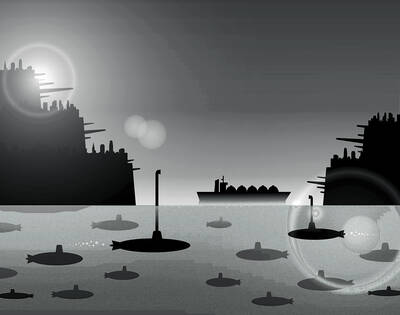
In the event of a war with China, Taiwan has some surprisingly tough defenses that could make it as difficult to tackle as a porcupine: A shoreline dotted with swamps, rocks and concrete barriers; conscription for all adult men; highways and airports that are built to double as hardened combat facilities. This porcupine has a soft underbelly, though, and the war in Iran is exposing it: energy. About 39,000 ships dock at Taiwan’s ports each year, more than the 30,000 that transit the Strait of Hormuz. About one-fifth of their inbound tonnage is coal, oil, refined fuels and liquefied natural gas (LNG),
To counter the CCP’s escalating threats, Taiwan must build a national consensus and demonstrate the capability and the will to fight. The Chinese Communist Party (CCP) often leans on a seductive mantra to soften its threats, such as “Chinese do not kill Chinese.” The slogan is designed to frame territorial conquest (annexation) as a domestic family matter. A look at the historical ledger reveals a different truth. For the CCP, being labeled “family” has never been a guarantee of safety; it has been the primary prerequisite for state-sanctioned slaughter. From the forced starvation of 150,000 civilians at the Siege of Changchun
The two major opposition parties, the Chinese Nationalist Party (KMT) and the Taiwan People’s Party (TPP), jointly announced on Tuesday last week that former TPP lawmaker Chang Chi-kai (張啟楷) would be their joint candidate for Chiayi mayor, following polling conducted earlier this month. It is the first case of blue-white (KMT-TPP) cooperation in selecting a joint candidate under an agreement signed by their chairpersons last month. KMT and TPP supporters have blamed their 2024 presidential election loss on failing to decide on a joint candidate, which ended in a dramatic breakdown with participants pointing fingers, calling polls unfair, sobbing and walking
In the opening remarks of her meeting with Chinese President Xi Jinping (習近平) in the Great Hall of the People in Beijing on Friday, Chinese Nationalist Party (KMT) Chairwoman Cheng Li-wun (鄭麗文) framed her visit as a historic occasion. In his own remarks, Xi had also emphasized the history of the relationship between the KMT and the Chinese Communist Party (CCP). Where they differed was that Cheng’s account, while flawed by its omissions, at least partially corresponded to reality. The meeting was certainly historic, albeit not in the way that Cheng and Xi were signaling, and not from the perspective


 RSS
RSS