


At the end of the 1960s sci-fi classic The Day the Earth Caught Fire, the camera pans across the Daily Express case room to a front-page proof hanging on a wall. “Earth Saved,” screams the headline. The camera pans. “Earth Doomed,” announces the proof beside it.
The head printer looks baffled. Which page will he be told to select? We never find out, for the film concludes without revealing the fate of our planet whose rotation has been sent spiralling out of control by simultaneous Soviet and US atom bomb tests. All we know is that Earth’s fate hangs in the balance thanks to human stupidity.
Such a vision might be the stuff of popular entertainment, but it comes uncomfortably close to our own uncertain future, as highlighted last week by an Intergovernmental Panel on Climate Change (IPCC) report, which effectively announced “a code red” warning for our species.

Illustration: Mountain People
Unequivocal evidence showed that greenhouse gas emissions were propelling us toward a calamitous fiery future triggered by extreme climate change, it said. Only urgent reductions of fossil fuel emissions can hope to save us.
It was a vision vividly endorsed by scientists, normally the most circumspect of commentators about world events.
“Our future climate could well become some kind of hell on Earth,” University of Oxford physics professor Tim Palmer said.
“This is not just another scientific report. This is hell and high water writ large,” said Dave Reay, executive director of University of Edinburgh’s Climate Change Institute.
Certainly the numbers outlined in the report were stark and strikingly emphatic in comparison with past, far more cautious, IPCC offerings. As it makes clear, humans have pumped about 2,400 billion tonnes of carbon dioxide into the atmosphere since 1850, creating concentrations of the gas that have not been seen on Earth in the past 2 million years.
Heat waves and heavy rains that cause flooding have become more intense and more frequent since the 1950s in most parts of the world, and climate change is now affecting all inhabited regions of the planet. Drought is increasing in many places and it is more than 66 percent likely that numbers of major hurricanes and typhoons have risen since the 1970s.
“If there was still a need for a proof that climate changes is caused by human activities, then this is the report that provides it,” University of East Anglia professor of climate change science Corinne Le Quere said.
The consequences of humanity’s massive act of atmospheric interference are now clear: What is hot today will become hotter tomorrow; extreme floods will become more frequent, wildfires more dangerous and deadly droughts more widespread. In short, things can only get worse.
Indeed, by the end of the century, they could become threatening to civilization if emissions are allowed to continue at their present rate.
“That might seem like a long way away but there are millions of children already born who should be alive well into the 22nd century,” said Jonathan Bamber, a physics professor at the University of Bristol and one of the report’s authors.
In fact, they could become utterly catastrophic with the occurrence of world-changing events — such as continent-wide forest die-backs or collapsing Antarctic ice sheets, University of Edinburgh professor Andrew Watson said.
“The IPCC report gives a comprehensive update on the knowns of climate change, and that makes for grim reading. But it also makes the point that climate models don’t include ‘low probability-high impact’ events, such as drastic changes in ocean circulation, that also become more likely the more the climate is changed. These ‘known unknowns’ are scarier still,” he said.
The new IPCC report is certainly a very different, uncompromising document compared with previous versions, as meteorologist Keith Shine of University of Reading said.
“I was heavily involved in IPCC’s first assessment report back in 1990. We weren’t even sure then that observed climate change was due to human activity. The IPCC now says the evidence is ‘unequivocal.’ That means there is no hiding place for policymakers,” Shine said.
The crucial point is that this report was agreed not just by scientists, but by government representatives on the committee, men and women who have made it clear they are also convinced of the urgency of the situation.
“They also see the direct link between greenhouse gas emissions and forest fires, floods and other recent extreme weather events, and that makes it essential for their own governments to act,” UK Climate Change Committee chair Lord Deben said.
At the Paris climate meeting in 2015, those governments pledged to try to keep temperature rises well below 2°C, and not more than 1.5°C if possible, from pre-industrial days. The trouble now is that the world has already heated up by almost 1.1°C, which means only drastic cutbacks in emissions would succeed in preventing far more serious, intense global warming. It will be tight going.
The most ambitious of emission scenarios described by the IPCC offers less than a 50 percent chance of keeping below that 1.5°C threshold.
Prospects for limiting global warming to 2°C are better, but will still require reductions far in excess of those that have been pledged by nations in the run up to COP26, the UN climate summit to be held in Glasgow, Scotland, in November.
“It is plain that any hopes that climate change might turn out to be ‘not as bad as expected’ were forlorn,” said Rowan Sutton, a professor at the University of Reading’s National Centre for Atmospheric Science. “It is happening now and it is happening very fast. Dealing with this crisis means taking urgent actions.”
However, that will not be an easy task.
As Nick Starkey, director of policy at the Royal Academy of Engineering, has said: “The UK is not on track to meet existing carbon targets and our goal of 78 percent emissions reduction by 2035 will not be reached without deep energy efficiency measures.”
What is needed is “a society wide vision,” a national plan that would be instigated to ensure implementation of all the different policies — from transport to power generation and from home heating to farming — that will be needed to make sure emissions are cut as quickly as possible.
“We need to put policies in place throughout society otherwise our targets will just become empty promises,” said Joeri Rogelj, director of research at the Grantham Institute, Imperial College London.
It is a suggestion backed by Lord Deben.
“In the UK, we need a new planning act that ensures all local authorities have to take climate change into account every time they make a planning decision. At present, they get absolutely no advice about how to go about this business,” he said.
Such processes would ensure that the fine detail of ensuring carbon emissions are controlled and mistakes — such as the recent granting of planning permission for a new coal mine in Cumbria, England — are not repeated, he added.
However, it will take considerable, sustained effort for the nation to keep up such efforts. On Tuesday last week, national front pages were filled with images of burning Greek villages and lurid headlines. “PM: wake up to red alert to climate crisis,” the Daily Express said.
“As doomsday report warns of apocalyptic climate change: can UK lead world back from the brink?” the Mail asked, while the Telegraph announced “UN warns of climate ‘reality check.’”
Given that many of these papers have gone to lengthy efforts in the past to denigrate climate science and to question the reality of global warming, these were radical announcements. It remains to be seen just how long each publication remains committed to the science.
“The climate story was all over the front pages on Tuesday, but by Friday, three days later, it was hardly mentioned,” Imperial College London professor Martin Siegert said. “Yet this is the most important thing that humanity needs to do in the next 30 years. It is going to change our lives, it is going to change the way we regard ourselves on the planet. And if we don’t, we are going to stoke up huge problems for our children. But after three days we seemed to be forgotten, despite the fact this is something that needs decades of consistent, persistent work.”
Siegert added that it had been estimated that investment levels equivalent to 1 percent of GDP are needed to ensure the country’s transition to net-zero status.
“However, we are currently spending about 0.01 percent ... a 100th of that estimated price tag. And this is also well below what the government is spending on things that will actually add to our emissions, such as airport expansion plans and the tens of billions it has pledged on new road schemes, which will only make it easier to drive around and burn more fossil fuel,” Siegert said.
These are all issues for the UK to hammer out, as a matter of urgency, over coming months, although the opening of the COP26 conference is going to be an even more pressing event. At the meeting, which begins on Nov. 1, delegates from more than 190 nations are to gather to hammer out a deal that would determine just how hot life will get on Earth.
At Paris, in 2015, nations pledged emission cuts that now urgently need to be updated or global temperatures would soar to well over 2?C. Similarly, agreements would have to be reached on how to phase out coal power stations as quickly as possible, to protect carbon dioxide absorbing forests, and to agree on aid for developing nations to help them survive the impacts of global warming.
It would a fine-run thing and it is very likely that we would not know if negotiators succeed until the very last minutes of the Glasgow conference. In this way we would learn the planet’s fate in November, exactly 60 years after the cinematic release of The Day the Earth Caught Fire.
We might then have a better idea of whether “Earth Saved” or “Earth Doomed” was the right front-page headline.
Minister of Labor Hung Sun-han (洪申翰) on April 9 said that the first group of Indian workers could arrive as early as this year as part of a memorandum of understanding (MOU) between the Taipei Economic and Cultural Center in India and the India Taipei Association. Signed in February 2024, the MOU stipulates that Taipei would decide the number of migrant workers and which industries would employ them, while New Delhi would manage recruitment and training. Employment would be governed by the laws of both countries. Months after its signing, the two sides agreed that 1,000 migrant workers from India would
In recent weeks, Taiwan has witnessed a surge of public anxiety over the possible introduction of Indian migrant workers. What began as a policy signal from the Ministry of Labor quickly escalated into a broader controversy. Petitions gathered thousands of signatures within days, political figures issued strong warnings, and social media became saturated with concerns about public safety and social stability. At first glance, this appears to be a straightforward policy question: Should Taiwan introduce Indian migrant workers or not? However, this framing is misleading. The current debate is not fundamentally about India. It is about Taiwan’s labor system, its
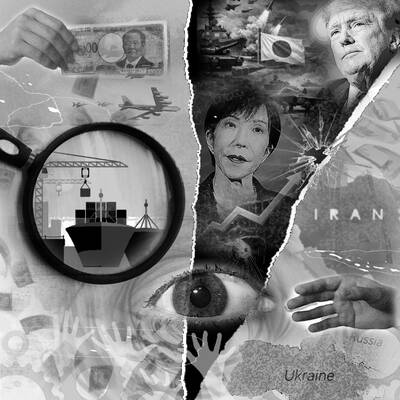
Japan’s imminent easing of arms export rules has sparked strong interest from Warsaw to Manila, Reuters reporting found, as US President Donald Trump wavers on security commitments to allies, and the wars in Iran and Ukraine strain US weapons supplies. Japanese Prime Minister Sanae Takaichi’s ruling party approved the changes this week as she tries to invigorate the pacifist country’s military industrial base. Her government would formally adopt the new rules as soon as this month, three Japanese government officials told Reuters. Despite largely isolating itself from global arms markets since World War II, Japan spends enough on its own
On March 31, the South Korean Ministry of Foreign Affairs released declassified diplomatic records from 1995 that drew wide domestic media attention. One revelation stood out: North Korea had once raised the possibility of diplomatic relations with Taiwan. In a meeting with visiting Chinese officials in May 1995, as then-Chinese president Jiang Zemin (江澤民) prepared for a visit to South Korea, North Korean officials objected to Beijing’s growing ties with Seoul and raised Taiwan directly. According to the newly released records, North Korean officials asked why Pyongyang should refrain from developing relations with Taiwan while China and South Korea were expanding high-level


 RSS
RSS