


Over the past year, Taiwan has received increased international attention due to its stellar response to the COVID-19 pandemic. Taipei has used the attention to argue its case for greater inclusion and to show that, despite not being a UN member, it has much to contribute to the world.
As everyone begins to think about a world after COVID-19, the government should channel this momentum into one element of its international cooperation: the Global Cooperation and Training Framework (GCTF).
Established in 2015, the framework was meant to demonstrate to a broader audience Taiwan’s ability to contribute on the global stage. As the nation is largely excluded from international organizations, Taiwan and its companies are often not able to share their expertise.
Therefore, the US government partnered with Taipei to bridge this gap by hosting workshops on public health, law enforcement cooperation, women’s empowerment, energy efficiency, e-commerce, cybersecurity, humanitarian assistance and disaster relief (HADR), and media literacy.
To date, the GCTF has conducted 30 workshops, with 1,600 officials and experts from 68 countries attending. In 2019, Tokyo became an official partner under the Japan-Taiwan Exchange Association. Other countries, such as Australia, Guatemala, the Netherlands, Sweden and, most recently, the UK, have joined as one-off cohosts of workshops.
Looking at the development and trajectory of the GCTF since its inception more than five years ago helps to show the impact that Taiwan and Taiwanese entities can have — if given the opportunity. The GCTF is a way for Taiwan to showcase that even though it might not get a seat on many international organizations, it can still help other countries seeking expertise.
As Taiwan’s COVID-19 response and containment efforts demonstrate, it has much to teach even “greater powers.”
As countries around the globe work to vaccinate citizens and start to look beyond the pandemic, Taipei should further utilize the GCTF framework to expand its influence and expertise — and possibly even find additional partners.
As the US grappled with a lackluster pandemic response, media around the globe highlighted Taiwan’s ability to contain the virus and the relatively normal life that people in Taiwan enjoyed despite global hardship.
While Taipei struggled to acquire vaccines for its citizens, the government’s response, coupled with no severe shutdowns, earned Taiwan much praise.
Throughout last year, the GCTF focused primarily on hosting COVID-19-related workshops. Of the seven workshops last year, four of them addressed some dimension of the pandemic: Combating COVID-19 disinformation, preparing for a second wave of infections (cohosted with Australia), COVID-19 and digital economy (cohosted with Guatemala), and combating COVID-19-related crimes (cohosted with Australia).
These workshops combined elements of the GCTF’s orbit with public health to show how the pandemic has cut across every dimension of society. COVID-19 is not just a public health issue, and these workshops show how individuals — for better or worse — adapt to a new world.
After the pandemic ends, the GCTF should again host workshops on public health-related issues, but the focus this year should continue to be on COVID-19.
Taipei, Washington and Tokyo should seek another host for a workshop to provide expertise on vaccine distribution. Such a workshop would be critical for relevant countries as the US finishes its domestic vaccination program and begins to deliver vaccines to countries around the world.
While the US’ record on COVID-19 has not been great, its vaccination program is one of the best in the world. Having the UK or Israel, which rank near the top of the New York Times’ world rankings, would provide another country’s expertise within the GCTF framework.
In addition to public health, the GCTF has hosted four workshops on women’s empowerment. The workshops have focused on helping women in the technology industry, developing female leaders in the Indo-Pacific region, and enhancing the role of women in trade and investment.
Tackling the issue of gender equality and equity is an underrepresented field in the region. Taiwan — which elected its first female president in 2016 and where 47 of the 113 members of its legislature are female — provides a good example of how to increase the number of women in government.
Now, this does not mean that Taiwan has a perfect record on gender equality, but it shows that the government is working to address gender equality issues and also that it hopes to train other countries seeking to follow Taiwan’s example.
Another facet of the GCTF is HADR. As Taiwan is regularly excluded from international organizations, and large international efforts and coalitions, the government and military emphasized becoming world-class at HADR. Whether it is responding to earthquakes, typhoons and pandemics, or providing aid to refugees, Taipei has specialized in HADR so that it can contribute to countries whenever disaster strikes.
Sometimes, assistance, such as in 2015 when Nepal turned down Taiwan’s offer to help in the aftermath of a major earthquake, is rejected due to political implications related to China, but other countries, such as Japan in the aftermath of the 2011 Tohoku earthquake, welcome any assistance.
The addition of cohosts to the GCTF and Japan’s formal partnering in 2019 shows that the framework can be even more effective and garner a larger audience.
At its heart, the GCTF seeks to be a nonpolitical tool for Taiwan to share its expertise. As a result, Beijing has largely ignored the GCTF and has not exerted much pressure against participating countries, companies or individuals.
The practical focus avoids the baggage that accompanies Taiwan’s efforts to attend meetings at UN-affiliated organizations, as a guest or observer. Countries with close ties to China, such as Cambodia, Pakistan and Myanmar, have attended GCTF workshops.
The framework and its mission could be well-served by including more partners in addition to Taipei, Washington and Tokyo. Considering their history of cohosting, Australia or the UK could be considered top candidates, if they so choose.
Australia has already cohosted more workshops than Japan after it became a full partner. With Canberra attached, the GCTF would have three of the four members of the Quadrilateral Security Dialogue (Quad), which was recently revigorated and looks to be one of the preferred formats of the administration of US President Joe Biden for dealing with China.
If the UK wants to partner more closely with Taiwan, becoming a partner in the GCTF makes sense. A dark horse candidate for partnership is another Quad member: India, which has recently sought to increase its dealings with Taipei.
However, India would likely need to cohost a workshop before such a scenario could be considered.
Taiwan has gained much political capital and international goodwill for its COVID-19 response and donations of personal protective equipment to countries in need. The past year has shown to every nation that Taiwan has much to contribute, especially in the field of public health.
It might be time for Taipei to take advantage of its situation by seeking not only to expand the number of GCTF workshops, but also to find additional partners.
Thomas Shattuck is a research associate in the Foreign Policy Research Institute’s Asia program and a member of Foreign Policy for America’s NextGen Foreign Policy Initiative.
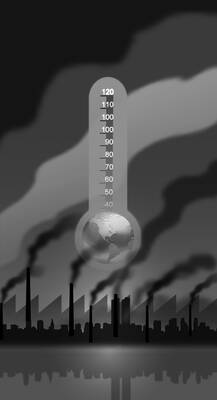
The closure of the Strait of Hormuz has sent the vast Asian chemicals industry into a tailspin. Deprived of the likes of Qatari natural gas and Saudi Arabian oil, the region’s fertilizer and plastics plants are slowing production or even shutting down. Everywhere except China, that is. In petrochemicals, China is unique. As well as a traditional industry that uses oil and gas as feedstock, it has parallel output that relies on its abundant domestic coal. Unsurprisingly, India and other regional powers want to copy and paste the Chinese method. This would not be easy — or climate friendly. The
KMT Chairwoman Cheng Li-wun’s (鄭麗文) recent visit to Beijing and her upcoming visit to Washington will serve as a high-level test of her diplomatic mettle. In Beijing, Cheng was received with symbolic gestures, a warm reception, and high-level access. In Washington, she will receive far less pomp and far sharper questions about the KMT’s vision for the future of Taiwan. Her challenge will be to persuade Washington that the KMT’s engagement with China can coexist with strong deterrence. Cheng’s April 7-12 visit to mainland China coincided with an intense period of conflict in Iran. Despite the strategic significance of Cheng’s trip,
History might remember 2026, not 2022, as the year artificial intelligence (AI) truly changed everything. ChatGPT’s launch was a product moment. What is happening now is an anthropological moment: AI is no longer merely answering questions. It is now taking initiative and learning from others to get things done, behaving less like software and more like a colleague. The economic consequence is the rise of the one-person company — a structure anticipated in the 2024 book The Choices Amid Great Changes, which I coauthored. The real target of AI is not labor. It is hierarchy. When AI sharply reduces the cost
US President Donald Trump recently repeated his claim that “Taiwan stole America’s chip industry,” reigniting public debate on the issue. As a former Taiwanese minister of economic affairs and an entrepreneur deeply involved in semiconductor supply chain development, I feel a responsibility to clarify this misunderstanding. From the perspective of global industrial evolution and the economic principle of comparative advantage, such a statement appears overly simplistic and risks obscuring the essence of the issue. The rise of Taiwan’s semiconductor industry was not built on “replacing America,” but rather emerged as a result of countries pursuing different development paths within the


 RSS
RSS