


Taipei Mayor Ko Wen-je’s (柯文哲) opinion that a rise in traffic deaths in Taichung and Kaohsiung was due to a change in governments in the two municipalities has stirred controversy.
However, the fundamental reason is that the punishments for those found guilty of offenses that caused a fatal road crash are too light to be a deterrent to careless driving. This has led to an increase in negligent driving and danger on the roads.
If a court rules that a death was caused by negligence, the offender will normally be given a light sentence. After all, insurance companies have set a price on a human life — NT$2 million (US$70,577) — which is the compensation they award in such circumstances.
The offending driver does not have to pay anything, and light sentences are often commuted to a fine, so they rarely face prison.
It is unsurprising that people are not motivated to drive carefully.
There are many Internet discussions about why there are so many traffic accidents in Taiwan. Some people say that Taiwan’s high population density increases the probability of crashes.
There were 1,849 road traffic fatalities in Taiwan in 2019 and 1,852 last year.
Comparing Taiwan with other densely populated nations shows that Singapore ranks first for population density, Taiwan ranks fourth, the Netherlands eighth and Israel ninth.
However, if the populations of these nations are adjusted to match Taiwan’s and the fatalities from the latest available data kept in proportion, Singapore would have 815 deaths per year, the Netherlands 871 and Israel 875.
The adjusted figures show that the rate of crash fatalities in Taiwan is more than double what it is in nations with similar population densities.
If Taiwan’s population and road accident deaths are adjusted for the population of Japan and its 3,532 deaths in 2019, Taiwan would have had only 661 deaths that year. In other words, the risk of being killed in a traffic crash in Taiwan was almost three times what it was in Japan.
Japan’s strict enforcement of compensation and prison terms, which are several times higher than they are in Taiwan, as well as intolerance toward offenders, have probably played a role in a rapid reduction in the number of road accident deaths there, from 5,224 in 2016 to 3,532 in 2019.
Taiwan has invested a lot of resources in traffic law enforcement, but it seems that the results have been limited. The government should seriously examine the root cause of the high incidence of crashes.
Carrots and sticks must be used in a balanced manner. An exaggerated emphasis on humanitarianism leads to strange rulings, such as a not-guilty verdict for a person suspected of killing his mother.
When offending drivers do not have to take any major responsibility for their mistakes, it sends the message that killing people on the roads is no big deal, as insurance companies pay the bereaved families.
Traffic on Taiwan’s roads is in a state of chaos. Perhaps it is time to deploy heavy punishments.
Lin Yeh-yun is a professor of business administration at National Chengchi University.
Translated by Lin Lee-kai
KMT Chairwoman Cheng Li-wun’s (鄭麗文) recent visit to Beijing and her upcoming visit to Washington will serve as a high-level test of her diplomatic mettle. In Beijing, Cheng was received with symbolic gestures, a warm reception, and high-level access. In Washington, she will receive far less pomp and far sharper questions about the KMT’s vision for the future of Taiwan. Her challenge will be to persuade Washington that the KMT’s engagement with China can coexist with strong deterrence. Cheng’s April 7-12 visit to mainland China coincided with an intense period of conflict in Iran. Despite the strategic significance of Cheng’s trip,
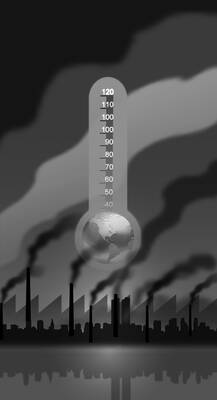
The closure of the Strait of Hormuz has sent the vast Asian chemicals industry into a tailspin. Deprived of the likes of Qatari natural gas and Saudi Arabian oil, the region’s fertilizer and plastics plants are slowing production or even shutting down. Everywhere except China, that is. In petrochemicals, China is unique. As well as a traditional industry that uses oil and gas as feedstock, it has parallel output that relies on its abundant domestic coal. Unsurprisingly, India and other regional powers want to copy and paste the Chinese method. This would not be easy — or climate friendly. The
Indonesian President Prabowo Subianto says he knows how to fix the problems facing Indonesia. Yet his economic mismanagement and authoritarian tendencies are steering the nation toward a familiar mix of currency instability and political chaos. The world’s fourth-most populous nation risks reversing the hard-won democratic and business reforms that came after the Asian Financial Crisis in 1997. At that time, the rupiah collapsed and the political upheaval that followed forced former president Haji Mohamed Suharto from power. Prabowo’s administration is ignoring similar warning signs. That disconnect was apparent in a national address on Wednesday, when Prabowo projected the swagger that has
“Of course you can choose not to be Taiwanese, just do not stay here,” chairwoman of Taipei 101 operator Taipei Financial Center Corp Janet Chia (賈永婕) said in an online interview with local entertainer Tai Chih-yuan (邰智源), triggering intense discussion on social media, with politicians across party lines weighing in. In the interview, which was aired on May 14, Chia and Tai’s discussion over a meal in Taipei 101 covered Chia’s career change from entertainer to chairwoman and US climber Alex Honnold’s free solo climb up the Taipei 101 building. During the interview, Chia said, “Being on this land, we


 RSS
RSS