


Taiwanese diplomats undergo a flurry of examinations and training before beginning their work. According to the Institute of Diplomacy and International Affairs’ missions and functions statement, new staff participate in an intense period of foreign language and Republic of China policy training to enhance their interpretation skills for negotiations.
While training these hard skills is necessary, it is not sufficient. The art of diplomacy is multifaceted, liquid and complex.
For this reason, Taiwan should include within its diplomatic training a focus on three key diplomatic soft skills: cross-cultural competence rooted in knowledge of local history and custom; respect for decorum under pressure; and adaptability through situational awareness.
Every diplomat must be a local historian. To walk into a diplomatic interaction with no knowledge of the historical context or current situation of the counterpart’s nation is to walk into a diplomatic minefield. It should go without saying that maintaining a constructive trajectory in negotiations can be done in large part by having the respect to know the background of your counterpart.
Decorum is the basis of diplomatic relations. Decorum provides a secure and predictable environment for potentially sensitive matters to be negotiated by actors from different cultural backgrounds.
While maintaining decorum might sometimes seem like mere pomp, it provides a necessary framework by creating a set of known boundaries, within which negotiations can take place. When decorum is broken, many other aspects of diplomacy often follow suit. The ability to maintain decorum under pressure is something that can be regularly drilled and refined both on and before employment.
Knowledge of local customs must be taught to new diplomats. Handshakes are with the right or the left? Should disagreement be aired publicly or privately? Are there different expectations for gender and age roles? There is no reason to expect that new recruits into diplomacy come preloaded with these rules for every region and culture with which they might interact, but they should be expected to adapt quickly through situational awareness, even if they are initially unfamiliar with these customs.
There should also be a clear procedure for passing on cultural knowledge from incoming and outgoing diplomats.
Situational and self-awareness are qualities that should be sought after in diplomats — a keen ability to adapt and pick up on social cues is one of the most important skills in diplomacy. A diplomat at any level must be the opposite of robotic and rote — as no diplomatic interaction is exactly the same as the last.
Finally, missed opportunities and misunderstandings are often not due to language barriers. There is no doubt that language skills play a key role in international diplomacy, and the lingua franca, English, is an important tool in a diplomat’s toolbox.
However, the elements of foreign relations that are all too often overlooked are knowledge of local history and custom, decorum, situational awareness and creativity on the job.
These skills and attributes can be taught. Commenting on Taiwan’s diplomatic human resources, Democratic Progressive Party (DPP) Legislator Lo Chih-cheng (羅致政) said that “examination, training, and employment are all connected, we need to find a balance between them.”
This is certainly true for all countries, and Taiwan, like many others, has room for improvement in this balancing act.
Taiwan Nextgen Foundation chief executive Chen Kuan-ting (陳冠廷) also made an important point when he said: “We need diplomats who are not focused on protocol and courtesy calls. While I find that extremely important, under Taiwan’s circumstances, we also need diplomats who can think outside the box, who are willing to be more innovative and challenge the status quo, rather than just set in using traditional diplomacy.”
The desire and creativity to think outside the box in diplomatic affairs requires a deep knowledge of both “the rules of the game” and beneficial ways in which those rules can be bent.
The diplomatic arm of the Taiwanese government is essential to this nation. Every diplomatic interaction matters greatly for Taiwan, so in some sense “the mic is always hot.”
Taiwan must rely on its diplomatic wit to pursue its interests in an environment that is at best uncertain and at worst hostile.
Well-rounded, well-educated and well-trained diplomats are not a resource that Taiwan can afford to pigeon-hole into a role that is defined by simply having great language skills and none of the other characteristics of top-notch diplomats.
Maxwell Wappel is a research associate at the Taiwan Nextgen Foundation, a Taipei and Chiayi-based policy think tank focusing on Taiwan’s soft power, the New Southbound Policy and the 2030 Bilingual Homeland.
In recent weeks, Taiwan has witnessed a surge of public anxiety over the possible introduction of Indian migrant workers. What began as a policy signal from the Ministry of Labor quickly escalated into a broader controversy. Petitions gathered thousands of signatures within days, political figures issued strong warnings, and social media became saturated with concerns about public safety and social stability. At first glance, this appears to be a straightforward policy question: Should Taiwan introduce Indian migrant workers or not? However, this framing is misleading. The current debate is not fundamentally about India. It is about Taiwan’s labor system, its
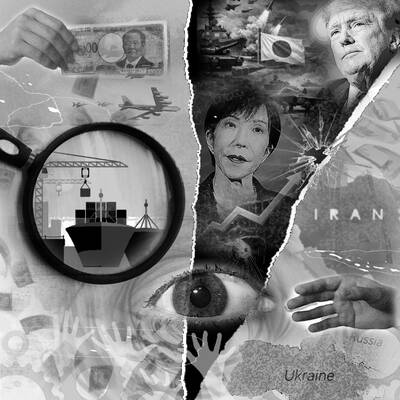
Japan’s imminent easing of arms export rules has sparked strong interest from Warsaw to Manila, Reuters reporting found, as US President Donald Trump wavers on security commitments to allies, and the wars in Iran and Ukraine strain US weapons supplies. Japanese Prime Minister Sanae Takaichi’s ruling party approved the changes this week as she tries to invigorate the pacifist country’s military industrial base. Her government would formally adopt the new rules as soon as this month, three Japanese government officials told Reuters. Despite largely isolating itself from global arms markets since World War II, Japan spends enough on its own
On March 31, the South Korean Ministry of Foreign Affairs released declassified diplomatic records from 1995 that drew wide domestic media attention. One revelation stood out: North Korea had once raised the possibility of diplomatic relations with Taiwan. In a meeting with visiting Chinese officials in May 1995, as then-Chinese president Jiang Zemin (江澤民) prepared for a visit to South Korea, North Korean officials objected to Beijing’s growing ties with Seoul and raised Taiwan directly. According to the newly released records, North Korean officials asked why Pyongyang should refrain from developing relations with Taiwan while China and South Korea were expanding high-level
Swiftly following the conclusion of Chinese Nationalist Party (KMT) Chairwoman Cheng Li-wun’s (鄭麗文) China trip, China’s Taiwan Affairs Office unveiled 10 new policy measures for Taiwan. The measures, covering youth exchanges, agricultural and fishery imports, resumption of certain flights and cultural and media cooperation, appear to offer “incentives” for cross-strait engagement. However, viewed within the political context, their significance lies not in promoting exchanges but in redefining who is qualified to represent Taiwan in dialogue with China. First, the policy statement proposes a “normalized communication mechanism” between the KMT and the Chinese Communist Party (CCP). This would shift cross-strait interaction from


 RSS
RSS