


China is considering targeting more Australian exports, including wine and dairy, according to people familiar with the matter, in what would be a dramatic deterioration in ties as the key trading partners spar over the COVID-19 outbreak.
Chinese officials have drawn up a list of potential goods, also including seafood, oatmeal and fruit, that could be subject to stricter quality checks, anti-dumping probes, tariffs or customs delays, sources said, asking not to be identified as the discussions are private.
State media could also encourage consumer boycotts, they said, adding a final decision on the measures had not been made.
Australia, which is the world’s most-China dependent developed economy, has raised Beijing’s ire by calling for an investigation into the origins of the pandemic.
The government of Chinese President Xi Jinping (習近平) is sensitive to criticism of its handling of the outbreak and has a track record of using trade as a diplomatic cudgel, with Taiwan, South Korea and Japan all having experienced reprisals.
China has already barred meat imports from four Australian slaughterhouses for “technical” reasons, and on late Monday slapped tariffs of more than 80 percent on Australian barley after a long-running inquiry.
Any additional measures will depend on how Australia addresses China’s objections, sources said, adding Beijing does not intend to publicly acknowledge any link between its trade actions and the calls for a virus probe.
Shares of some Australian companies that export to China sank on Tuesday prospects for more trade disruptions. Shares of A2 Milk Co, which counts on China for about 40 percent of its sales, dropped as much as 3.9 percent, while Treasury Wine Estates Ltd shares pared gains on the news.
The office of Australian Trade Minister Simon Birmingham declined to comment.
When asked about the list, the Chinese Ministry of Foreign Affairs did not address the specifics, but said the government “has always sought to find common ground while putting differences aside, cooperate to achieve win-win results and will not harm others to benefit oneself.”
“We hope the Australian and Chinese side can meet in the middle, take more measures to improve bilateral relations and deepen mutual trust, and provide favorable conditions and atmosphere for practical cooperation in various areas,” the ministry said.
Speaking earlier in the day at a briefing in Beijing, foreign ministry spokesman Zhao Lijian (趙立堅) said China would back a resolution at the World Health Assembly later in the day that calls for a “comprehensive assessment” of the pandemic that differs from “Australia’s earlier proposal of a so-called independent global review.”
“We suggest the Australia side to go through the text carefully. If Australia is willing to change its course and give up the political manipulation of the pandemic, we will welcome that,” Zhao said.
Later on Tuesday, Australian Minister of Foreign Affairs Marise Payne and Minister of Health Greg Hunt welcomed the resolution’s commitment to an “impartial, independent and comprehensive” evaluation of the lessons learned from the virus response.
“Australia has been clear and transparent in calling for an independent review into COVID-19, which is an unprecedented global health and economic crisis,” the Australian ministers said.
“Australia will continue to be a consistent and constructive voice in the international community to advance and protect our national interest and the global interest,” thay added.
China is Australia’s most important trading partner, with agricultural shipments alone totaling about A$16 billion (US$10.5 billion) in 2018 to last year.
While the big ticket items of iron ore, coal and natural gas that Beijing needs to build and fuel its economy have so far not been mentioned, education and tourism could also be vulnerable to reprisals.
The Chinese ambassador to Australia last month suggested that Chinese tourists and students might decide to boycott the nation.
As Australia slides toward its first recession in almost 30 years, the economic hit of more widespread trade measures could not come at a worse time.
The impact “would be very keenly felt given we are in a global recession and Chinese demand is not only very large, but a key source of relative strength in the global economy,” said Roland Rajah, an economist at Sydney-based think tank the Lowy Institute.
“Finding alternative export markets is difficult in the best of times, but virtually impossible right now,” added Rajah, who previously worked at the Asian Development Bank and the Reserve Bank of Australia.
Any shift of focus to Australia’s mining exports “could signify a real escalation in tensions, not only because it is far more important to us, but because China itself would be paying a high price if they went down that path,” he said.
China is Australia’s biggest overseas destination for wine and dairy, with shipments growing to A$754 million and A$564 million respectively.
While Australia and China entered a free-trade agreement in late 2015, tensions between the two nations have been simmering for years. Passing laws against foreign interference in 2018, Australia accused Beijing of “meddling” in its government, media and education system.
Like the US, Australia has also banned Huawei Technologies Co from building its 5G network on security concerns.
The Huawei ban was seen as the catalyst for China’s barley anti-dumping probe that began in 2018, and a slowdown of Australian coal shipments into Chinese ports. China also restricted canola imports from Canada after the nation detained a Huawei executive.
“China has been practicing economic coercion against many countries over the past 10 years,” said Rory Medcalf, head of the National Security College at the Australian National University in Canberra.
“As we’ve seen with the barley tariffs, economic coercion is about applying short-term economic and political pain, but it will be difficult for China to sustain such tactics against the wide range of countries that want the pandemic to be investigated. I don’t see that China can succeed in singling out Australia indefinitely on this issue,” Medcalf said.
Shi Yinhong (時殷弘), an adviser to China’s Cabinet and a professor of international relations at Renmin University of China in Beijing, said that ties between the two nations were more likely to deteriorate than to improve, given Australia’s foreign policy alignment with the US.
“If the Australian government’s rhetoric is still loud and it sticks to its current demands, China may take more severe countermeasures. If the Australian government — mindful of its economic interests and opposition from the business community — steps back, China would not need to take such steps,” Shi said.
A gap appears to be emerging between Washington’s foreign policy elites and the broader American public on how the United States should respond to China’s rise. From my vantage working at a think tank in Washington, DC, and through regular travel around the United States, I increasingly experience two distinct discussions. This divergence — between America’s elite hawkishness and public caution — may become one of the least appreciated and most consequential external factors influencing Taiwan’s security environment in the years ahead. Within the American policy community, the dominant view of China has grown unmistakably tough. Many members of Congress, as
The shifting geopolitical tectonic plates of this year have placed Beijing in a profound strategic dilemma. As Chinese President Xi Jinping (習近平) prepares for a high-stakes summit with US President Donald Trump, the traditional power dynamics of the China-Japan-US triangle have been destabilized by the diplomatic success of Japanese Prime Minister Sanae Takaichi in Washington. For the Chinese leadership, the anxiety is two-fold: There is a visceral fear of being encircled by a hardened security alliance, and a secondary risk of being left in a vulnerable position by a transactional deal between Washington and Tokyo that might inadvertently empower Japan
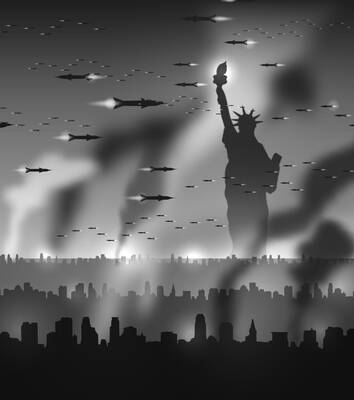
After declaring Iran’s military “gone,” US President Donald Trump appealed to the UK, France, Japan and South Korea — as well as China, Iran’s strategic partner — to send minesweepers and naval forces to reopen the Strait of Hormuz. When allies balked, the request turned into a warning: NATO would face “a very bad” future if it refused. The prevailing wisdom is that Trump faces a credibility problem: having spent years insulting allies, he finds they would not rally when he needs them. That is true, but superficial, as though a structural collapse could be caused by wounded feelings. Something
Former Taipei mayor and Taiwan People’s Party (TPP) founding chairman Ko Wen-je (柯文哲) was sentenced to 17 years in prison on Thursday, making headlines across major media. However, another case linked to the TPP — the indictment of Chinese immigrant Xu Chunying (徐春鶯) for alleged violations of the Anti-Infiltration Act (反滲透法) on Tuesday — has also stirred up heated discussions. Born in Shanghai, Xu became a resident of Taiwan through marriage in 1993. Currently the director of the Taiwan New Immigrant Development Association, she was elected to serve as legislator-at-large for the TPP in 2023, but was later charged with involvement


 RSS
RSS