


On one side of the marketplace, it was carnage. As the Hindu mob descended, Muslim-owned stalls selling car parts were slowly reduced to debris and ashes, while just 100m away stood two police stations.
As the mob attacks came once, then twice and then a third time in the northeast Delhi neighborhood, desperate stallholders repeatedly ran to Gokalpuri and Dayalpur police stations crying out for help, but each time they found the gates locked from the inside. For three days, no help came.
“How could they set fire to our market in such a horrific way, while it is so close to two police stations, and not be stopped?” said a shopkeeper, who asked to remain anonymous for fear of reprisals. “But if I make any complaint against the police and if they know my identity, I will face very serious trouble.”
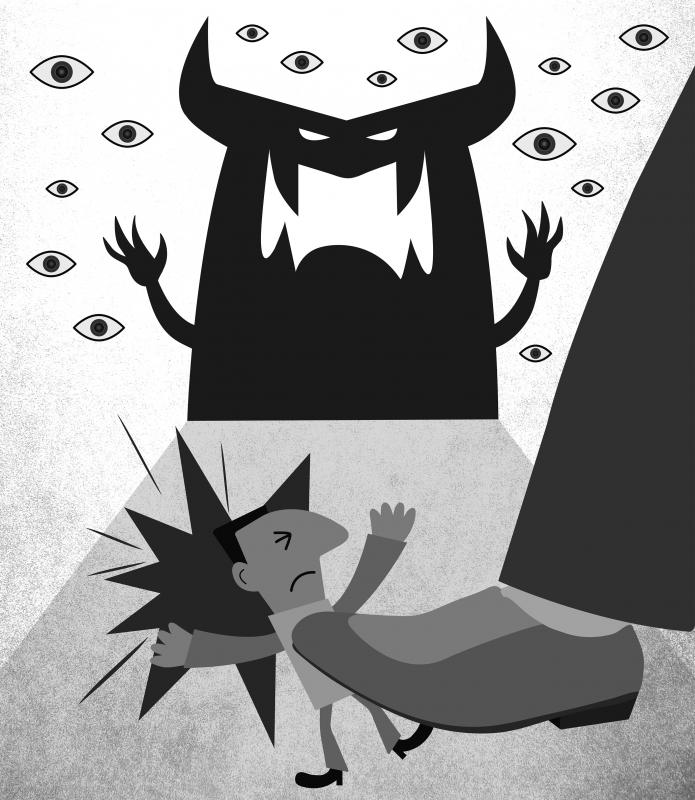
Illustration: Lance Liu
Since the riots broke out in Delhi at the end of last month, the worst religious conflict to engulf the capital in decades, questions have persisted about the role that the Delhi police played in enabling the violence, which was predominately Hindu mobs attacking Muslims. Of the 51 people who died, at least three-quarters were Muslim, and many Muslims are still missing.
“During the recent riots in Delhi, the role of the police has been very reprehensible,” said S.R. Darapuri, a retired senior police officer from Uttar Pradesh. “They not only openly sided with the Hindu mobs attacking Muslims, but also used brutal force against them. They purposely failed to respond to the SOS calls from the Muslims trapped in many violence-hit areas. Evidently, the role of the police has been communal, unethical and unprofessional.”
Delhi’s police are under the direct control of the ruling Bharatiya Janata Party (BJP) government, specifically Amit Shah, who is Indian home minister and party president, one of the most fervent advocates of the BJP’s Hindu nationalist agenda, which aims to establish India as a Hindu, rather than secular, nation.
As a result, the political agenda of the BJP government of Indian Prime Minister Narendra Modi, which is widely seen as vehemently anti-Muslim, appears to have become firmly entrenched in the mindset of the Delhi police, which is already an overwhelmingly Hindu force.
In the weeks that have followed the riots, the alleged bias of the police has extended to accusations of a cover-up to protect the Hindu rioters and a widespread refusal to file or investigate complaints made by Muslim victims.
Delhi police did not respond to repeated requests for comment, but speaking in parliament last week, Shah praised the “commendable” job done by the Delhi police and said that “people should not look for religion in riots.”
The police themselves claim they did everything in their power to restore law and order.
However, those who took part in the riots on the Hindu side tell a very different story.
The catalyst for the riots is widely acknowledged to have been a comment by Kapil Mishra, a BJP leader, who on Feb. 23 issued a public ultimatum declaring that if the police did not clear the streets of a protest against a new citizenship law seen as anti-Muslim, his supporters would be “forced to hit the streets.”
Ravinder, a 17-year-old who works at his father’s property business and is part of India’s lower-caste Gujjar community, said he and other young Hindu men had heard Mishra’s call to action against the Muslim community and began to mobilize on the morning of Feb. 24 without any fear of police reprisal.
“There was a clear instruction of catch-and-kill action against any Muslim we could spot,” Ravinder said. “I was in a group of around 15 boys. Many senior brothers said to us that police would not take any action against any member of our community and we could attack the people on the other side [Muslims] the way we liked.”
Ravinder described how he and a group of seven men had captured a Muslim rickshaw driver in his 40s, beaten him with wooden sticks and metal rods until he appeared dead and then threw him in an open drain while police stood by.
He also said the police had instructed them to destroy the CCTV cameras as they marauded through the streets.
“Some policemen were standing just a few meters away,” Ravinder said. “They did not say anything to us. They turned their faces away from us. We understood that police would not intervene if we turned violent against any Muslim and a large section of the police all along backed us throughout.”
His account was echoed by a Hindu priest from Bihar state.
The Brahmin, who spoke on condition of anonymity, said he had witnessed young Hindu men in his neighborhood, who were all BJP supporters, declare that the “police brothers are with us” as they gathered stones, iron rods, knives, machetes, wooden sticks and guns ready to attack Muslims.
“The men were displaying weapons openly,” the priest said. “One young man with a pistol shouted: ‘Brothers, we are on a mission in the interest of the nation. Our [BJP] leaders have given the call to come out in the open... There is nothing to worry about. Join us and increase our strength.’”
“They were mobilizing other youths to come out with all types of arms. This was in the presence of police. It was clear that police were on our side,” he said.
While the authorities have denied that police were in any way involved in the violence, video footage captured during the riots and corresponding witness testimony shows police accompanying and encouraging the Hindu mobs or even taking part in pelting Muslims with stones and destroying CCTV cameras.
One piece of mobile phone footage, which went viral, laid bare the anti-Muslim bigotry of Delhi police. On Feb. 24, in one of the first clashes of the riots, police officers were captured beating five Muslim men who had not taken part in any violence. They kicked and hit them with sticks until their bodies were limp and broken, and then as the wounded men lay in the street, police forced them to sing the national anthem to prove their “loyalty” to India.
Among the men was 23-year-old Mohammad Faizan, who had gone out looking for his mother that day.
Although an innocent bystander, after their beatings and public humiliation at the hands of the police, Faizan and the others were then taken into police detention, where they received no medical attention. By the time he was released more than 24 hours later, Faizan’s condition had deteriorated. He died in hospital the next day from internal injuries, although his family has still not been given the report of the postmortem examination.
Sitting on the floor of the one-room house she shared with Faizan, his mother, Kishmatoon, 61, could not contain her grief, stroking the bed where he had once slept.
“He was completely innocent,” she said. “They cannot show any evidence that shows my son did anything unlawful that day. Yet the policemen caught and beat him mercilessly, and finally he died from the beatings.”
“They are policemen and I am poor and powerless,” she said. “I cannot seek justice for my son’s murder by police in any court in this country.”
Yet as the violence escalated across northeast Delhi and hundreds of thousands of phone calls began to flood into the police helpline, in most cases no police came. While Delhi police have claimed they did not have the personnel to respond to the scale of calls, accounts suggest that many made by Muslims purposefully went ignored.
Sanjida, 32, who owned a bakery in Shiv Vihar, which was destroyed by mobs, described how she had called the police as the attackers descended and was told by the officer who picked up the phone: “You voted for Kejriwal, call Kejriwal for help,” referring to Delhi Chief Minister Arvind Kejriwal, whose party recently beat the BJP by a landslide in the Delhi state elections with huge backing from the Muslim community.
Others described how when they had called the police helpline, they had been told: “You wanted azadi [freedom], this is it.”
Most victims of the riots now believe that police complicity in the violence means they will never receive justice.
Mehmood Pracha, a lawyer who is providing free legal assistance to riot victims, alleged that the police were now trying to prevent the mobs that carried out the violence being brought to account.
“Police are using pressure tactics and trying to ensure that no complaint is filed against the rioters,” Pracha said. “We have received hundreds of complaints from Muslim people that police are threatening people, including women and children, that if they filed complaints, they would be implicated in false cases.”
Even a retired Muslim policeman said that no officers had responded to dozens of calls as his house was looted in the riots.
Mahmood Khan, 66, who worked for Delhi police all his life, had his house raided three times by Hindu mobs.
He said no police had responded to his calls, his letter to a senior officer had gone unanswered and the police had initially refused to let him file a report about the damage.
“Maybe they will pretend to look for the culprits, but in the end they will be protected,” Khan said. “We are Muslims. There is no justice for us.”
Taiwan’s higher education system is facing an existential crisis. As the demographic drop-off continues to empty classrooms, universities across the island are locked in a desperate battle for survival, international student recruitment and crucial Ministry of Education funding. To win this battle, institutions have turned to what seems like an objective measure of quality: global university rankings. Unfortunately, this chase is a costly illusion, and taxpayers are footing the bill. In the past few years, the goalposts have shifted from pure research output to “sustainability” and “societal impact,” largely driven by commercial metrics such as the UK-based Times Higher Education (THE) Impact
History might remember 2026, not 2022, as the year artificial intelligence (AI) truly changed everything. ChatGPT’s launch was a product moment. What is happening now is an anthropological moment: AI is no longer merely answering questions. It is now taking initiative and learning from others to get things done, behaving less like software and more like a colleague. The economic consequence is the rise of the one-person company — a structure anticipated in the 2024 book The Choices Amid Great Changes, which I coauthored. The real target of AI is not labor. It is hierarchy. When AI sharply reduces the cost
I wrote this before US President Donald Trump embarked on his uneventful state visit to China on Thursday. So, I shall confine my observations to the joint US-Philippine military exercise of April 20 through May 8, known collectively as “Balikatan 2026.” This year’s Balikatan was notable for its “firsts.” First, it was conducted primarily with Taiwan in mind, not the Philippines or even the South China Sea. It also showed that in the Pacific, America’s alliance network is still robust. Allies are enthusiastic about America’s renewed leadership in the region. Nine decades ago, in 1936, America had neither military strength
The Presidential Office on Saturday reiterated that Taiwan is a sovereign, independent nation after US President Donald Trump said that Taiwan should not “go independent.” “We’re not looking to have somebody say: ‘Let’s go independence because the United States is backing us,’” Trump said in an interview with Fox News aired on Friday. President William Lai (賴清德) on Monday said that the Republic of China (ROC) — Taiwan’s official name — and the People’s Republic of China (PRC) are not subordinate to each other. Speaking at an event marking the 40th anniversary of the establishment of the Democratic Progressive Party (DPP), Lai said


 RSS
RSS