


Not long ago, newspapers reported that the total expenditure of the National Health Insurance (NHI) system had for the first time exceeded NT$700 billion (US$23.17 billion), but its deficit might be as much as NT$50 billion to NT$60 billion. If the situation continues to worsen, Taiwan’s NHI program would go bankrupt in 2021, according to National Health Insurance Administration data.
When a nation becomes a “super-aged society,” as the number of elderly people increases while the population shrinks, healthcare costs are sure to keep rising as more people get sick and develop acute and serious illnesses. The trend for NHI expenditure to keep climbing is to some extent irreversible, but is it unavoidable?
It is possible to focus on prevention, health promotion, public hygiene and chronic disease control and prevention to hold the healthcare front line, rather than waiting until after people have fallen ill and must seek medical treatment, which would increase NHI expenditure even more.
The main problem is sugar consumption. Sugar is public enemy No. 2, after tobacco. The only difference between the two is that it is possible to avoid tobacco, while sugar is inescapable.
Two of the main sources of sugar that does not occur naturally in fruits and vegetables are soft drinks and energy drinks. It is also an ingredient in bread, yogurt, peanut butter, soup, wine, sausage and almost every other processed food.
Studies have shown that sugar is harmful to our physical health. In addition to being the primary culprit behind obesity and diabetes, increasing the risk of cardiovascular disease and metabolic syndrome, Academia Sinica research also shows that high sugar consumption contributes to pancreatic cancer.
In January 2014, Mexico added a 1 peso (US$0.05) per liter tax on sugary drinks, which reduced sugary drink purchases by 7.6 percent during 2014 and 2015, a study from the Mexican National Institute of Public Health and the University of North Carolina showed.
After France taxed soft drinks in 2012, the consumption of these drinks went down, while Norway has had a generalized tax measure on refined sugar products since 1922 and is achieving good results with its consumer information program.
In 2016, the British chancellor of the exchequer announced a sugar tax targeting manufacturers and importers, based on a product’s sugar content. In 2017, Philadelphia introduced the Philadelphia Beverage Tax, which targets distributors of sweetened beverages and caused sales of sweetened drinks in the city to fall by 38 percent.
Ministry of Education data show that about 30 percent of elementary and junior-high school students are obese, and this number is increasing. World Obesity Federation information shows that the obesity rates among adults and children in Taiwan are Asia’s highest behind China.
The government should learn from the experiences of other countries, and in addition to writing new laws, raising business tax on sugar-related businesses and supervising the food industry, it should educate people and help them protect themselves. If nothing is done, national healthcare will pay a heavy price.
Wei Shih-chang works in the information industry.
Translated by Julian Clegg and Perry Svensson
A gap appears to be emerging between Washington’s foreign policy elites and the broader American public on how the United States should respond to China’s rise. From my vantage working at a think tank in Washington, DC, and through regular travel around the United States, I increasingly experience two distinct discussions. This divergence — between America’s elite hawkishness and public caution — may become one of the least appreciated and most consequential external factors influencing Taiwan’s security environment in the years ahead. Within the American policy community, the dominant view of China has grown unmistakably tough. Many members of Congress, as
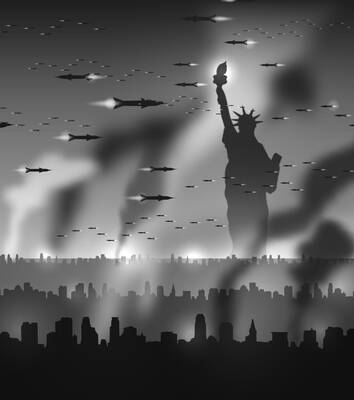
After declaring Iran’s military “gone,” US President Donald Trump appealed to the UK, France, Japan and South Korea — as well as China, Iran’s strategic partner — to send minesweepers and naval forces to reopen the Strait of Hormuz. When allies balked, the request turned into a warning: NATO would face “a very bad” future if it refused. The prevailing wisdom is that Trump faces a credibility problem: having spent years insulting allies, he finds they would not rally when he needs them. That is true, but superficial, as though a structural collapse could be caused by wounded feelings. Something
Former Taipei mayor and Taiwan People’s Party (TPP) founding chairman Ko Wen-je (柯文哲) was sentenced to 17 years in prison on Thursday, making headlines across major media. However, another case linked to the TPP — the indictment of Chinese immigrant Xu Chunying (徐春鶯) for alleged violations of the Anti-Infiltration Act (反滲透法) on Tuesday — has also stirred up heated discussions. Born in Shanghai, Xu became a resident of Taiwan through marriage in 1993. Currently the director of the Taiwan New Immigrant Development Association, she was elected to serve as legislator-at-large for the TPP in 2023, but was later charged with involvement
Out of 64 participating universities in this year’s Stars Program — through which schools directly recommend their top students to universities for admission — only 19 filled their admissions quotas. There were 922 vacancies, down more than 200 from last year; top universities had 37 unfilled places, 40 fewer than last year. The original purpose of the Stars Program was to expand admissions to a wider range of students. However, certain departments at elite universities that failed to meet their admissions quotas are not improving. Vacancies at top universities are linked to students’ program preferences on their applications, but inappropriate admission


 RSS
RSS