


It is the beginning of autumn, but still hot and dry. While my wife and I were out visiting friends, we were invited to attend a cosplay event paying tribute to Yang Li-hua (楊麗花), a Taiwanese opera performer revered as a “national treasure.”
Entitled “Everyone is Yang Li-hua” (人人都是楊麗花), the event was promoting Taiwanese opera television show The Timeless Virtues (忠孝節義), which is to premier on Tuesday next week, marking Yang's return to the spotlight after 16 years.
The event featured more than 40 guests of all ages — from five-year-olds to 68-year-olds — in period costume, all dressed as they remembered their idol Yang.
Their introductions about their connection with her were almost all identical: The vast majority grew up watching Yang’s performances with their mother or grandmother. Regardless of whether they were fluent in Hoklo (commonly known as Taiwanese), they were all more or less capable of singing a few lines from Taiwanese opera.
We were all sent back to Taiwan in the 1960s, when everyone was glued to the TV screen at 8pm on weekdays to watch Yang Li-hua Taiwanese Opera (楊麗花歌仔劇).
One of the guest performers, a mother in a handsome-looking outfit, said with tears in her eyes that after her son’s accidental death, she could not stop crying, and in the end, she followed a doctor’s advice and returned to her habit of watching Taiwanese opera.
She said that Yang helped her get through that difficult period.
Another guest, a middle-aged mother who had brought her two daughters to perform with her on stage, said that she was not didactic in the way she raised her children — instead, she watched Yang’s opera performances with them, because children watching opera never go astray.
My wife, who grew up in southern Taiwan, said that during midday reruns of Yang’s performances, everyone was glued to the TV and the streets were empty. It was truly grassroots music and created a bond among family members, between grandchildren and grandparents.
For me, a second-generation Mainlander, the daily two-hour show in Taiwanese was my biggest exposure to the language, making my Taiwanese listening comprehension better than some of the young people performing on stage at the event.
This might just have been a promotional event for an upcoming show, or a fun social gathering, but for me, born and raised in Taiwan, Yang’s performances bring together common people and create bonds of friendship. They demonstrate the vitality and resilience of grassroots people and this is where Taiwanese values can be found.
Yang’s return has completely absorbed older people and has made them forget their age. It is a great example for us elderly people.
Yang’s disciple Chen Ya-lan (陳亞蘭) was there, thoughtfully reminding the performers to “hold your head up high, stand up straight, suck in your stomach” and so on.
Whenever she talked about Yang, Chen would respectfully call her Auntie Yang.
The Timeless Virtues has yet to be aired, but thanks to Chen, I have already seen what the timeless virtues of loyalty, filial piety, chastity and righteousness really mean.
Ku Li-jen is an adjunct associate professor of history at National Taipei University.
Translated by Lin Lee-kai
A gap appears to be emerging between Washington’s foreign policy elites and the broader American public on how the United States should respond to China’s rise. From my vantage working at a think tank in Washington, DC, and through regular travel around the United States, I increasingly experience two distinct discussions. This divergence — between America’s elite hawkishness and public caution — may become one of the least appreciated and most consequential external factors influencing Taiwan’s security environment in the years ahead. Within the American policy community, the dominant view of China has grown unmistakably tough. Many members of Congress, as
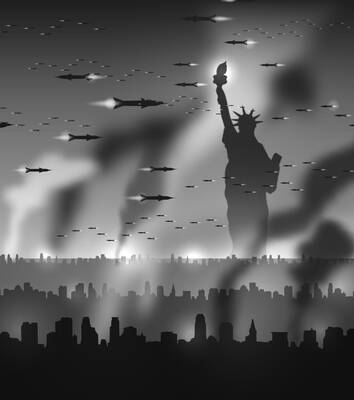
After declaring Iran’s military “gone,” US President Donald Trump appealed to the UK, France, Japan and South Korea — as well as China, Iran’s strategic partner — to send minesweepers and naval forces to reopen the Strait of Hormuz. When allies balked, the request turned into a warning: NATO would face “a very bad” future if it refused. The prevailing wisdom is that Trump faces a credibility problem: having spent years insulting allies, he finds they would not rally when he needs them. That is true, but superficial, as though a structural collapse could be caused by wounded feelings. Something
Former Taipei mayor and Taiwan People’s Party (TPP) founding chairman Ko Wen-je (柯文哲) was sentenced to 17 years in prison on Thursday, making headlines across major media. However, another case linked to the TPP — the indictment of Chinese immigrant Xu Chunying (徐春鶯) for alleged violations of the Anti-Infiltration Act (反滲透法) on Tuesday — has also stirred up heated discussions. Born in Shanghai, Xu became a resident of Taiwan through marriage in 1993. Currently the director of the Taiwan New Immigrant Development Association, she was elected to serve as legislator-at-large for the TPP in 2023, but was later charged with involvement
Out of 64 participating universities in this year’s Stars Program — through which schools directly recommend their top students to universities for admission — only 19 filled their admissions quotas. There were 922 vacancies, down more than 200 from last year; top universities had 37 unfilled places, 40 fewer than last year. The original purpose of the Stars Program was to expand admissions to a wider range of students. However, certain departments at elite universities that failed to meet their admissions quotas are not improving. Vacancies at top universities are linked to students’ program preferences on their applications, but inappropriate admission


 RSS
RSS