


According to newspaper reports, Taiwanese receive more than 3 million computed tomography (CT) scans every year.
As CT scans are covered by the National Health Insurance (NHI), people often avail themselves of the free, high-tech medical checks. This is both a benefit and a drawback of the NHI.
A CT scan radiation dose can be as high as 10 to 20 millisieverts, more than 100 times higher than that of an X-ray and equivalent to the dose 2km from the hypocenter of the atomic bomb blasts in Japan’s Hiroshima or Nagasaki.
In other words, on a daily basis at Taiwanese hospitals, people suffer radiation exposure equal to that of an atomic bomb, yet no one seems to care.
The chance of getting cancer from a single CT scan is low, and CT scans are necessary in many cases as part of medical treatment. The risk lies in the impact of accumulated radiation exposure on future generations.
Today, people commonly receive three, four or even more than a dozen CT scans over a lifetime. The younger the patients are, the greater the potential damage.
China Medical University in Taichung conducted a study based on NHI data, and the findings showed that children and teenagers who had received head CT scans were three times likelier to develop a brain tumor. This study has been cited several hundred times after its publication in a British cancer journal.
People are often given CT scans after a trauma, but is that necessary when they are conscious?
Some doctors even give patients with a small cold CT examinations to avoid potential medical lawsuits, as the NHI program covers such expenses anyway.
Taiwanese have refused to eat Japanese food products from some areas affected by the 2011 Fukushima incident, but if a person consumed radiation-affected food every day for a year, the dose is only about 1 millisievert at most, which is within the tolerance range. After eating such food for five years, the dose is not higher than that of a CT scan.
Taiwanese love CT scans, but hate radiation-affected food because of personal biases. In addition, they believe doctors give them CT scans because it is good for them.
At some hospitals one-third of the people given a CT scan have only minor ailments, but the National Health Insurance Administration (NHIA) is only concerned with resource waste and a financial crowding-out effect, overlooking the negative health effects and the recent increase in cancer cases.
Studies from other countries estimate that perhaps 2 percent of cancers are caused by CT scans. If this is true, then every year more than 1,000 Taiwanese might get cancer because of CT scans.
Not only do hospitals and doctors turn a blind eye to this risk, they also recommend that people receive tens of thousands of sieverts of radiation.
From a patient’s perspective, reducing the number of CT scans requires telling the public that CT scans are a double-edged sword, as the risk of radiation from them is more serious than that from a nuclear power station. Patients should let doctors know: “I’m a patient, I oppose nukes and unnecessary CT scans.”
From a hospital perspective, perhaps the NHIA’s method of paying for the scans on a case-by-case basis is the main problem. If it charged a “radiation tax,” it could reduce the crowding-out effect that CT scans have on other expenses.
Wen Chi-pang is an honorary research fellow at the National Health Research Institutes.
Translated by Eddy Chang
A gap appears to be emerging between Washington’s foreign policy elites and the broader American public on how the United States should respond to China’s rise. From my vantage working at a think tank in Washington, DC, and through regular travel around the United States, I increasingly experience two distinct discussions. This divergence — between America’s elite hawkishness and public caution — may become one of the least appreciated and most consequential external factors influencing Taiwan’s security environment in the years ahead. Within the American policy community, the dominant view of China has grown unmistakably tough. Many members of Congress, as
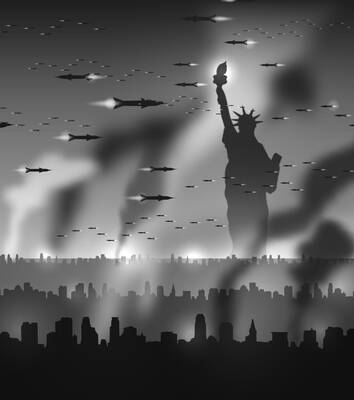
After declaring Iran’s military “gone,” US President Donald Trump appealed to the UK, France, Japan and South Korea — as well as China, Iran’s strategic partner — to send minesweepers and naval forces to reopen the Strait of Hormuz. When allies balked, the request turned into a warning: NATO would face “a very bad” future if it refused. The prevailing wisdom is that Trump faces a credibility problem: having spent years insulting allies, he finds they would not rally when he needs them. That is true, but superficial, as though a structural collapse could be caused by wounded feelings. Something
Former Taipei mayor and Taiwan People’s Party (TPP) founding chairman Ko Wen-je (柯文哲) was sentenced to 17 years in prison on Thursday, making headlines across major media. However, another case linked to the TPP — the indictment of Chinese immigrant Xu Chunying (徐春鶯) for alleged violations of the Anti-Infiltration Act (反滲透法) on Tuesday — has also stirred up heated discussions. Born in Shanghai, Xu became a resident of Taiwan through marriage in 1993. Currently the director of the Taiwan New Immigrant Development Association, she was elected to serve as legislator-at-large for the TPP in 2023, but was later charged with involvement
Out of 64 participating universities in this year’s Stars Program — through which schools directly recommend their top students to universities for admission — only 19 filled their admissions quotas. There were 922 vacancies, down more than 200 from last year; top universities had 37 unfilled places, 40 fewer than last year. The original purpose of the Stars Program was to expand admissions to a wider range of students. However, certain departments at elite universities that failed to meet their admissions quotas are not improving. Vacancies at top universities are linked to students’ program preferences on their applications, but inappropriate admission


 RSS
RSS