


Terry Gou (郭台銘), Taiwan’s wealthiest man and chairman of Hon Hai Precision Industry Co, on Wednesday threw his hat into the Chinese Nationalist Party (KMT) presidential primary.
There are many reasons that Gou’s bid should raise questions and red flags. Here are four:
First, Gou’s record as chairman of Hon Hai — known internationally as Foxconn Technology Group and famous for assembling Apple Inc iPhones — is questionable.
Hon Hai was one of the first Taiwanese firms in the 1980s to begin manufacturing in China to take advantage of its cheaper labor market. Over the years, there have been frequent media reports of poor working conditions at Foxconn’s Chinese facilities, including low pay, no sick leave for junior employees and forced overtime, with some assembly-line workers reportedly putting in 60-hour weeks and only being given one day off in 13.
From January to May 2010, 14 Foxconn workers at plants in Shenzhen committed suicide by jumping off roofs.
In 2012, CNN interviewed an 18-year-old Foxconn worker, identified only as Ms Chen to protect her identity.
“Foxconn employees have a saying: Use women as men and men as machines,” she said.
“It is so boring, I can’t bear it anymore. Every day I finish work and go to bed. I get up in the morning and I go to work. It is my daily routine. I almost feel like an animal,” Chen said.
The animal analogy is apt.
Gou once told senior managers at an end-of-year party: “Hon Hai has a workforce of more than 1 million worldwide and, as human beings are also animals, to manage 1 million animals gives me a headache.”
Gou also invited former Taipei Zoo director Chuang Hsuan-chih (莊絢智) to share his management experience with Foxconn managers, according to a report by the Chinese-language China Times.
At a time when Taiwan is seeking to diversify its economy away from China and tackle a chronic low-wage problem, his lukewarm commitment to Taiwan and the continued allegations of poor working conditions at Foxconn raise questions about how he would handle these issues.
Second, given that Gou’s business is inextricably wedded to China, many have questioned whether he would have Taiwan’s best interests at heart if he were president. Even supposing that Gou has undergone a Damascus road conversion and is now filled with patriotic fervor for his native land, given his core business interests in China, a perception of him as Chinese President Xi Jinping’s (習近平) puppet are likely to dog him.
Third, Gou’s behavior at two high-profile forums in Taipei this week raises questions about his temperament. On Monday, at a forum to commemorate the 40th anniversary of the US’ Taiwan Relations Act, he asked American Institute in Taiwan Chairman James Moriarty whether the US would support a specific presidential candidate or would allow Taiwan to elect its own leader.
On Tuesday, Gou stormed out of the Indo-Pacific Security Dialogue after complaining that fellow panelists — a group of Taiwanese and US lawmakers — failed to answer a question he asked.
Fourth, on Wednesday, he said the sea goddess Matsu had appeared to him in a dream three days earlier and told him to “come out” — in what some cynics saw as an attempt to appropriate local religious beliefs to set himself up as a messiah figure.
KMT members and other voters should demand answers from Gou about these issues and incidents ahead of the KMT primary.
KMT Chairwoman Cheng Li-wun’s (鄭麗文) recent visit to Beijing and her upcoming visit to Washington will serve as a high-level test of her diplomatic mettle. In Beijing, Cheng was received with symbolic gestures, a warm reception, and high-level access. In Washington, she will receive far less pomp and far sharper questions about the KMT’s vision for the future of Taiwan. Her challenge will be to persuade Washington that the KMT’s engagement with China can coexist with strong deterrence. Cheng’s April 7-12 visit to mainland China coincided with an intense period of conflict in Iran. Despite the strategic significance of Cheng’s trip,
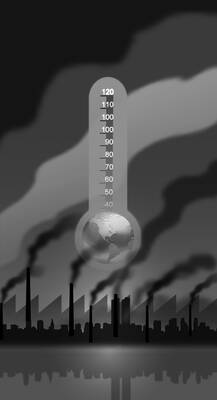
The closure of the Strait of Hormuz has sent the vast Asian chemicals industry into a tailspin. Deprived of the likes of Qatari natural gas and Saudi Arabian oil, the region’s fertilizer and plastics plants are slowing production or even shutting down. Everywhere except China, that is. In petrochemicals, China is unique. As well as a traditional industry that uses oil and gas as feedstock, it has parallel output that relies on its abundant domestic coal. Unsurprisingly, India and other regional powers want to copy and paste the Chinese method. This would not be easy — or climate friendly. The
Indonesian President Prabowo Subianto says he knows how to fix the problems facing Indonesia. Yet his economic mismanagement and authoritarian tendencies are steering the nation toward a familiar mix of currency instability and political chaos. The world’s fourth-most populous nation risks reversing the hard-won democratic and business reforms that came after the Asian Financial Crisis in 1997. At that time, the rupiah collapsed and the political upheaval that followed forced former president Haji Mohamed Suharto from power. Prabowo’s administration is ignoring similar warning signs. That disconnect was apparent in a national address on Wednesday, when Prabowo projected the swagger that has
“Of course you can choose not to be Taiwanese, just do not stay here,” chairwoman of Taipei 101 operator Taipei Financial Center Corp Janet Chia (賈永婕) said in an online interview with local entertainer Tai Chih-yuan (邰智源), triggering intense discussion on social media, with politicians across party lines weighing in. In the interview, which was aired on May 14, Chia and Tai’s discussion over a meal in Taipei 101 covered Chia’s career change from entertainer to chairwoman and US climber Alex Honnold’s free solo climb up the Taipei 101 building. During the interview, Chia said, “Being on this land, we


 RSS
RSS