


There are several different kinds of illegal structures. They can be divided into structures that violated legal procedure during construction and those that violate building requirements.
The first category includes structures for which the location, height, structure, floor area ratio and building coverage ratio meet local urban planning and building regulations, but for which construction was carried out without first obtaining a construction license, even if the builder had the right to use the land. This can be corrected at a later date, making the construction legal.
The second category includes structures for which a building license has not been applied for in accordance with the Building Act (建築法), the Regulations for the Management of Buildings in Areas Not Covered by Urban Planning (實施都市計畫以外地區建築物管理辦法) or other regulations.
In practice, there are also other categories: “Old illegal structures” refer to those that existed prior to Feb. 10, 1958, in what was then called Taiwan Province; those built before 1963 in Taipei; and those built before Dec. 21, 1968, in Kaohsiung. When public construction projects are handled, these dates are used to determine whether a demolition fee or subsidy can be issued.
Taipei is also categorizing illegal structures built between 1964 and Aug. 1, 1977, as “existing illegal structures.” If they are not a threat to public safety, traffic, health, the urban landscape or urban planning, photographs are taken of them and they are entered into a registry for management and control, but are temporarily exempt from reporting and demolition.
Demolishing or relocating this kind of illegal structure in a public construction project also allows for a demolition or relocation fee or subsidy, but the amount is lower than for “old illegal structures.”
Structures completed prior to Jan. 10, 1992, in Taiwan Province also meet the Taiwan Province Standards for Determining the Demolition of Illegal Structures (臺灣省違章建築拆除認定基準). They were built without applying for a building license and their demolition can also be delayed.
Regulations for handling illegal structures at the local level also differ.
In Tainan, for example, demolition priority is given to illegal structures built prior to Dec. 24, 2010, for which “construction exceeding more than three floors has been added to a legally defined open space facing a road” or “construction on a rooftop has added more than three floors to a building” or for “a structure occupying a legally defined arcade so that there is less than 1.5m of free space from side to side and police have issued a fine without the issue being addressed.”
There have been media reports saying that both the Taipei and New Taipei City governments plan to tear down all illegal structures.
PRIORITIES
If these structures are demolished without considering their negative effects on public safety, traffic, health, the urban landscape or urban planning, there is a risk that priorities will be confused.
Is this really the right way to go about things?
Furthermore, is the government capable of tearing down all these illegal structures?
If buildings that are used for rental apartments are demolished, what would happen to the tenants? Would their rents not increase even more? Is there sufficient social housing to accommodate disadvantaged people?
Lee Ji-sheng is an assistant researcher in the Legislative Yuan’s Judiciary and Organic Laws and Statutes Committee.
Translated by Perry Svensson

A gap appears to be emerging between Washington’s foreign policy elites and the broader American public on how the United States should respond to China’s rise. From my vantage working at a think tank in Washington, DC, and through regular travel around the United States, I increasingly experience two distinct discussions. This divergence — between America’s elite hawkishness and public caution — may become one of the least appreciated and most consequential external factors influencing Taiwan’s security environment in the years ahead. Within the American policy community, the dominant view of China has grown unmistakably tough. Many members of Congress, as
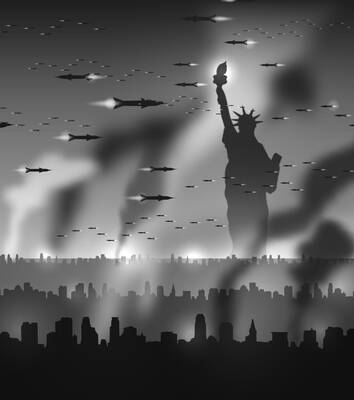
After declaring Iran’s military “gone,” US President Donald Trump appealed to the UK, France, Japan and South Korea — as well as China, Iran’s strategic partner — to send minesweepers and naval forces to reopen the Strait of Hormuz. When allies balked, the request turned into a warning: NATO would face “a very bad” future if it refused. The prevailing wisdom is that Trump faces a credibility problem: having spent years insulting allies, he finds they would not rally when he needs them. That is true, but superficial, as though a structural collapse could be caused by wounded feelings. Something
Former Taipei mayor and Taiwan People’s Party (TPP) founding chairman Ko Wen-je (柯文哲) was sentenced to 17 years in prison on Thursday, making headlines across major media. However, another case linked to the TPP — the indictment of Chinese immigrant Xu Chunying (徐春鶯) for alleged violations of the Anti-Infiltration Act (反滲透法) on Tuesday — has also stirred up heated discussions. Born in Shanghai, Xu became a resident of Taiwan through marriage in 1993. Currently the director of the Taiwan New Immigrant Development Association, she was elected to serve as legislator-at-large for the TPP in 2023, but was later charged with involvement
Out of 64 participating universities in this year’s Stars Program — through which schools directly recommend their top students to universities for admission — only 19 filled their admissions quotas. There were 922 vacancies, down more than 200 from last year; top universities had 37 unfilled places, 40 fewer than last year. The original purpose of the Stars Program was to expand admissions to a wider range of students. However, certain departments at elite universities that failed to meet their admissions quotas are not improving. Vacancies at top universities are linked to students’ program preferences on their applications, but inappropriate admission


 RSS
RSS