


On Thursday last week, heavy rain caused severe flooding at Taiwan Taoyuan International Airport, leading to tens of thousands of stranded passengers bereft of light, electricity and air-conditioning, and not knowing when flights would resume. The central and local government, as well as Taoyuan International Airport Corp (TIAC), were at a loss as to what to do, pointing the finger of blame at each other. It was as if they were hoping that the problem would just go away if they ignored it long enough.
It was not the first time flooding had occurred at Taoyuan airport. It is fine if airport authorities decide to close the airport temporarily as an emergency measure at times of heavy rain to prevent the situation from becoming more serious. It has happened in other countries, too.
Notodden Airport in Norway was recently closed when rains caused flooding on the runway, and affected the connecting highway and bridges: It was closed twice in as many weeks. Then there was Boston Logan International Airport, which had to be closed twice between September last year and April. There is nothing shameful about closing an airport when heavy weather or natural disasters threaten to disrupt services or potentially put lives at risk. That said, there are few cases of international airports shutting down because the drainage system could not cope with a bit of rain — and those occurred in less-developed countries.
Initially, people suspected the culprit was the airport’s inadequate,1980s-designed drainage system. However, a Ministry of Transportation and Communications investigation revealed that the problem was caused by sediment blocking a pipe, causing floodwaters to flow back into the airport. This has nothing to do with the design of the drainage system: It is human error, based on negligence, pure and simple. The ministry accordingly replaced TIAC’s chairman and president, in what was the first step in introducing some much-needed changes.
There are also structural problems. The airport has definitely seen better days and is continuously plagued by leaks, partial flooding and delayed runway maintenance.
Many of these problems have been due to public construction projects long kept on the back burner, budgets perennially promised, but rarely forthcoming, and substandard construction work. Complicating matters is TIAC’s tendency to give out positions as rewards: management is often ill-suited and ill-prepared for the job, and often does not take the task seriously. Inadequate management has only exacerbated the problems at the airport.
Structural and personnel issues aside, there are also issues with the disaster response task force TIAC has set up to deal with natural or manmade disasters, such as typhoons, fires, flooding, dangerous substances, radiation, biological pathogens, earthquakes, tsunamis, hijackings, explosive devices or crashes, in compliance with the Disaster Prevention and Protection Act (災害防救法). This task force has drawn up emergency response procedures for disasters and emergencies of all descriptions and, while this all sounds impressive, the reality is far less so. The task force is not fit for the purpose, there is little disaster response preparedness to speak of and communication with the outside world is wanting. All in all, the airport is unable to cope with disasters or emergencies.
In any crisis there is opportunity. This could be a turning point. The government needs to think carefully about how to reform the personnel issues, re-examine the importance and prioritization of various construction projects, and vet contractors to make sure they are up to snuff. It also needs to ensure that systems and regulations are complied with, and drill emergency response measures to cope with various eventualities. Only when it has ironed out all of these details will the prospects of Taoyuan airport improve.
A gap appears to be emerging between Washington’s foreign policy elites and the broader American public on how the United States should respond to China’s rise. From my vantage working at a think tank in Washington, DC, and through regular travel around the United States, I increasingly experience two distinct discussions. This divergence — between America’s elite hawkishness and public caution — may become one of the least appreciated and most consequential external factors influencing Taiwan’s security environment in the years ahead. Within the American policy community, the dominant view of China has grown unmistakably tough. Many members of Congress, as
The shifting geopolitical tectonic plates of this year have placed Beijing in a profound strategic dilemma. As Chinese President Xi Jinping (習近平) prepares for a high-stakes summit with US President Donald Trump, the traditional power dynamics of the China-Japan-US triangle have been destabilized by the diplomatic success of Japanese Prime Minister Sanae Takaichi in Washington. For the Chinese leadership, the anxiety is two-fold: There is a visceral fear of being encircled by a hardened security alliance, and a secondary risk of being left in a vulnerable position by a transactional deal between Washington and Tokyo that might inadvertently empower Japan
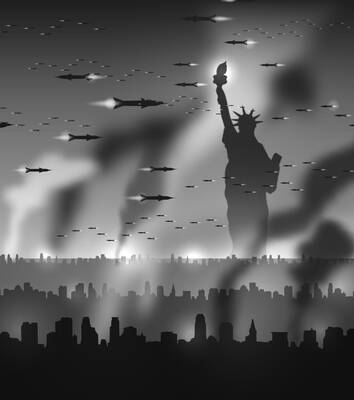
After declaring Iran’s military “gone,” US President Donald Trump appealed to the UK, France, Japan and South Korea — as well as China, Iran’s strategic partner — to send minesweepers and naval forces to reopen the Strait of Hormuz. When allies balked, the request turned into a warning: NATO would face “a very bad” future if it refused. The prevailing wisdom is that Trump faces a credibility problem: having spent years insulting allies, he finds they would not rally when he needs them. That is true, but superficial, as though a structural collapse could be caused by wounded feelings. Something
Former Taipei mayor and Taiwan People’s Party (TPP) founding chairman Ko Wen-je (柯文哲) was sentenced to 17 years in prison on Thursday, making headlines across major media. However, another case linked to the TPP — the indictment of Chinese immigrant Xu Chunying (徐春鶯) for alleged violations of the Anti-Infiltration Act (反滲透法) on Tuesday — has also stirred up heated discussions. Born in Shanghai, Xu became a resident of Taiwan through marriage in 1993. Currently the director of the Taiwan New Immigrant Development Association, she was elected to serve as legislator-at-large for the TPP in 2023, but was later charged with involvement


 RSS
RSS