


The Holy See, whose territorial residence is the Vatican, is the only European sovereign entity with diplomatic ties to the Republic of China (ROC). These relations have been ongoing since 1942.
However, recent rumors and events have questioned the stability of those ties, even in the Ministry of Foreign Affairs. From the Vatican side, there have been offhand remarks by Pope Francis that he would like to visit China. On Taiwan’s side, the recent Gambia gambit and Kenya fiasco have exposed President Ma Ying-jeou’s (馬英九) “flexible diplomacy” (彈性外交) to be a limp noodle. In addition, the illusory so-called “1992 consensus” with “different interpretations” is proving to be one consensus and one interpretation, namely that of the People’s Republic of China (PRC).
Does the Holy See plan to break ties with Taiwan and re-establish relations with the PRC leaving Taiwan with no European ally? Things are not as simple, or cut and dry, as they seem.
Ironically in all this complexity, the ministry has a lot of control, but it needs to up its game and have a better long-term game plan. It and Taiwanese should first realize what they do have, what they do not have, and what the KMT has pretended to have. You cannot lose what you do not have, but no one can take away what you do have.
The Holy See and relations with it are unlike those with other sovereign states, which are often influenced by dollar diplomacy and trade considerations. The Holy See currently has relations with about 180 states, large and small, and over 80 states have embassies in the Vatican. In its mission to the world, the Holy See even has a nunciature (the equivalent of an embassy) in Rabat, Malta, and Malta has an embassy in Rome, although Malta’s population is less than 430,000.
With regards to Taiwan, most people are not aware that the Holy See did not recognize Chiang Kai-shek (蔣介石) and the then-Chinese Nationalist Party (KMT) when they fled to Taiwan in 1949. The Holy See’s Apostolic Nuncio to China remained in China. He was eventually “kicked out” in 1951 on trumped up charges of plots against the state. After that, the Holy See’s ambassador took up residency in Taiwan.
A second telltale and related factor is that in 1971, when the ROC lost its seat at the UN, the position of the Vatican’s representative in Taiwan was downgraded from ambassador to charge d’affaires. It has remained so since then.
Monsignor Paul Russell, who for the past eight years has served as the charge d’affaires in Taiwan, is leaving and is to be elevated to the position of Archbishop in his new assignment to Turkey. In Vatican diplomatic speak, this means he will be taking on resident ambassador status there. His replacement in Taiwan, a monsignor, will of course maintain charge d’affaires status.
The “one China” issue will always come up, since the PRC tries to place a zero sum, “only us” insistence on this. Examine how other states have finessed this. The most common way has been to change their embassies in Taiwan into trade or cultural affairs offices.
Unlike the Vatican, the US kept its ambassador in Taiwan in 1971. When it moved its ambassador to Beijing at the start of 1979, the US created the American Institute in Taiwan, which performs most of the functions of an embassy, but is not called such. This was followed by the creation of the Taiwan (not the ROC) Relations Act. The Taiwan (again not ROC) Caucus, with a growing 205 members in the US House of Representatives, recently celebrated the anniversary of that act. The official US position on Taiwan of course remains “undecided,” even after 70 years.
Many people still do not understand the important background details in any nation’s “one China” stance. No one denies that there cannot be two of what is one. However, that is different from accepting what territory is contained in “that one.”
For the PRC, “one China” means that the democratic nation of Taiwan and Taiwan’s territory belong to China. Other nations can acknowledge that this is what China believes, but that does not mean that they themselves believe or accept the same thing that China believes.
A brief comparative explanation is in order. Li Bai (李白), the well-known Tang Dynasty poet, has written many poems on the moon; there is even one where he talks to the moon and invites it to drink with him. China could claim that since the moon is thoroughly discussed in Tang Dynasty poems, it belongs to “one China.” Other nations could acknowledge, accept and even agree that such a preposterous thought is what China claims and believes. However, acknowledging that fact does not mean that those nations accept that the moon belongs to China or is part of its territory. Here the US position on Taiwan still remains “undecided” even though China of course constantly asks the US to repeat over and over that it has a “one China” policy.
The Holy See, which does not depend on trade deals, has a long history of diplomacy that can be traced back to the fourth century. In world affairs it plays the long game.
Unlike countries where ambassadors are honorary positions and can be appointed because they donated large sums to the president’s campaign, papal diplomats have rigorous training and earn a licentiate and doctorate in canon law in the process. They also know the centuries-long history of the church, including its high points, low points and scandals, such as Innocent III, Alexander VI, the Papal States, the Avignon Papacy and even the Western Schism when there were three popes — to name just a few.
The Holy See has diplomatic relations with South Korea, but it could also have them with North Korea if North Korea was open to it. It has established non-resident relations with Vietnam and its flexibility has allowed it to broker agreements like the bringing together of the US and Cuba. In the French-Algerian war it did not take sides and now has relations with both. Even the Palestinian Liberation Organization has an office in Rome for non-diplomatic relations. Vatican diplomats listen more than they act and provide the Holy See with a constant flow of information from parish priests all over the world.
What the ministry should glean from this is that while other countries might break off relations with the Holy See, it does not abandon any country or nation. This is important as the ministry develops its future strategies.
If the Holy See and PRC do enter negotiations, it would be a lengthy process, where the biggest questions would both be human rights and freedom of religion. Even if that happens, it would not take away the ministry’s many established advantages with the Holy See. The challenge would be for an adroit ministry not to box itself into a corner with things such as the “1992 consensus” as it develops those strategies.
Jerome Keating is a commentator in Taipei.
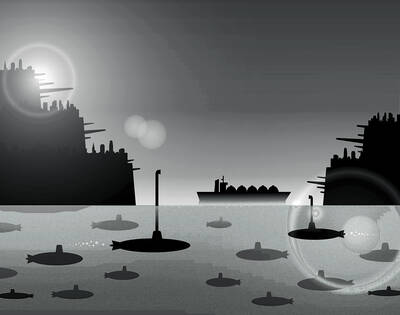
In the event of a war with China, Taiwan has some surprisingly tough defenses that could make it as difficult to tackle as a porcupine: A shoreline dotted with swamps, rocks and concrete barriers; conscription for all adult men; highways and airports that are built to double as hardened combat facilities. This porcupine has a soft underbelly, though, and the war in Iran is exposing it: energy. About 39,000 ships dock at Taiwan’s ports each year, more than the 30,000 that transit the Strait of Hormuz. About one-fifth of their inbound tonnage is coal, oil, refined fuels and liquefied natural gas (LNG),
On Monday, the day before Chinese Nationalist Party (KMT) Chairwoman Cheng Li-wun (鄭麗文) departed on her visit to China, the party released a promotional video titled “Only with peace can we ‘lie flat’” to highlight its desire to have peace across the Taiwan Strait. However, its use of the expression “lie flat” (tang ping, 躺平) drew sarcastic comments, with critics saying it sounded as if the party was “bowing down” to the Chinese Communist Party (CCP). Amid the controversy over the opposition parties blocking proposed defense budgets, Cheng departed for China after receiving an invitation from the CCP, with a meeting with
To counter the CCP’s escalating threats, Taiwan must build a national consensus and demonstrate the capability and the will to fight. The Chinese Communist Party (CCP) often leans on a seductive mantra to soften its threats, such as “Chinese do not kill Chinese.” The slogan is designed to frame territorial conquest (annexation) as a domestic family matter. A look at the historical ledger reveals a different truth. For the CCP, being labeled “family” has never been a guarantee of safety; it has been the primary prerequisite for state-sanctioned slaughter. From the forced starvation of 150,000 civilians at the Siege of Changchun
The two major opposition parties, the Chinese Nationalist Party (KMT) and the Taiwan People’s Party (TPP), jointly announced on Tuesday last week that former TPP lawmaker Chang Chi-kai (張啟楷) would be their joint candidate for Chiayi mayor, following polling conducted earlier this month. It is the first case of blue-white (KMT-TPP) cooperation in selecting a joint candidate under an agreement signed by their chairpersons last month. KMT and TPP supporters have blamed their 2024 presidential election loss on failing to decide on a joint candidate, which ended in a dramatic breakdown with participants pointing fingers, calling polls unfair, sobbing and walking


 RSS
RSS