


A national anthem, an indispensable representation of any sovereign nation, plays a crucial role in fostering national unity, instilling national pride and reinforcing a patriotic spirit.
It is therefore understandable that President Ma Ying-jeou (馬英九) has expressed concern over the frequency of the national anthem being sung by students at elementary and junior-high schools.
However, as Taiwan progresses toward a mature democracy, the legitimacy of the Republic of China’s (ROC) national anthem has come under increasing challenges, with many people either refusing to sing it or only muttering it under their breath.
The situation is particularly glaring whenever non-Chinese Nationalist Party (KMT) officials at public functions gag on the very first line of the anthem — “Three Principles of the People, our party’s aim shall be (三民主義,吾黨所宗)” — followed by the usual political wrangling, with members of the pan-blue and pan-green camps trading barbs over the issue of national identity.
It seems that the current national anthem, rather than pulling people together, serves more as a reflection of the divisions in Taiwan’s sense of identity.
And there is a valid reason for that.
The lyrics of the anthem are an adaptation of a speech delivered by Sun Yat-sen (孫逸仙) at the opening ceremony of the Whampoa Military Academy on June 16, 1924. The KMT adopted Sun’s exhortation as its party anthem in 1928 and solicited contributions from the public for a melody to fit the words. In 1930, the Nationalist government passed a resolution to use the KMT anthem as the interim national anthem before deciding in 1937 to adopt it as the official national anthem.
Since the Whampoa Military Academy, headed by Chiang Kai-shek (蔣介石), was essentially a party-run school, it is indisputable that the “party” in Sun’s “Three Principles of the People, our party’s aim shall be” refers to the KMT.
In other words, not only are the anthem’s lyrics closely associated with the KMT, but they also embodied its party-state rule.
Having a new national anthem would benefit Taiwan in several ways.
First, a new anthem that has wider public acceptance would better serve its purpose of bonding the nation’s people and fostering national unity.
Second, it would exorcise the remnants of the party-state consciousness and implement the transitional justice that is long overdue in the nation’s democratization.
Third, it would aid the KMT’s reputation, because the current lyrics are a constant reminder of the party’s authoritarian past.
Most important of all, a new anthem with lyrics that better capture the values and the essence of the nation and its people would ultimately help forge a sense of national identity.
But can the anthem be changed? Of course.
Unlike the national flag, the ROC Constitution does not prevent changes to the lyrics of the national anthem. Since the current national anthem was unilaterally adopted by the former party-state regime, the government, backed by public consensus, can revise the lyrics or replace the current anthem with a new one without having to go through any complex legal or constitutional process.
As times and circumstances have changed, all practices — especially those relating to party-state ideology that used to permeate the nation during the KMT’s authoritarian rule — ought to be publicly discussed and addressed to keep pace with progress and changes in values.
Taking Canada for example, a parliamentary member recently introduced a bill seeking to remove sexism from the national anthem by changing the phrase “True patriot love in all thy sons’ command” to “all of us command.”
Taiwan’s transformation, without bloodshed, from authoritarianism into a democracy has been touted as a success story. Now that the nation has marked its third transfer of power, a step further consolidating its democracy, there is no justification for using a political party’s song as the national anthem.
A gap appears to be emerging between Washington’s foreign policy elites and the broader American public on how the United States should respond to China’s rise. From my vantage working at a think tank in Washington, DC, and through regular travel around the United States, I increasingly experience two distinct discussions. This divergence — between America’s elite hawkishness and public caution — may become one of the least appreciated and most consequential external factors influencing Taiwan’s security environment in the years ahead. Within the American policy community, the dominant view of China has grown unmistakably tough. Many members of Congress, as
The shifting geopolitical tectonic plates of this year have placed Beijing in a profound strategic dilemma. As Chinese President Xi Jinping (習近平) prepares for a high-stakes summit with US President Donald Trump, the traditional power dynamics of the China-Japan-US triangle have been destabilized by the diplomatic success of Japanese Prime Minister Sanae Takaichi in Washington. For the Chinese leadership, the anxiety is two-fold: There is a visceral fear of being encircled by a hardened security alliance, and a secondary risk of being left in a vulnerable position by a transactional deal between Washington and Tokyo that might inadvertently empower Japan
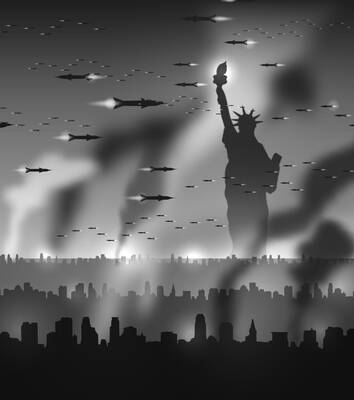
After declaring Iran’s military “gone,” US President Donald Trump appealed to the UK, France, Japan and South Korea — as well as China, Iran’s strategic partner — to send minesweepers and naval forces to reopen the Strait of Hormuz. When allies balked, the request turned into a warning: NATO would face “a very bad” future if it refused. The prevailing wisdom is that Trump faces a credibility problem: having spent years insulting allies, he finds they would not rally when he needs them. That is true, but superficial, as though a structural collapse could be caused by wounded feelings. Something
Former Taipei mayor and Taiwan People’s Party (TPP) founding chairman Ko Wen-je (柯文哲) was sentenced to 17 years in prison on Thursday, making headlines across major media. However, another case linked to the TPP — the indictment of Chinese immigrant Xu Chunying (徐春鶯) for alleged violations of the Anti-Infiltration Act (反滲透法) on Tuesday — has also stirred up heated discussions. Born in Shanghai, Xu became a resident of Taiwan through marriage in 1993. Currently the director of the Taiwan New Immigrant Development Association, she was elected to serve as legislator-at-large for the TPP in 2023, but was later charged with involvement


 RSS
RSS