


The Ministry of Education’s (MOE) insistence on pushing through the opaque adjustments to the high-school curriculum guidelines has brought widespread protests among high-school students. A few days ago, student protesters broke into the ministry building at night, which was followed by police arrests of journalists, the government’s decision to file charges against students and mounting harsh criticism of Minister of Education Wu Se-hwa (吳思華).
The root of the problem lies with the ministry, which went about the adjustments clandestinely, unprofessionally, ignoring procedural justice and making at least 100 random and major adjustments to the guidelines. The changes have been questioned by academics, caused a strong backlash among students and have even been ruled against by the High Administrative Court. However, the ministry is sticking to its guns and refuses to change or engage in sincere dialogue with students. It is determined to oppose mainstream public opinion.
The ministry’s stubbornness is caused by its China-centric ideology. After World World II, education in Taiwan has undergone a process of de-Taiwanization, as the nation has been treated as an area on the Chinese periphery. Taiwanese awareness and dignity were harmed and normal development was impaired. After democratization, at a time when Taiwan is still on its way to becoming a normal nation, the ministry is attempting to reverse the progress and play its old Sinicization trick by making adjustments to the curriculum guidelines to brainwash students. However, trying to fight the young generation of pro-independence youth who have come into being is futile and doomed from the start.
The same thing happened in the legislature when the government was stopped by students as it attempted to pass the cross-strait service trade agreement last year. Hence, after the students broke into the ministry on July 23, it said that they must have been manipulated by someone; just as the pan-blue media attempted to associate the Sunflower movement with the pan-green camp. The government’s underestimation of the younger generation’s independent thinking and resolution is both absurd and disturbing.
Moreover, the ministry suggested that it was the reporters who led the students to break into the ministry building. Outrageously, the police played along and arrested the reporters.
As long as an event occurs, reporters will come uninvited. Police said that since reporters were not invited by the ministry, they were justified in arresting them, which just shows how ignorant they are about journalism. Taipei Mayor Ko Wen-je (柯文哲) should clearly offer an apology. On the other hand, reporters are observers, and it is necessary to set up a system of regulation for the interaction between police and reporters at news events.
As the event has developed thus far, it is best described by a saying from the Chinese Cultural Revolution: “The smaller the temple, the stronger the wind; the more shallow the pond, the more bastards there are.” If the ministry, which has been the cause of all the trouble, continues to try to force its way, it will only be further humiliated.
Lu Shih-hsiang is an adviser to the Taipei Times.
Translated by Ethan Zhan
A gap appears to be emerging between Washington’s foreign policy elites and the broader American public on how the United States should respond to China’s rise. From my vantage working at a think tank in Washington, DC, and through regular travel around the United States, I increasingly experience two distinct discussions. This divergence — between America’s elite hawkishness and public caution — may become one of the least appreciated and most consequential external factors influencing Taiwan’s security environment in the years ahead. Within the American policy community, the dominant view of China has grown unmistakably tough. Many members of Congress, as
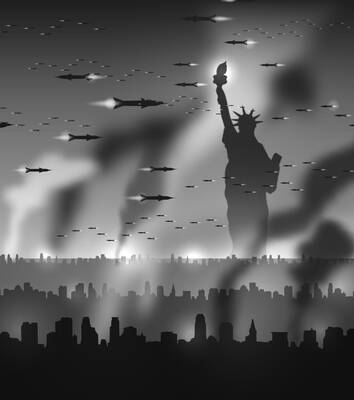
After declaring Iran’s military “gone,” US President Donald Trump appealed to the UK, France, Japan and South Korea — as well as China, Iran’s strategic partner — to send minesweepers and naval forces to reopen the Strait of Hormuz. When allies balked, the request turned into a warning: NATO would face “a very bad” future if it refused. The prevailing wisdom is that Trump faces a credibility problem: having spent years insulting allies, he finds they would not rally when he needs them. That is true, but superficial, as though a structural collapse could be caused by wounded feelings. Something
Former Taipei mayor and Taiwan People’s Party (TPP) founding chairman Ko Wen-je (柯文哲) was sentenced to 17 years in prison on Thursday, making headlines across major media. However, another case linked to the TPP — the indictment of Chinese immigrant Xu Chunying (徐春鶯) for alleged violations of the Anti-Infiltration Act (反滲透法) on Tuesday — has also stirred up heated discussions. Born in Shanghai, Xu became a resident of Taiwan through marriage in 1993. Currently the director of the Taiwan New Immigrant Development Association, she was elected to serve as legislator-at-large for the TPP in 2023, but was later charged with involvement
Out of 64 participating universities in this year’s Stars Program — through which schools directly recommend their top students to universities for admission — only 19 filled their admissions quotas. There were 922 vacancies, down more than 200 from last year; top universities had 37 unfilled places, 40 fewer than last year. The original purpose of the Stars Program was to expand admissions to a wider range of students. However, certain departments at elite universities that failed to meet their admissions quotas are not improving. Vacancies at top universities are linked to students’ program preferences on their applications, but inappropriate admission


 RSS
RSS