


There are many news outlets and there is a lot of news. Although people say this means that facts gradually become clearer, news manipulation is also worsening as facts are drowned out by never-ending wars of words.
For example, broadcaster Clara Chou (周玉蔻) has been sued for slander by Hon Hai Precision Industry Co chairman Terry Gou (郭台銘) after she said Gou had made a donation of NT$300 million (US$9.6 million) to the Chinese Nationalist Party’s (KMT) Taipei mayoral candidate Sean Lien (連勝文) during last year’s nine-in-one elections.
Chou said she had received that information from Taipei Mayor Ko Wen-je (柯文哲). Ko on Monday told a court that he had heard it from Democratic Progressive Party caucus whip Ker Chien-ming (柯建銘) ahead of the mayoral election.
Ker then immediately held a press conference at the Legislative Yuan to say that the money was a donation by Gou to the administration of then-Taipei mayor Hau Lung-bin (郝龍斌) to handle expenses for the Taipei pavilion at the 2010 World Fair. Hau has also said that Gou donated funds to help build the pavilion, which implies that Ker is right.
It thus seems that Ko may have misunderstood Ker, while others willfully made biased interpretations, and that this was the cause of the controversy.
However, Ko only said that someone had given his opponent NT$300 million, without specifying whether by “opponent” he meant Lien or Hau, so it is difficult to say that Ko heard or said something wrong. This turns the focus to Chou, who was the one who said Gou was the donor and Lien the recipient.
The whole affair now appears a farce, with facts changing as they are circulated without being verified, leading to confusion over who did or said what. This draws attention to the frivolous and irresponsible way in which public officials handle public affairs. When news hits the media, those involved behave as if it has nothing to do with them and they are only waiting around to enjoy the show while unsubstantiated rumors cause public concern.
Many media outlets behave irresponsibly, reporting anything journalists hear without any fact checking. Talk show pundits are veritable rumor machines who do nothing to help clarify issues while causing social divisions to grow ever wider.
Gou is to take the witness stand, and one can only hope that he will clarify the ins and outs of this whole mess and put an end to the ruckus once and for all.
Although it seems that the whole affair was a misunderstanding, it must not be forgotten that the reason it has attracted so much attention is not the money itself, but rather the connections between government and industry hidden behind such a huge political donation. Such connections are a hotbed for corruption and distort the fair and reasonable distribution of public resources.
A look at the strange conditions in the Taipei City Government’s contracts with Farglory Land Development Co in connection to the construction of the Taipei Dome and with Radium Life Tech Co in connection to the MeHAS City project in New Taipei City’s Sindian District (新店) makes it very difficult to believe that everything is on the up and up.
Open, transparent and democratic politics requires that murky political donations must not be tolerated. The Chou-Gou case must not be allowed to divert attention, as inappropriate political donations must continue to be investigated.
A gap appears to be emerging between Washington’s foreign policy elites and the broader American public on how the United States should respond to China’s rise. From my vantage working at a think tank in Washington, DC, and through regular travel around the United States, I increasingly experience two distinct discussions. This divergence — between America’s elite hawkishness and public caution — may become one of the least appreciated and most consequential external factors influencing Taiwan’s security environment in the years ahead. Within the American policy community, the dominant view of China has grown unmistakably tough. Many members of Congress, as
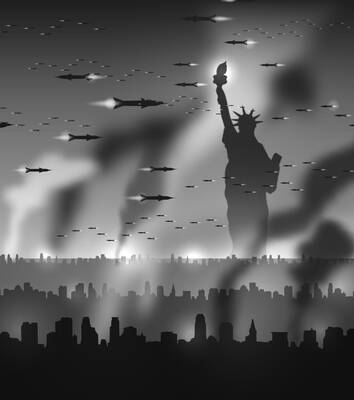
After declaring Iran’s military “gone,” US President Donald Trump appealed to the UK, France, Japan and South Korea — as well as China, Iran’s strategic partner — to send minesweepers and naval forces to reopen the Strait of Hormuz. When allies balked, the request turned into a warning: NATO would face “a very bad” future if it refused. The prevailing wisdom is that Trump faces a credibility problem: having spent years insulting allies, he finds they would not rally when he needs them. That is true, but superficial, as though a structural collapse could be caused by wounded feelings. Something
Former Taipei mayor and Taiwan People’s Party (TPP) founding chairman Ko Wen-je (柯文哲) was sentenced to 17 years in prison on Thursday, making headlines across major media. However, another case linked to the TPP — the indictment of Chinese immigrant Xu Chunying (徐春鶯) for alleged violations of the Anti-Infiltration Act (反滲透法) on Tuesday — has also stirred up heated discussions. Born in Shanghai, Xu became a resident of Taiwan through marriage in 1993. Currently the director of the Taiwan New Immigrant Development Association, she was elected to serve as legislator-at-large for the TPP in 2023, but was later charged with involvement
Out of 64 participating universities in this year’s Stars Program — through which schools directly recommend their top students to universities for admission — only 19 filled their admissions quotas. There were 922 vacancies, down more than 200 from last year; top universities had 37 unfilled places, 40 fewer than last year. The original purpose of the Stars Program was to expand admissions to a wider range of students. However, certain departments at elite universities that failed to meet their admissions quotas are not improving. Vacancies at top universities are linked to students’ program preferences on their applications, but inappropriate admission


 RSS
RSS