


Taiwan is suffering another setback in the US as the nation’s solar companies face heavy penalties in the latest anti-dumping probes that originally targeted Chinese solar manufacturers, making Taiwan a victim of US-China trade disputes.
The US Department of Commerce on Friday last week imposed preliminary import tariffs ranging from 27.59 percent to 44.18 percent on Taiwan’s major solar cell makers. A final decision is expected in December. The tariffs are much higher than the 20 percent estimated by local research house TrendForce Corp.
However, Taiwan does not hamper competition practices in the US market. Taiwanese solar firms do not sell their products at prices lower than the cost level in the US and the government does not provide any subsidy to enhance their cost-competitiveness.
Taiwanese firms are to be fined primarily because they provide cost-efficient solar cells and modules to their Chinese customers, which has put their “plan B” into action in preparation for future stricter penalties.
Taiwanese solar exporters face an average of 35 percent in import tariffs on solar cells, solar panels and solar modules shipped to the US.
This is higher than the 29.3 percent tax rate on China’s major solar module maker Trina Solar and the 30 percent rate first levied on most Chinese exporters in 2012.
Only a few small-scale Chinese solar companies must pay import tariffs of 165.04 percent based on the Commerce Department’s verdict.
Now, the question is whether the department’s latest ruling will effectively protect US solar cell manufacturers, such as SolarWorld, from price competition from overseas, mainly from China.
Clearly, the answer is “no.” China’s major solar cell and module makers will be able to export more solar products directly from China to the US, probably carrying a higher price tag.
The ruling is more likely a compromise, as US solar operators are concerned that higher-priced solar products might bring up costs of installations.
Besides, there are government forces involved in the China-US talks, but Taiwanese solar companies, lacking such government backing, must fight for their interests by themselves.
In an emergency press conference yesterday, the Taiwan Photovoltaic Industry Association called on the government to provide immediate assistance including professional knowledge and negotiation support in the upcoming talks, aiming to reduce the proposed import tariffs on local firms before the final determination is made in December.
“We are good at making solar cells, but we are not professional negotiators... We hope the government will form a task force to help us,” Neo Solar Power CEO Sam Hong said.
To minimize the impact from the duties, the association yesterday said it would offer a price hike of at least 12 percent to the US Commerce Department in exchange for tariff cuts.
“We have to try everything to find a way out,” Hong said.
He said about 20 percent of Taiwan’s solar cell output was shipped to the US via Chinese customers last year.
The government has not done enough to safeguard local companies’ interests. It needs to play a more active role in solving trade problems as anti-dumping and anti-trust suits become regular occurrences.
A gap appears to be emerging between Washington’s foreign policy elites and the broader American public on how the United States should respond to China’s rise. From my vantage working at a think tank in Washington, DC, and through regular travel around the United States, I increasingly experience two distinct discussions. This divergence — between America’s elite hawkishness and public caution — may become one of the least appreciated and most consequential external factors influencing Taiwan’s security environment in the years ahead. Within the American policy community, the dominant view of China has grown unmistakably tough. Many members of Congress, as
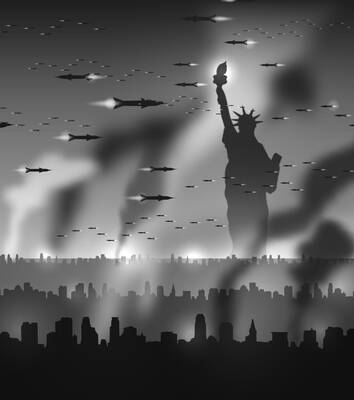
After declaring Iran’s military “gone,” US President Donald Trump appealed to the UK, France, Japan and South Korea — as well as China, Iran’s strategic partner — to send minesweepers and naval forces to reopen the Strait of Hormuz. When allies balked, the request turned into a warning: NATO would face “a very bad” future if it refused. The prevailing wisdom is that Trump faces a credibility problem: having spent years insulting allies, he finds they would not rally when he needs them. That is true, but superficial, as though a structural collapse could be caused by wounded feelings. Something
Former Taipei mayor and Taiwan People’s Party (TPP) founding chairman Ko Wen-je (柯文哲) was sentenced to 17 years in prison on Thursday, making headlines across major media. However, another case linked to the TPP — the indictment of Chinese immigrant Xu Chunying (徐春鶯) for alleged violations of the Anti-Infiltration Act (反滲透法) on Tuesday — has also stirred up heated discussions. Born in Shanghai, Xu became a resident of Taiwan through marriage in 1993. Currently the director of the Taiwan New Immigrant Development Association, she was elected to serve as legislator-at-large for the TPP in 2023, but was later charged with involvement
Out of 64 participating universities in this year’s Stars Program — through which schools directly recommend their top students to universities for admission — only 19 filled their admissions quotas. There were 922 vacancies, down more than 200 from last year; top universities had 37 unfilled places, 40 fewer than last year. The original purpose of the Stars Program was to expand admissions to a wider range of students. However, certain departments at elite universities that failed to meet their admissions quotas are not improving. Vacancies at top universities are linked to students’ program preferences on their applications, but inappropriate admission


 RSS
RSS