


Mountains of Norwegian salmon left rotting at a port. A beachfront resort in Palau abandoned before completion. A sluggish response to a devastating Philippine typhoon.
Crossing China’s “red lines” can have painful economic consequences.
Beijing is looking to build up its political and diplomatic status as a “major responsible country” commensurate with its global economic position and improve its cultural reach worldwide.
As well as the world’s second-largest economy, China is its biggest trading nation in goods and Africa’s biggest trading partner, a fact highlighted last week by Japan’s attempt to present itself as a competitor on the continent.
However, experts have said Beijing’s tactical moves toward smaller countries risk backfiring against its broader strategy.
Beijing has sought to punish Norway since the 2010 Nobel Peace Prize was awarded to jailed dissident and pro-democracy activist Liu Xiaobo (曉波) — despite Oslo having no control over the prize committee’s decisions.
Strict new import controls left Norwegian salmon wasting away in Chinese warehouses and its market share in the country, once 92 percent, plummeted to 29 percent last year.
A musical starring Norwegian Eurovision 2009 winner Alexander Rybak had its tour canceled and Norwegians are excluded from China’s 72-hour transit visa schemes.
“The ‘bully boy’ tactics China has adopted, especially with regard to small nations such as Norway... are typical of a passive-aggressive kind of personality,” said Phil Mead, a British businessman who helps small Chinese companies in the European market.
Such behavior makes Beijing “look petty and spiteful in the eyes of the world,” Mead said in a blog post.
Norway is far from the only country subjected to China’s wrath.
Beijing is embroiled in a South China Sea territorial row with Manila, and after Super Typhoon Haiyan struck in November last year — the most powerful recorded storm ever to make landfall — it initially offered the Philippines only US$100,000.
After a storm of criticism, China upped its contribution to US$1.8 million and dispatched its Peace Ark hospital ship, but the response paled in comparison to Japan’s US$30 million, the US’ US$20 million and even some private companies’ contributions.
“China lags IKEA in aid to Philippines,” one newspaper wrote, comparing Beijing’s initial offer with US$2.7 million from the Swedish furniture chain’s charitable foundation.
A year earlier, after a maritime standoff, China suddenly imposed a raft of restrictions on banana imports from the Philippines, claiming it had found pests in shipments.
Tonnes of fruit were left to rot at Chinese and Philippine ports, with losses estimated at US$23 million.
In 2009, after the Pacific island nation of Palau announced it would accept six Uighur detainees released from the US’ Guantanamo Bay military prison and considered terrorists by Beijing, construction of a Chinese-backed, 100-room beachfront resort was abruptly halted.
Experts say the “red lines” that trigger Chinese threats and retribution are limited to a tight set of very specific issues.
They include relations with the exiled Tibetan spiritual leader the Dalai Lama; criticism of China’s leadership or human rights record; territorial disputes in the East and South China seas; Taiwan; and unrest in Xinjiang, the far western region home to the mostly Muslim Uighur ethnic minority.
“They have such a small, focused kind of interest, with the Dalai Lama visits in particular,” said James Reilly, professor of Northeast Asian politics at the University of Sydney, who has studied China’s unilateral sanction use. “China’s pretty unique in that regard.”
The pattern of retaliation with the Nobel laureate is so well-established that in 2010, German researchers found that countries whose leaders met him saw their exports to China fall by an average 12.5 percent over the next two years, a phenomenon they dubbed “the Dalai Lama effect.”
Qu Xing (曲興), president of the China Institute of International Studies, dismissed the possibility that Beijing’s actions could damage its global image, arguing that “many people in China believe that our diplomacy could have been more assertive.”
Yet polling suggests its reputation has been hit — in a survey of 14,400 people in 14 countries, China’s own Global Times newspaper found 29 percent of respondents described the country as “belligerent” in international affairs.
Harvard University professor Joseph Nye said the problem largely stems from Beijing’s limited view of the impact its measures have on its “soft power,” a term used to describe the ability to achieve outcomes through attraction, rather than payment or coercion.
It “does not pay enough attention” to contradictions between its aims and its actions, Nye said. “China tends to think of soft power in cultural rather than political terms.”
A gap appears to be emerging between Washington’s foreign policy elites and the broader American public on how the United States should respond to China’s rise. From my vantage working at a think tank in Washington, DC, and through regular travel around the United States, I increasingly experience two distinct discussions. This divergence — between America’s elite hawkishness and public caution — may become one of the least appreciated and most consequential external factors influencing Taiwan’s security environment in the years ahead. Within the American policy community, the dominant view of China has grown unmistakably tough. Many members of Congress, as
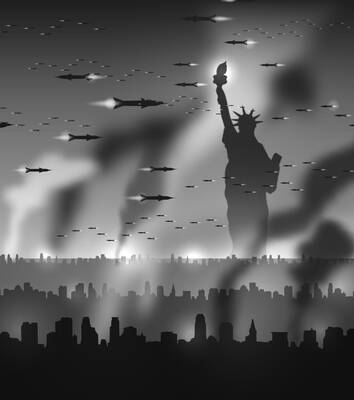
After declaring Iran’s military “gone,” US President Donald Trump appealed to the UK, France, Japan and South Korea — as well as China, Iran’s strategic partner — to send minesweepers and naval forces to reopen the Strait of Hormuz. When allies balked, the request turned into a warning: NATO would face “a very bad” future if it refused. The prevailing wisdom is that Trump faces a credibility problem: having spent years insulting allies, he finds they would not rally when he needs them. That is true, but superficial, as though a structural collapse could be caused by wounded feelings. Something
Former Taipei mayor and Taiwan People’s Party (TPP) founding chairman Ko Wen-je (柯文哲) was sentenced to 17 years in prison on Thursday, making headlines across major media. However, another case linked to the TPP — the indictment of Chinese immigrant Xu Chunying (徐春鶯) for alleged violations of the Anti-Infiltration Act (反滲透法) on Tuesday — has also stirred up heated discussions. Born in Shanghai, Xu became a resident of Taiwan through marriage in 1993. Currently the director of the Taiwan New Immigrant Development Association, she was elected to serve as legislator-at-large for the TPP in 2023, but was later charged with involvement
Out of 64 participating universities in this year’s Stars Program — through which schools directly recommend their top students to universities for admission — only 19 filled their admissions quotas. There were 922 vacancies, down more than 200 from last year; top universities had 37 unfilled places, 40 fewer than last year. The original purpose of the Stars Program was to expand admissions to a wider range of students. However, certain departments at elite universities that failed to meet their admissions quotas are not improving. Vacancies at top universities are linked to students’ program preferences on their applications, but inappropriate admission


 RSS
RSS