


Earlier this month, approximately 120 important figures from Taiwan and China gathered at the first ever cross-strait peace forum held in Shanghai.
Apart from being attended by Chinese government officials and policy advisers, several former political officials from the pan-blue and pan-green camps also took part, which made the forum something of a first. China presented an overall attitude of being candid, open and tolerant during this forum.
Each person was allowed to openly express themselves, including former vice premier Wu Rong-i (吳榮義) of the Democratic Progressive Party (DPP), who proposed the idea that Taiwan and China represent an “allegiance of brotherhood,” while the Taiwanese academics in attendance insisted that the Republic of China (ROC) be acknowledged.
However, the forum also highlighted the political chasm that exists between Taiwan and China. China is still unable to accept the existence of the ROC, while Taiwan’s blue and green camps are both unable to accept China’s precondition of unification.
Why would China, a nation vastly stronger than Taiwan both economically and politically, be willing to go through nongovernmental political dialogue to promote cross-strait political talks?
When the Democratic Progressive Party (DPP) was in power, Taiwan hoped to engage in political dialogue to facilitate the establishment of an interactive framework for cross-strait peace and stability. President Ma Ying-jeou’s (馬英九) government is not willing to do so, while China has had to resort a public forum to promote the idea of cross-strait political dialogue. So, just what are China’s goals?
China wants to pressure Ma into engaging in political talks. In the face of the Ma government’s refusal, China now wants to use the more relaxed atmosphere of nongovernmental political dialogue to lower the psychological resistance to cross-strait political talks and to create a mindset among Taiwanese that is supportive of them.
However, as soon as the Chinese Nationalist Party (KMT) government accepts China’s idea of political negotiations, the KMT’s past verbal promises on cross-strait policy will all have to be turned into written agreements. This will be very hard for the Ma government to pull off. The verbal promises were aimed at brushing China off; writing these agreements into law would definitely meet with strong resistance from the public.
The goals of China’s “peaceful offensive” are probably not just aimed at the Ma administration. Given that Ma only has two-and-a-half years left in office, it will be impossible to get him to sign a cross-strait peace initiative, especially when he has already promised that he will not enter into any talks on a cross-strait peace initiative with China during his term.
Over the past five years, Taiwan and China have signed 19 agreements, but the cross-strait diplomatic and military standoff has never ended and Taiwanese are opposed to unification. The number of people who consider “Taiwan” to be their country is rising quickly, even faster than the number of people who thought so during former president Chen Shui-bian’s (陳水扁) two terms in office. This raises major doubts for long-term peace in cross-strait developments. Peace could become nothing more than an illusion if accidents happen or if there is another change in the ruling party.
Chinese Academic Yen Anlin (嚴安林) made China’s mode of thinking very clear when he said that the peace and stability of the two nations are not only directly linked to the safety, stability and development of Taiwan’s economy, but also to breeding a peaceful and stable environment that China needs now that it has opened up and conducted reforms. He also said peace and stability are linked to the Chinese dream of seeing the re-emergence of a great China.
What this implies is that only the signing of a systemic framework for development can consolidate peace in the Taiwan Strait and it is only in this way that peaceful development in China can be assured. The real conflicts need to be fundamentally solved, instead of “shelving disputes” and “seeking common ground while reserving differences” as has been suggested in the past.
Following the rapid growth of its economic and military power, China has become more self-confident, tolerant and more willing to handle the political differences that have existed for a long time. At the cross-strait peace forum, China’s Taiwan Affairs Office Director Zhang Zhijun (張志軍) said that the forum is beneficial to encouraging different sectors of society to think about feasible ways to solve political differences.
He also said it is beneficial to creating a more cordial atmosphere for negotiations for cross-strait political talks and useful in providing experience and methods to use in future.
A cross-strait peace initiative is not something that can be achieved overnight, and it is something that requires everyone to face up to the political differences that exist and show an open, tolerant and pragmatic attitude to forge a consensus between the two sides.
This is the only way to go about building a systemic framework for peaceful development between Taiwan and China.
Tung Chen-yuan is a distinguished professor in the Graduate Institute of Development Studies at National Chengchi University.
Translated by Drew Cameron
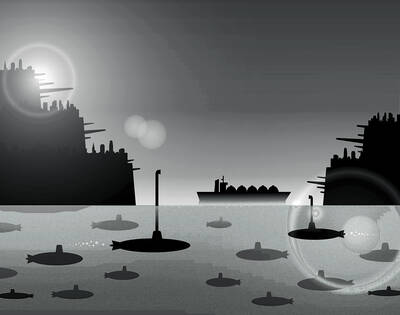
In the event of a war with China, Taiwan has some surprisingly tough defenses that could make it as difficult to tackle as a porcupine: A shoreline dotted with swamps, rocks and concrete barriers; conscription for all adult men; highways and airports that are built to double as hardened combat facilities. This porcupine has a soft underbelly, though, and the war in Iran is exposing it: energy. About 39,000 ships dock at Taiwan’s ports each year, more than the 30,000 that transit the Strait of Hormuz. About one-fifth of their inbound tonnage is coal, oil, refined fuels and liquefied natural gas (LNG),
On Monday, the day before Chinese Nationalist Party (KMT) Chairwoman Cheng Li-wun (鄭麗文) departed on her visit to China, the party released a promotional video titled “Only with peace can we ‘lie flat’” to highlight its desire to have peace across the Taiwan Strait. However, its use of the expression “lie flat” (tang ping, 躺平) drew sarcastic comments, with critics saying it sounded as if the party was “bowing down” to the Chinese Communist Party (CCP). Amid the controversy over the opposition parties blocking proposed defense budgets, Cheng departed for China after receiving an invitation from the CCP, with a meeting with
To counter the CCP’s escalating threats, Taiwan must build a national consensus and demonstrate the capability and the will to fight. The Chinese Communist Party (CCP) often leans on a seductive mantra to soften its threats, such as “Chinese do not kill Chinese.” The slogan is designed to frame territorial conquest (annexation) as a domestic family matter. A look at the historical ledger reveals a different truth. For the CCP, being labeled “family” has never been a guarantee of safety; it has been the primary prerequisite for state-sanctioned slaughter. From the forced starvation of 150,000 civilians at the Siege of Changchun
The two major opposition parties, the Chinese Nationalist Party (KMT) and the Taiwan People’s Party (TPP), jointly announced on Tuesday last week that former TPP lawmaker Chang Chi-kai (張啟楷) would be their joint candidate for Chiayi mayor, following polling conducted earlier this month. It is the first case of blue-white (KMT-TPP) cooperation in selecting a joint candidate under an agreement signed by their chairpersons last month. KMT and TPP supporters have blamed their 2024 presidential election loss on failing to decide on a joint candidate, which ended in a dramatic breakdown with participants pointing fingers, calling polls unfair, sobbing and walking


 RSS
RSS