


According to statistics from the Ministry of the Interior’s Department of Household Registration, there were 324,980, 227,447 and 166,473 babies born in 1997, 2003 and 2010 respectively. In three years’ time, many of the nation’s colleges and universities will be facing a 12-year-long “low birthrate cliff.” Is the nation ready for this?
Perhaps Taiwan can learn from Japan’s experience.
In his book Decline of Collective Intelligence, Japanese business strategist Kenichi Ohmae described the current situation at Japanese universities: A lot of local national universities look like a mini-version of the University of Tokyo, without any defining characteristics of their own. As the number of students constantly declines, they are doomed to collapse due to financial difficulties sooner or later.
Looking at Taiwan’s situation, in June last year the Ministry of Education released the “regulations for the merging of national universities.” Depending on how much universities could complement one another, the goal is to merge schools into “comprehensive universities.”
However, if we push to merge national universities in accordance with these regulations, then our higher education providers are likely to see a repeat of Japan’s mistake by 2028. By that time, we will have only slightly cut the number of school presidents and administrative staff, while the number of departments, faculties and assistants will remain unchanged. After merging, comprehensive universities will have all kinds of departments and will look like mini-versions of National Taiwan University.
This is just what Ohmae described: a lot of national universities without their own characteristics, all waiting for their finances to implode.
At the moment, personnel costs accounts for more than 60 percent of a national universities’ expenditure. The future impact of the “low birthrate cliff” will be a decline in tax revenue and schools’ tuition revenue, resulting in the expenditure on personnel becoming an even heavier burden for the government.
The ministry should abolish its misguided policy based on how schools complement one another. Instead, the merging of national universities should be based on similarities between schools, with the primary goal being cutting personnel costs.
National universities that are similar in nature should merge and share their academic colleges.
To begin with, the number of faculties, staff and students would be doubled. The merged school should then leave vacancies unfilled, adjust employees’ duties and gradually lower admissions to reduce manpower by 5 percent each year. By doing so, the number of employees could be halved in 13 years and the number of faculties, staff and students would also be reduced to a normal size.
This form of merger would be in line with the declining population and could preserve universities with special characteristics, even reducing personnel costs by half. These savings could be used to improve the quality of teaching, research and services.
The policy of establishing more universities nationwide has lowered the standard of higher education, destroyed vocational education and caused an imbalance between supply and demand in the workplace as youth unemployment continues to rise.
In the face of the “low birthrate cliff” and its impact on higher education, it is time to start again. Hopefully, the new Cabinet can come up with a suitable university merger policy and consider the ratio of students in regular and vocational universities in the future to save the higher education system.
Kao Yi-hsuan is an associate professor in National Yang-Ming University’s Department of Biomedical Imaging and Radiological Sciences.
Translated by Eddy Chang
KMT Chairwoman Cheng Li-wun’s (鄭麗文) recent visit to Beijing and her upcoming visit to Washington will serve as a high-level test of her diplomatic mettle. In Beijing, Cheng was received with symbolic gestures, a warm reception, and high-level access. In Washington, she will receive far less pomp and far sharper questions about the KMT’s vision for the future of Taiwan. Her challenge will be to persuade Washington that the KMT’s engagement with China can coexist with strong deterrence. Cheng’s April 7-12 visit to mainland China coincided with an intense period of conflict in Iran. Despite the strategic significance of Cheng’s trip,
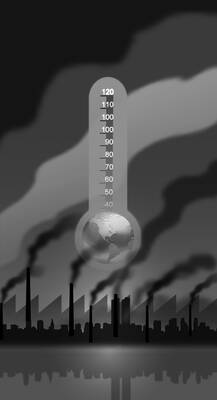
The closure of the Strait of Hormuz has sent the vast Asian chemicals industry into a tailspin. Deprived of the likes of Qatari natural gas and Saudi Arabian oil, the region’s fertilizer and plastics plants are slowing production or even shutting down. Everywhere except China, that is. In petrochemicals, China is unique. As well as a traditional industry that uses oil and gas as feedstock, it has parallel output that relies on its abundant domestic coal. Unsurprisingly, India and other regional powers want to copy and paste the Chinese method. This would not be easy — or climate friendly. The
Indonesian President Prabowo Subianto says he knows how to fix the problems facing Indonesia. Yet his economic mismanagement and authoritarian tendencies are steering the nation toward a familiar mix of currency instability and political chaos. The world’s fourth-most populous nation risks reversing the hard-won democratic and business reforms that came after the Asian Financial Crisis in 1997. At that time, the rupiah collapsed and the political upheaval that followed forced former president Haji Mohamed Suharto from power. Prabowo’s administration is ignoring similar warning signs. That disconnect was apparent in a national address on Wednesday, when Prabowo projected the swagger that has
“Of course you can choose not to be Taiwanese, just do not stay here,” chairwoman of Taipei 101 operator Taipei Financial Center Corp Janet Chia (賈永婕) said in an online interview with local entertainer Tai Chih-yuan (邰智源), triggering intense discussion on social media, with politicians across party lines weighing in. In the interview, which was aired on May 14, Chia and Tai’s discussion over a meal in Taipei 101 covered Chia’s career change from entertainer to chairwoman and US climber Alex Honnold’s free solo climb up the Taipei 101 building. During the interview, Chia said, “Being on this land, we


 RSS
RSS