


Is democratic time too slow to respond to crises and too short to plan for the long term?
At a time of deepening economic and social crisis in many of the world’s rich democracies, that question is highly relevant. For example, Italian Prime Minister Mario Monti has the necessary and legitimate ambition to carry out comprehensive reform. He is both competent and honest, but he faces a quasi-structural impediment — whereas leaders once had three years to convince voters of their policies’ benefits, they now have three hours to convince global financial markets to back their approach.
Caught between Italian legislators who, deep down, do not understand that change and markets in quest of near-immediate certainties, can Monti transcend his natural prudence and act with sufficient clarity and decisiveness?
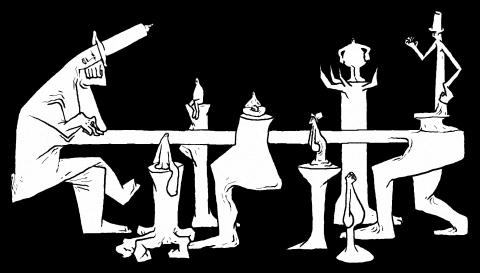
In the US, too, the political system is becoming increasingly dysfunctional. The political philosopher Francis Fukuyama goes so far as to say that “vetocracy” could triumph over democracy, regardless of who wins this year’s US presidential election. The separation of powers, a principle established by the US founders under the influence of philosophers such as Montesquieu, is leading today to near-paralysis.
Democracies suffer not only from their slow reaction time at moments of crisis, but also from the difficulty that they face in projecting themselves into the future and planning for the long term. On both sides of the Atlantic, political leaders know what they must do for their countries, but they don’t know how to get re-elected if they actually do it. They seem to be structurally condemned to short-termism.
However, it is not because democracies have a “time problem” that their era seems to some to be over. China is rightly proud to be able to project itself into the 22nd century, but it owes that quality of long-term thinking much more to its culture than to the nature of its political system. Chinese think long term because they are Chinese, not because they are not democrats.
China’s leaders can, of course, react to events without much regard for Chinese public opinion. After all, the great majority of Chinese do not dream of democracy, even if something like a civil society is emerging, generating new interests and demands that can no longer be totally controlled or manipulated, as in the past.
That is precisely the weakness of non-democratic regimes in a global age dominated by transparency — who dreams of becoming a Chinese citizen or even a citizen of Singapore?
In the aftermath of North Korea’s hereditary succession, strategic thinkers rightly emphasize China’s key role in shaping the peninsula’s future, but, despite the scenes of hysteria that followed the death of the “Great Leader” Kim Jong-il, most North Koreans probably dream of joining democratic South Korea (even if many South Koreans fear that prospect).
The majority of Chinese may not want to be governed like Westerners, but it would be wrong to assume that their only ambition is to spend like Westerners. The more successful they are, the more individualistic they will become, and the more they will expect the respect and consideration of those who govern them.
By contrast, if China’s economic growth slows, which is likely in the coming years, protest against corruption — a source of fragility for any regime — will escalate. Indeed, it is important to bear in mind that, ahead of the upcoming Chinese leadership transition, new occupants for only the top two posts have been chosen, and that through a process of gradual anointment by roughly 100 people at most.
The current crisis in advanced countries, which may very well lead to a global recession (if it is not already doing so), not only reveals the many maladies of democratic regimes, but also acts as their incubator and accelerator, and yet the crisis may turn out to have an even greater impact on non-democratic systems that seem to be more efficient, but are in reality much more fragile. We see this in mounting unrest in both Russia and China.
Contrary to what one might think, democracy is more resilient than the alternatives in the long run. This will remain true as long as democrats remain convinced of it. Non-democratic models cannot truly challenge democracy. Only the misbehavior of democrats can do that.
Dominique Moisi is the author of The Geopolitics of Emotion.
Copyright: Project Syndicate
A gap appears to be emerging between Washington’s foreign policy elites and the broader American public on how the United States should respond to China’s rise. From my vantage working at a think tank in Washington, DC, and through regular travel around the United States, I increasingly experience two distinct discussions. This divergence — between America’s elite hawkishness and public caution — may become one of the least appreciated and most consequential external factors influencing Taiwan’s security environment in the years ahead. Within the American policy community, the dominant view of China has grown unmistakably tough. Many members of Congress, as
After declaring Iran’s military “gone,” US President Donald Trump appealed to the UK, France, Japan and South Korea — as well as China, Iran’s strategic partner — to send minesweepers and naval forces to reopen the Strait of Hormuz. When allies balked, the request turned into a warning: NATO would face “a very bad” future if it refused. The prevailing wisdom is that Trump faces a credibility problem: having spent years insulting allies, he finds they would not rally when he needs them. That is true, but superficial, as though a structural collapse could be caused by wounded feelings. Something
Former Taipei mayor and Taiwan People’s Party (TPP) founding chairman Ko Wen-je (柯文哲) was sentenced to 17 years in prison on Thursday, making headlines across major media. However, another case linked to the TPP — the indictment of Chinese immigrant Xu Chunying (徐春鶯) for alleged violations of the Anti-Infiltration Act (反滲透法) on Tuesday — has also stirred up heated discussions. Born in Shanghai, Xu became a resident of Taiwan through marriage in 1993. Currently the director of the Taiwan New Immigrant Development Association, she was elected to serve as legislator-at-large for the TPP in 2023, but was later charged with involvement
Out of 64 participating universities in this year’s Stars Program — through which schools directly recommend their top students to universities for admission — only 19 filled their admissions quotas. There were 922 vacancies, down more than 200 from last year; top universities had 37 unfilled places, 40 fewer than last year. The original purpose of the Stars Program was to expand admissions to a wider range of students. However, certain departments at elite universities that failed to meet their admissions quotas are not improving. Vacancies at top universities are linked to students’ program preferences on their applications, but inappropriate admission


 RSS
RSS