


During the second televised debate between the three presidential candidates on Dec. 17, the candidates expressed their opinions on the development of nuclear energy in Taiwan. One wonders if they took public opinion into consideration, or if they have considered scrapping the Fourth Nuclear Power Plant on safety concerns.
After disaster struck the Fukushima Dai-ichi nuclear power plant in Japan in March, the National Association for Radiation Protection invited a group of Taiwan-based professors to conduct a survey into public awareness of the risks related to nuclear power plant operations.
Through a systematic questionnaire, a total of 2,287 respondents was surveyed. They reside, work, or study in Jinshan (金山), Shimen (石門) and Wanli (萬里) townships in the vicinity of Taiwan’s first and second nuclear power plants; in Hengchun (恆春), Manjhou (滿州) and Checheng (車城) townships in the vicinity of the third nuclear power plant; and in Gongliao Township (貢寮) in the vicinity of the planned Fourth Nuclear Power Plant. The responses were then compared to those of residents in other areas.
The survey showed that 85 percent of respondents in townships near the operational plants and 97 percent of those in Gongliao believe that the plants pose a high health risk. Ninety percent of those who do not live in the vicinity of a nuclear power plant believe they have a negative impact on health. They also believe that living within 30km of a power plant increases the risk of cancer by between two and six times.
The results also indicated that people are generally unwilling to live in areas close to Taiwan’s nuclear power plants and believe it is safer to live at least 90km to 100km away.
Sixty percent of respondents expressed the hope that a strict timetable would be established for the abolition of nuclear power, and felt that alternative energy sources should provide about 50 percent of the nation’s energy needs. In addition, about 60 percent of respondents were opposed to allowing the Fourth Nuclear Power Plant to begin operating. Even among those not opposed to the plant, more than 80 percent felt that nuclear power plants had a negative impact on health and hoped for a major increase in the use of alternative energy sources.
More than 70 percent of respondents believe nuclear safety in Taiwan to be inferior to that in Japan and that the safety management capabilities of Taiwan Power Co (Taipower) and the government are equally weak. More than 80 percent do not trust the government’s evacuation plans for nuclear power plant emergencies.
On the whole, the survey showed the public does not readily accept nuclear power and many give the industry’s 30-year development in Taiwan a failing grade, even though Taipower has long provided financial compensation and education in neighboring townships.
The public has very high expectations of alternative energy, which are not fully supported by any of the presidential candidates. However, they are also concerned the price of electricity will go up, and about potential power shortages.
Public concerns about nuclear power are at an all-time high, but the performance of Taipower and the government’s nuclear power agencies has been lackluster. They frequently force their policies on disadvantaged groups and remote areas.
All the presidential candidates say they consider nuclear safety a top priority, but if they don’t have public trust, how do they expect to get public support for such expensive and outdated public projects?
Peter Chang is chairman of the National Association for Radiation Protection. Ho Jung-chun is a board member of the association.
TRANSLATED BY EDDY CHANG
A gap appears to be emerging between Washington’s foreign policy elites and the broader American public on how the United States should respond to China’s rise. From my vantage working at a think tank in Washington, DC, and through regular travel around the United States, I increasingly experience two distinct discussions. This divergence — between America’s elite hawkishness and public caution — may become one of the least appreciated and most consequential external factors influencing Taiwan’s security environment in the years ahead. Within the American policy community, the dominant view of China has grown unmistakably tough. Many members of Congress, as
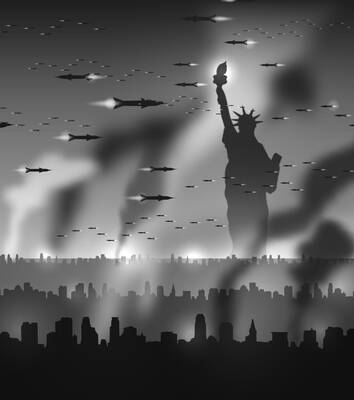
After declaring Iran’s military “gone,” US President Donald Trump appealed to the UK, France, Japan and South Korea — as well as China, Iran’s strategic partner — to send minesweepers and naval forces to reopen the Strait of Hormuz. When allies balked, the request turned into a warning: NATO would face “a very bad” future if it refused. The prevailing wisdom is that Trump faces a credibility problem: having spent years insulting allies, he finds they would not rally when he needs them. That is true, but superficial, as though a structural collapse could be caused by wounded feelings. Something
Former Taipei mayor and Taiwan People’s Party (TPP) founding chairman Ko Wen-je (柯文哲) was sentenced to 17 years in prison on Thursday, making headlines across major media. However, another case linked to the TPP — the indictment of Chinese immigrant Xu Chunying (徐春鶯) for alleged violations of the Anti-Infiltration Act (反滲透法) on Tuesday — has also stirred up heated discussions. Born in Shanghai, Xu became a resident of Taiwan through marriage in 1993. Currently the director of the Taiwan New Immigrant Development Association, she was elected to serve as legislator-at-large for the TPP in 2023, but was later charged with involvement
Out of 64 participating universities in this year’s Stars Program — through which schools directly recommend their top students to universities for admission — only 19 filled their admissions quotas. There were 922 vacancies, down more than 200 from last year; top universities had 37 unfilled places, 40 fewer than last year. The original purpose of the Stars Program was to expand admissions to a wider range of students. However, certain departments at elite universities that failed to meet their admissions quotas are not improving. Vacancies at top universities are linked to students’ program preferences on their applications, but inappropriate admission


 RSS
RSS