


The recent special municipality elections marked the first time that the Democratic Progressive Party (DPP) received a greater share of the overall vote than the Chinese Nationalist Party (KMT) in a local election.
The elections also signaled a big change in the structure of the KMT’s support at both the national and local level. Although the KMT has always held an overall lead over the DPP, that lead was always higher the more local the elections were.
During the 1990s, the KMT generally won about 55 percent of the vote in county commissioner and mayoral elections, regardless of whether the elections took place in northern or southern Taiwan. In the direct municipality councilor elections, the KMT’s proportion of the vote increased to 60 percent, in county and city councilor elections it rose to 70 percent, while in borough and village chief elections the party received 80 percent of the vote.
In comparison, the DPP won less than 10 percent of borough and village chief seats, a number that increased gradually through the city and county councilor elections up to the direct municipality councilor elections, reaching about a third of all seats in the legislative elections and more than 40 percent of the county commissioner and mayoral seats during the 1990s. Then, finally, the party won more than 50 percent of the vote in the 2004 presidential election.
The DPP’s voter support structure is the result of restrictions implemented by the authoritarian KMT government. Under the authoritarian system, various grassroots organizations, political or not, and including local governments, civil servants, farmers’ or fishermen’s associations, labor unions and regular non-governmental organizations, were all strictly controlled by the KMT. In the KMT’s corporatist state, class contradictions were not very intense and the DPP found it difficult to develop at the grassroots level. The fundamental significance of the system of martial law that developed was that it prevented Taiwanese from participating in central government.
As the government treated society as its polar opposite, it is only natural that society was opposed to the state on such clearly national issues as martial law, the permanent legislature, the ban on new political parties and newspapers, and cultural discrimination.
Before democratization, an opposition movement called dangwai — “outside the party” — formed and members of this movement always received a higher proportion of both the vote and the number of seats in legislative by-elections, provincial councilor elections and county commissioner and mayoral elections than in county and city councilor elections, or, in particular, in township chief elections. The more local the election, the stronger the KMT’s monopoly.
Following democratization and the resulting social changes, the KMT’s ability to control the grassroots and various non-governmental organizations was drastically weakened and the recent elections were an almost total reversal at several levels.
In addition to the two parties’ even strength in the direct municipality mayoral elections, they also drew even in the county and city councilor elections, where they received a third each of the vote and 130 seats each. As for the most local of all elections, the borough and village chief elections, the KMT has in the past won 80 percent of the seats, but this time it didn’t even get a third.
It is also worth noting that the Taiwan Solidarity Union, the New Party and the People First Party were defeated across the board in terms of borough and village chiefs. However, the KMT’s loss did not mean that the DPP’s share of the seats increased significantly.
Summing up these observations, we see some structural changes in Taiwan’s political landscape.
First, the trend toward a two-party system is becoming increasingly clear. While this is partly the result of the legislature adopting the Japanese single-member district, dual-vote electoral system, it is also the result of strong Chinese pressure, both positive and negative, which has been so strong that Taiwan’s main domestic conflict suppresses all other issues. While a two-party system can be a positive thing, it also makes it difficult for a diversity of new progressive issues to make their way into the public focus.
Second, there is more room for independent candidates in the city councilor elections than in the mayoral elections. This is dependent on the fact that one of these elections is for a single seat, while the other is for a large number of seats. However, that leaves us with the question why the number of independents is increasing so quickly among borough and village chiefs, which also are single seat elections.
This situation highlights the development toward a focus on political parties in higher level elections, while the focus is turning away from political parties at the grassroots level. This is beneficial both to the consolidation of a shared community feeling in smaller communities and to the formation of party and policy competition at the national level.
Third, at the same time as the normalization of democratic politics is continuing, we can also see the weakening of factors that have traditionally contributed to the formation of local forces. This is leading to a paradigmatic change in the logic behind the support distribution for political parties.
It is because of this change that the KMT still believes its fundamental support base is bigger than the DPP’s, but that view is the result of the mistaken application of the old paradigm to the new situation. It was this mistake that resulted in the KMT’s strategy to revive its deep-blue supporter base and this strategy was the reason why the party lost the overall vote in the recent elections to the DPP.
Lin Cho-shui is a former Democratic Progressive Party legislator.
TRANSLATED BY PERRY SVENSSON
A gap appears to be emerging between Washington’s foreign policy elites and the broader American public on how the United States should respond to China’s rise. From my vantage working at a think tank in Washington, DC, and through regular travel around the United States, I increasingly experience two distinct discussions. This divergence — between America’s elite hawkishness and public caution — may become one of the least appreciated and most consequential external factors influencing Taiwan’s security environment in the years ahead. Within the American policy community, the dominant view of China has grown unmistakably tough. Many members of Congress, as
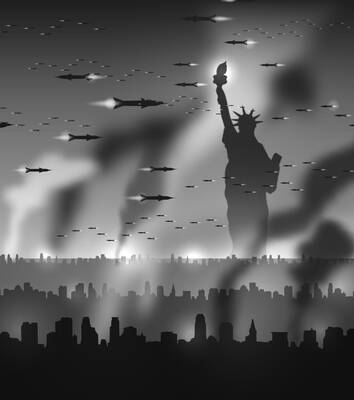
After declaring Iran’s military “gone,” US President Donald Trump appealed to the UK, France, Japan and South Korea — as well as China, Iran’s strategic partner — to send minesweepers and naval forces to reopen the Strait of Hormuz. When allies balked, the request turned into a warning: NATO would face “a very bad” future if it refused. The prevailing wisdom is that Trump faces a credibility problem: having spent years insulting allies, he finds they would not rally when he needs them. That is true, but superficial, as though a structural collapse could be caused by wounded feelings. Something
Former Taipei mayor and Taiwan People’s Party (TPP) founding chairman Ko Wen-je (柯文哲) was sentenced to 17 years in prison on Thursday, making headlines across major media. However, another case linked to the TPP — the indictment of Chinese immigrant Xu Chunying (徐春鶯) for alleged violations of the Anti-Infiltration Act (反滲透法) on Tuesday — has also stirred up heated discussions. Born in Shanghai, Xu became a resident of Taiwan through marriage in 1993. Currently the director of the Taiwan New Immigrant Development Association, she was elected to serve as legislator-at-large for the TPP in 2023, but was later charged with involvement
Out of 64 participating universities in this year’s Stars Program — through which schools directly recommend their top students to universities for admission — only 19 filled their admissions quotas. There were 922 vacancies, down more than 200 from last year; top universities had 37 unfilled places, 40 fewer than last year. The original purpose of the Stars Program was to expand admissions to a wider range of students. However, certain departments at elite universities that failed to meet their admissions quotas are not improving. Vacancies at top universities are linked to students’ program preferences on their applications, but inappropriate admission


 RSS
RSS