


With all the screening technology at US airports, the last line of defense is still the human hand: the pat-down search.
But aviation experts say the pat-down is often ineffective, in part because of government rules covering where screeners can put their hands and how frequently they can frisk passengers. As a result, even if the man accused of trying to blow up a Detroit-bound US jetliner on Christmas Day got an airport pat-down, it probably wouldn’t have found the explosives authorities say were hidden in his crotch.
“To have people hold up their arms and just pat them — like I’m really going to carry a bomb there,” industry analyst Michael Boyd said, arguing that pat-downs were often of little value. “You know where you’re going to put it, and no one’s going to go there.”
Most travelers at US airports never get a pat-down when they pass through security. A metal detector must be set off first and then screeners would need to find out what triggered the alarm. That often amounts to screeners just lightly tapping on a passenger’s arms, legs and clothes.
But even if they go ahead with a pat-down, it likely would not turn up something nonmetallic, small and well-hidden.
Unlike the frisking of suspects conducted by police — which involves officers running their hands firmly up and down the body, including sensitive areas like the groin, buttocks and breasts — the pat-downs at airports usually involve, well, patting down.
A flood of complaints by women prompted the Transportation Security Administration (TSA) in 2004 to list “dos” and “don’ts” on pat-downs, including barring screeners from touching female passengers between their breasts. The TSA hasn’t publicly released that list.
But a report by the Government Accountability Office, which said federal investigators were able to smuggle liquid explosives and detonators past security at US airports, appeared to prompt some changes last year in pat-down policies.
In one instance cited in the report, an investigator placed coins in his pockets to ensure he’d receive a secondary screening. But after a pat-down and use of a hand-held metal detector, the screener didn’t catch the prohibited items the investigator brought through a checkpoint.
The TSA last year decided to permit what it describes as “enhanced pat-downs” that include breast and groin searches. But these could be done only under limited circumstances and only after the use of metal detectors, less invasive pat-downs and all other tools had been exhausted.
Still, even in those cases, screeners must use the back of their hands when touching the groin area and breasts, the TSA said.
“This new procedure will affect a very small percentage of travelers, but it is a critical element in ensuring the safety of the flying public,” the agency said in a statement on its Web site.
Since the Dec. 25 incident, some have been calling for more pat-downs at airports. But sensitivities on all sides mean any push for more frequent, thorough pat-downs would likely meet fierce resistance.
“People just wouldn’t stand for it. You wouldn’t. I wouldn’t,” said Gerry Berry, a Florida-based airport security expert.
Fearful of lawsuits or allegations of molestation, many screeners at airports would be the most resistant of all, Boyd said.
“You’ll have people yelling: ‘He grabbed me! He groped me!’” he said. “You don’t want that job,” Boyd said.
TSA spokesman Greg Soule declined to discuss the agency’s pat-down rules or any directives to airports, including whether the agency has ordered stepped-up pat-downs at US airports since last week.
“Pat-downs are one layer of security in a multifaceted security system,” he said.
The TSA, he said, was aware of concerns surrounding pat-downs.
“I would say that security is TSA’s No. 1 priority while balancing the privacy of all passengers,” he said.
It’s possible that pat-downs may become more frequent in airports as the use of full-body scanning machines expands. The high-tech machines are in use at a handful of airports; the TSA just bought 150 and plans to buy 300 more. But passengers can opt for a physical pat-down instead of being scanned.
A gap appears to be emerging between Washington’s foreign policy elites and the broader American public on how the United States should respond to China’s rise. From my vantage working at a think tank in Washington, DC, and through regular travel around the United States, I increasingly experience two distinct discussions. This divergence — between America’s elite hawkishness and public caution — may become one of the least appreciated and most consequential external factors influencing Taiwan’s security environment in the years ahead. Within the American policy community, the dominant view of China has grown unmistakably tough. Many members of Congress, as
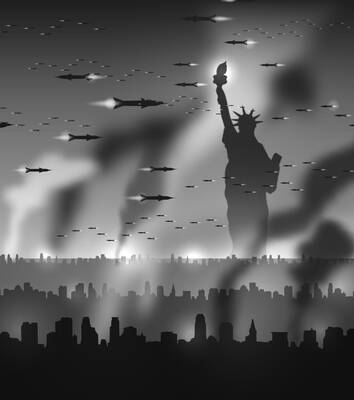
After declaring Iran’s military “gone,” US President Donald Trump appealed to the UK, France, Japan and South Korea — as well as China, Iran’s strategic partner — to send minesweepers and naval forces to reopen the Strait of Hormuz. When allies balked, the request turned into a warning: NATO would face “a very bad” future if it refused. The prevailing wisdom is that Trump faces a credibility problem: having spent years insulting allies, he finds they would not rally when he needs them. That is true, but superficial, as though a structural collapse could be caused by wounded feelings. Something
Former Taipei mayor and Taiwan People’s Party (TPP) founding chairman Ko Wen-je (柯文哲) was sentenced to 17 years in prison on Thursday, making headlines across major media. However, another case linked to the TPP — the indictment of Chinese immigrant Xu Chunying (徐春鶯) for alleged violations of the Anti-Infiltration Act (反滲透法) on Tuesday — has also stirred up heated discussions. Born in Shanghai, Xu became a resident of Taiwan through marriage in 1993. Currently the director of the Taiwan New Immigrant Development Association, she was elected to serve as legislator-at-large for the TPP in 2023, but was later charged with involvement
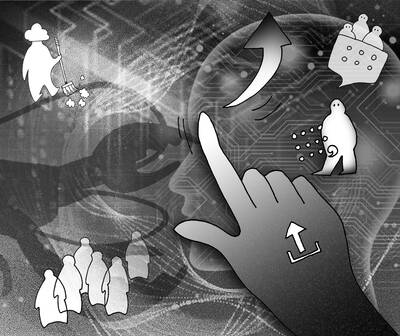
Weeks into the craze, nobody quite knows what to make of the OpenClaw mania sweeping China, marked by viral photos of retirees lining up for installation events and users gathering in red claw hats. The queues and cosplay inspired by the “raising a lobster” trend make for irresistible China clickbait. However, the West is fixating on the least important part of the story. As a consumer craze, OpenClaw — the AI agent designed to do tasks on a user’s behalf — would likely burn out. Without some developer background, it is too glitchy and technically awkward for true mainstream adoption,


 RSS
RSS