


Itis an interesting twist about Wikipedia that the most controversial, most heavily trafficked articles — on abortion, politics, virgin birth — are often the most accurate and vandalism-free. Not that people aren’t trying to cause mayhem. It’s just that the frequent visits ensure that vandalism is quickly removed, aided by automated tools that can recognize crude writing before it ever appears.
Leave these high-traffic thoroughfares, however, and things can get a bit sketchier. A few wrong turns and you may find yourself deep in Hatfield-and-McCoy territory. Entrenched enemies engage in combat over the wording of topics so obscure — Armenian historians from the first millennium, for example, or breakfast cereals — that you may wonder: so much fighting over this?
But it is exactly the obscurity that makes these Wikipedia articles ripe for feuding, fighting and vandalism. A basic tenet of the online encyclopedia is that articles be written from a neutral point of view.
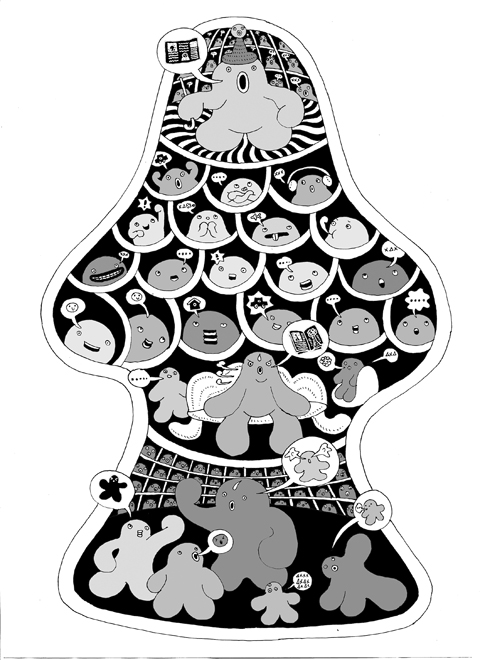
And it can be hard to expect neutrality on some topics. For example, the 430 Wikipedia articles about all aspects of Scientology represent a free-floating civil war, a “miasma,” in the description of Ira Brad Matetsky, a corporate litigation lawyer in New York. He is a member of Wikipedia’s Arbitration Committee, which last month waded into the sniping over the Scientology entries.
In a sweeping ruling with little precedent in the eight-year history of Wikipedia, the committee blocked editing from “all IP addresses owned or operated by the Church of Scientology and its associates, broadly interpreted.” The ruling did allow users from those addresses to appeal to be reinstated on a case-by-case basis.
“We’ve only blocked the work sites; they can edit from their laptops, their kid’s computer at home,” said Roger Davies, the committee member who wrote the exhaustive report after more than five months of fact-gathering and deliberation.
The material in the case file was half a megabyte of data, or more than 400 pages printed out, he said.
The decision has a range of sanctions for dozens of users, including outspoken critics of Scientology and Wikipedia administrators, from mild chiding for poor behavior to bans on editing about Scientology to total bans. Among the violations were name-calling and repeated nullifying of the editing of others without any discussion first.
“It was obvious that this case was going to be controversial pretty much from the start,” Davies said in a telephone interview from London, where he is a writer. “What we have done is we’ve really tried to make sure that we have not directed our fire at anyone in particular.”
The Church of Scientology accepted its ban in that spirit, saying in a statement: “More importantly is the fact that Wikipedia finally banned those who were engaged in unobjective and biased editing for the purposes of antagonism as opposed to providing accurate information. We hope the decision will result in more accurate and useful articles on Wikipedia as the site evolves.”
There are articles covering detailed elements of Scientology belief and practice, important people in the religion, important debunkers of the religion, important documents released by the important debunkers and important cases about the legality of release of the important documents. Each is a potential battleground between the camps, often while being viewed only a few dozen times a day. In essence, they preach to the converted or those who used to be converted.
“One of the problems we keep bumping into is what I call core belief issues — politics, religion, nationalism,” Davies said. “Fringe faiths, fringe nationalities.”
The Scientology decision, which received plenty of news coverage, brought the Arbitration Committee (or ArbCom) to public view. No doubt, most users of Wikipedia had no idea that there was a court of last resort for disputes on the site.
Tens of millions of people around the world use Wikipedia, but few users — even the most frequent editors — can say how or why it works. The two members of the committee I interviewed agreed that the committee was not vital to Wikipedia’s continued operation — the Hatfields and McCoys, after all, were largely left to their own devices by the government and people knew to stay away — but they said that having a way to ban people of bad faith made the site more friendly, more efficient and more welcoming to new editors.
Wikipedia users elect the panel members, and Matetsky reports that he is the only active lawyer among them, though there are a few law students.
He said: “It is considered ironic; I’m the gung-ho litigation attorney but often on the side of second chances and leniency.”
He says he often is opposed to outright bans — he abstained on some of the sanctions in the Scientology case — because “to a user who is banned, Wikipedia is ‘the encyclopedia anyone can edit,’ except for you.”
The discovery that Wikipedia is not the anarchic paradise some might imagine can be a shock. Others see hypocrisy, evidence that there is a class of users who control what appears there, people who benefit from Wikipedia’s huge public clout with little public scrutiny.
But taking the longer view, it is apparent that in its brief history, Wikipedia is quickly replicating the creation of society, from an Eden (no rules, no need for rules) to a modern entity.
“Bureaucracy is inevitable,” said Joseph Reagle, whose doctoral. thesis was about the history of Wikipedia and collaborative culture, crediting the German sociologist Max Weber. “Even if you have a supposed anarchy or collective, that doesn’t mean the rules aren’t there, just that they are implicit.”
A gap appears to be emerging between Washington’s foreign policy elites and the broader American public on how the United States should respond to China’s rise. From my vantage working at a think tank in Washington, DC, and through regular travel around the United States, I increasingly experience two distinct discussions. This divergence — between America’s elite hawkishness and public caution — may become one of the least appreciated and most consequential external factors influencing Taiwan’s security environment in the years ahead. Within the American policy community, the dominant view of China has grown unmistakably tough. Many members of Congress, as
After declaring Iran’s military “gone,” US President Donald Trump appealed to the UK, France, Japan and South Korea — as well as China, Iran’s strategic partner — to send minesweepers and naval forces to reopen the Strait of Hormuz. When allies balked, the request turned into a warning: NATO would face “a very bad” future if it refused. The prevailing wisdom is that Trump faces a credibility problem: having spent years insulting allies, he finds they would not rally when he needs them. That is true, but superficial, as though a structural collapse could be caused by wounded feelings. Something
Former Taipei mayor and Taiwan People’s Party (TPP) founding chairman Ko Wen-je (柯文哲) was sentenced to 17 years in prison on Thursday, making headlines across major media. However, another case linked to the TPP — the indictment of Chinese immigrant Xu Chunying (徐春鶯) for alleged violations of the Anti-Infiltration Act (反滲透法) on Tuesday — has also stirred up heated discussions. Born in Shanghai, Xu became a resident of Taiwan through marriage in 1993. Currently the director of the Taiwan New Immigrant Development Association, she was elected to serve as legislator-at-large for the TPP in 2023, but was later charged with involvement
Out of 64 participating universities in this year’s Stars Program — through which schools directly recommend their top students to universities for admission — only 19 filled their admissions quotas. There were 922 vacancies, down more than 200 from last year; top universities had 37 unfilled places, 40 fewer than last year. The original purpose of the Stars Program was to expand admissions to a wider range of students. However, certain departments at elite universities that failed to meet their admissions quotas are not improving. Vacancies at top universities are linked to students’ program preferences on their applications, but inappropriate admission


 RSS
RSS